Vintage solid-wood furniture never goes out of style — but it does ask for a few simple care rituals
A French chest of drawers from the 1960s, a dining table inherited from grandparents, or a secretary desk brought from an old manor house all carry something new, mass-produced furniture simply cannot buy: patina. Every fine scratch, every sun-softened shade tells the story of time passing over the piece. That is exactly why proper care for vintage solid-wood furniture is not about making it look "brand new" again, but about protecting its character while also protecting the wood's structure. In the Martello showroom in Nimoreni, Ialoveni — just 15 minutes from Chișinău — we see, day after day, one-of-a-kind pieces that have survived decades precisely because their previous owners treated them gently, without harsh cleaning products.
Why old wood behaves differently from new furniture
Solid wood used 40 to 80 years ago was typically air-dried slowly, over years, which gave it a density and stability rarely matched by modern furniture made of particleboard or veneered MDF. That density, however, also means the wood keeps "breathing" — expanding and contracting with humidity and temperature — far more visibly than a composite material. A walnut, oak or cherry piece from the Martello collection continues this natural process long after it arrives in your home, which is why it pays to understand the exact wood species before choosing a care method. The differences between walnut, oak and cherry matter not just aesthetically, but also in how each species reacts to wax, oil or light.
Daily dusting: gentleness above all
The golden rule is simplicity. A soft cotton or microfibre cloth, lightly dampened — never wet — is enough for everyday dust. Always wipe along the grain of the wood, never in circles, so you don't deepen existing micro-scratches. Avoid rough synthetic cloths and abrasive sponges entirely: they leave fine marks, almost invisible at first glance, that build up over time and dull the original finish. Kitchen detergents, all-purpose sprays or ammonia-based products are strictly off-limits on old solid wood — they dissolve the protective wax layer and can discolour or lighten the finish, especially on pieces with thin veneer or inlay work.
Feeding the wood with natural wax
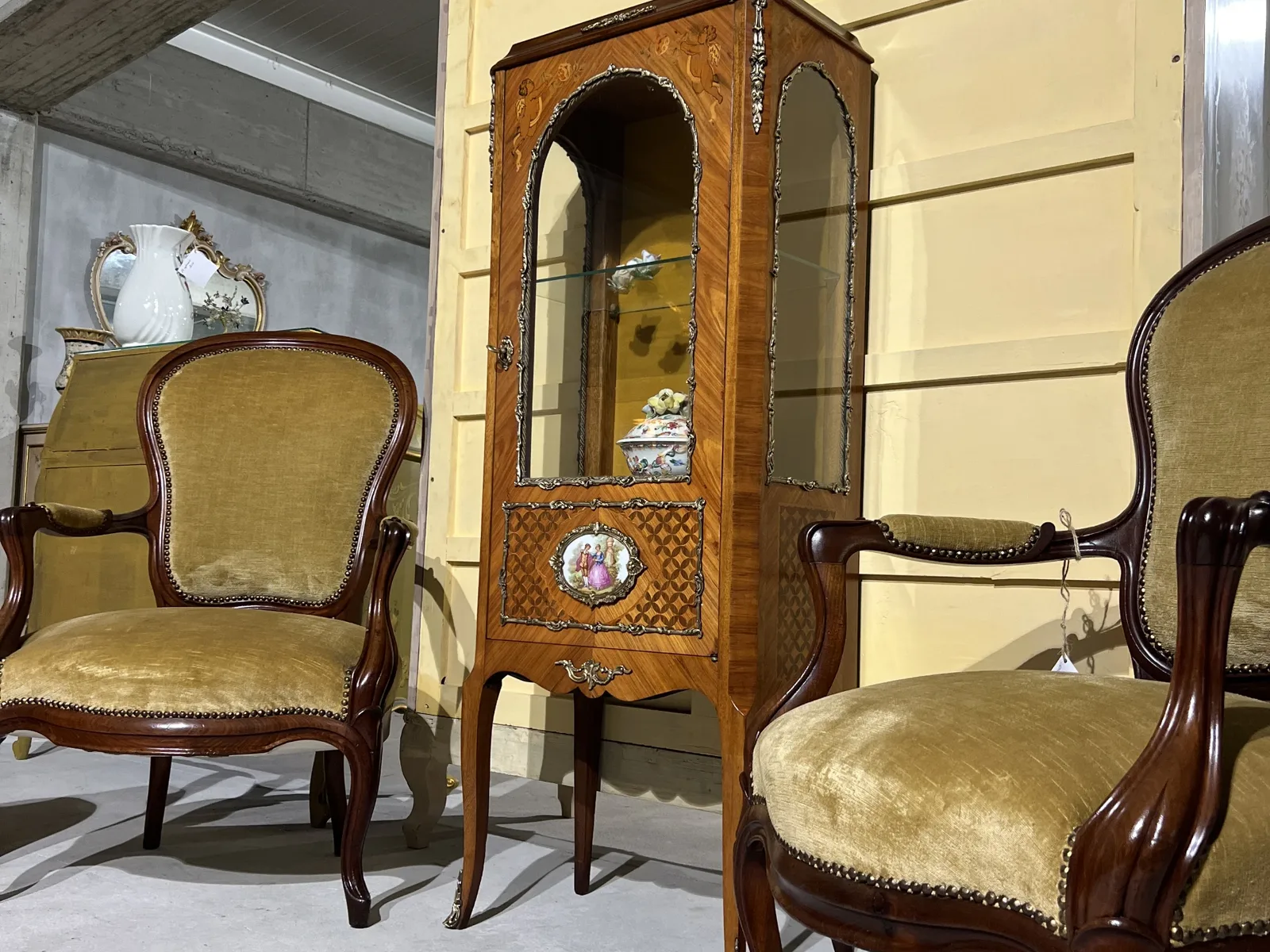
Unlike new furniture, which often carries a thick protective lacquer, vintage pieces usually have a more delicate finish — beeswax, shellac or oil — that wears away slowly and needs periodic "feeding." A good-quality natural wax, applied two or three times a year in a very thin layer with a clean cloth, restores the wood's understated sheen and protects it from drying out. After applying, let the wax sit for 10-15 minutes, then buff with a dry cloth along the grain. Don't layer fresh wax over old, hardened wax without gently cleaning it first — you risk a cloudy, milky finish. For pieces with a longer history and a more fragile finish, such as those discussed in our guide on vintage furniture versus antiques, always test the wax on a hidden area before applying it to the whole surface.
Humidity and temperature: wood's quiet enemies
The most common reason a vintage piece cracks, warps or develops loose joints isn't age itself, but sudden swings in humidity. A constant humidity level of around 40-60% is ideal for solid wood. Overly dry winter air, with the heating running non-stop, dries out the grain and can trigger fine cracks, especially in massive pieces such as tables made of solid wood, where the tabletop moves differently than the legs. Avoid placing vintage furniture directly next to a radiator, fireplace or air-conditioning unit — the temperature difference across the surface can crack the finish even if the structure itself stays sound. A room humidifier, especially in winter, is a small investment that protects a genuinely valuable piece.
Direct sunlight: beautiful for photos, harmful over time
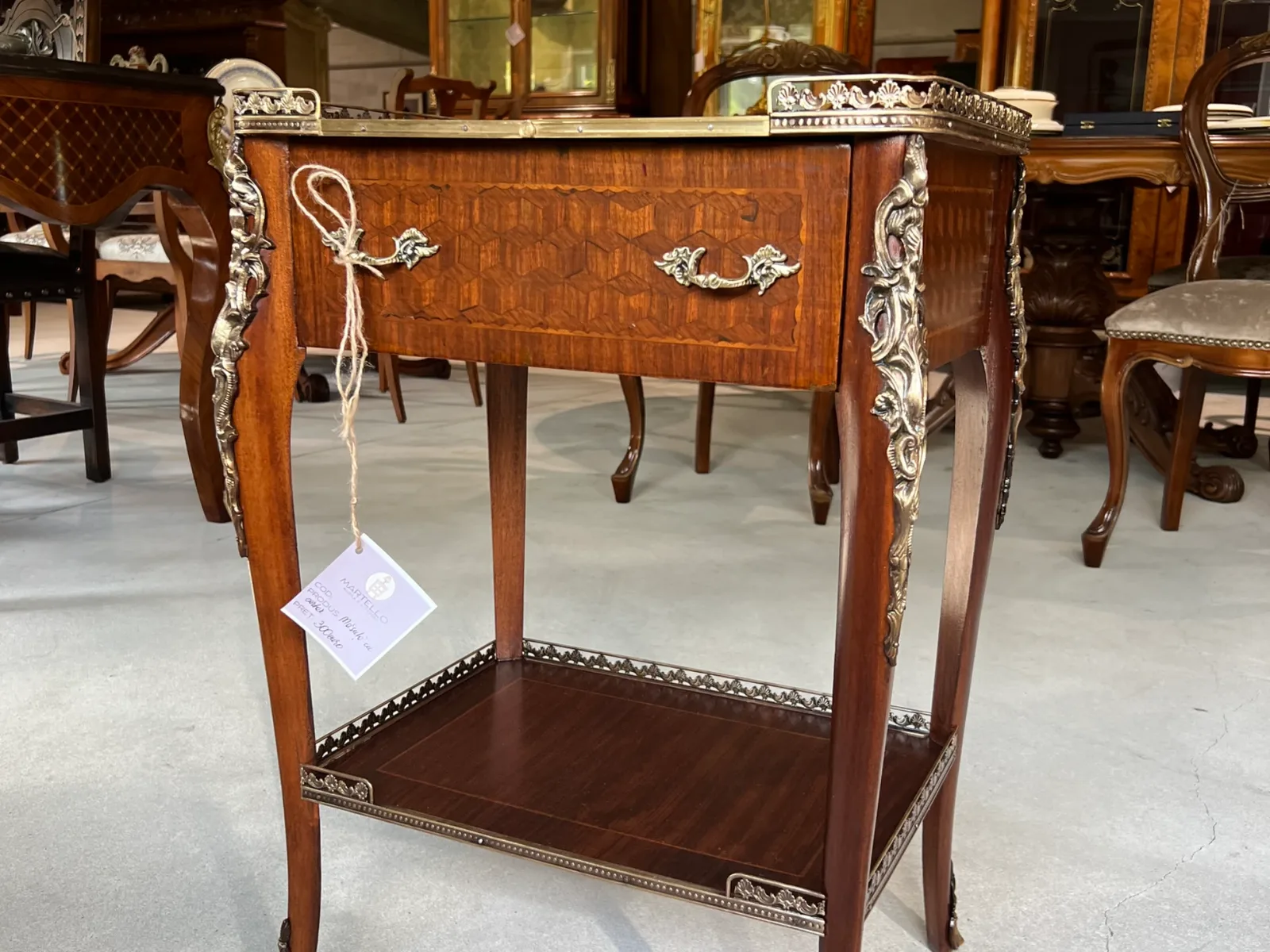
Direct sunlight fades wood unevenly — the exposed area takes on a different shade from the rest of the piece, and once that contrast appears, it can't be fully corrected. If your display cabinet, chest of drawers or bookcase sits next to a large window, the simplest fix is a sheer curtain that filters light without darkening the room, or periodically turning smaller pieces so sun exposure stays even. This detail matters especially for pieces with marquetry or inlay, where the shade differences between wood species are part of the piece's aesthetic value — one more reason to learn how to recognise quality solid wood before deciding where to place it in your home.
Common mistakes we see often
The most frequent mistake is cleaning with too much water and detergent, which seeps into the joints and swells the wood from within. The second is using randomly bought "universal" spray lacquers that aren't compatible with the original finish and create opaque stains that can't be removed without stripping the piece. A third, subtler mistake is dragging furniture across the floor instead of lifting it — over time this loosens legs and joints, especially on pieces over fifty years old. Finally, many owners ignore slightly loose screws or hinges, which seem minor but eventually lead to cracks in the surrounding wood. A quick check of joint stability twice a year prevents far costlier repairs down the line.
Choosing a vintage piece that will age beautifully
Proper care actually begins at the moment you choose the piece. In the Martello collection, every one-of-a-kind item goes through a careful selection process before entering our catalogue — we check structural stability, the quality of the original finish and the condition of the solid wood, so new owners receive a piece worth caring for over the years, not just a purchase for a season. If you're after a truly unique find, a rarity that won't be repeated once sold, we welcome you at our showroom in Nimoreni, or you can explore the vintage furniture collection curated for homes in Moldova and Romania that appreciate authentic solid wood and the story behind every piece.