Where to Find Authentic Vintage Furniture in Chișinău — A Buyer's Guide
Interest in vintage and antique furniture in Chișinău has grown noticeably in recent years. More people want a chest of drawers with a story, a display cabinet from another century, a chandelier that looks nothing like what fills today's furniture catalogues. The problem isn't supply — it's the lack of curation. The local market is crowded with pieces mixed together indiscriminately: next to a hundred-year-old solid wood dresser might sit a 1990s imitation painted to look "antique." For an inexperienced buyer, the difference is hard to spot in photos or during a rushed visit. This guide explains, point by point, where people actually look for vintage furniture around Chișinău, what each option risks, and why a curated showroom changes the equation entirely.
A growing but chaotic market
Demand for genuine old furniture has long outgrown the narrow circle of collectors. Vintage pieces increasingly turn up in modern Chișinău homes, paired with contemporary furniture — a contrast that gives character to an otherwise predictable interior. The trouble is that supply hasn't kept pace with demand in terms of quality. Anyone searching for vintage furniture in the city today runs into a mix of genuine pieces, replicas, aggressively refinished furniture, and simply worn-out objects with no value beyond their age. Without a trained eye, it's easy to pay rarity prices for something ordinary — or, just as easily, to walk past a genuinely valuable piece because it doesn't look "polished" enough.
What "authentic" actually means in this context
Authenticity isn't something you see at a glance, and it has nothing to do with how old a piece looks at first impression. What matters is the wood grain — whether it's natural, with an irregular pattern, or just a veneer imitating solid wood. What matters is the patina — the fine marks acquired naturally over time, distinct from paint applied artificially for an "aged" look. And what matters is provenance — where a piece came from, how many hands it passed through, whether its original structure was preserved or altered. We break down exactly how to spot these signs in our guide to recognizing quality solid wood — worth reading before visiting any seller, whoever they are.
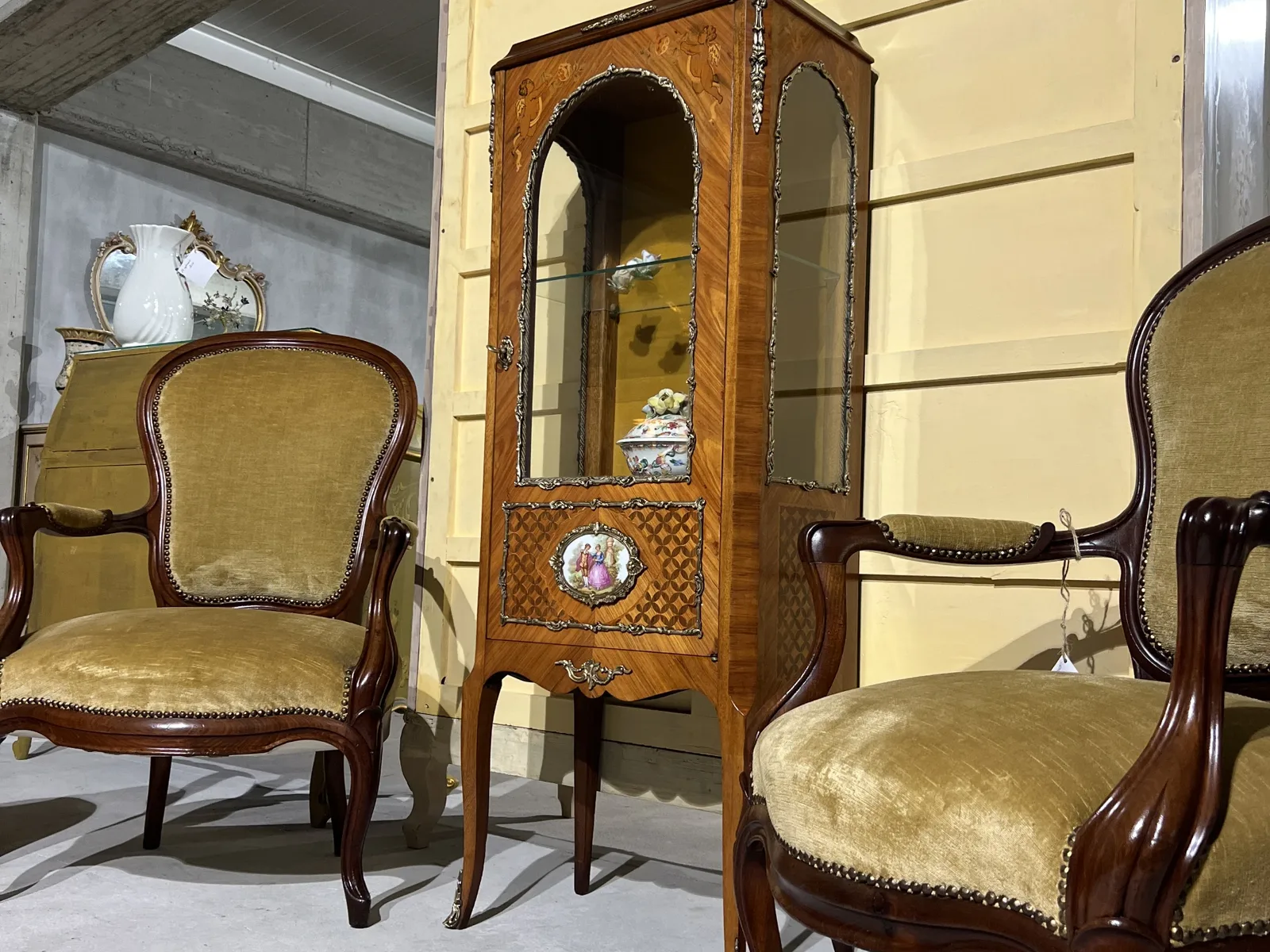
Flea markets, online listings, second-hand shops
Each option has its place, but also real limits. Flea markets occasionally turn up a good piece, but with no guarantee of provenance and no calm time to examine it — hurried haggling leaves little room for a careful check. Online listings solve the time problem but introduce a worse one: you're buying from photos, without touching the wood, without feeling the weight of a drawer or the stability of a frame, and the difference between veneer and solid wood rarely shows clearly in a picture. General second-hand shops, meanwhile, mix vintage furniture with items that are simply old and worn, with no quality selection at all — their role is turning over stock, not curating it. None of these options offers what matters most: certainty.
Why a curated physical showroom changes everything
The real difference appears when you can touch the wood with your own hands, open a drawer, see a piece in natural light rather than an edited listing photo. At the Martello showroom in Nimoreni, Ialoveni — about 15 minutes from Chișinău — the collection consists exclusively of one-of-a-kind pieces, selected one at a time, not gathered in bulk and put up for sale without a filter. Every piece is carefully assessed before it goes on display: grain, structure, provenance, real condition. There's no cluttered warehouse of whatever showed up on the market — there's a considered collection, where every object earns its place. You can compare two similar pieces side by side, see the difference in quality with your own eyes, and ask about the story behind each item — things no online listing can offer.
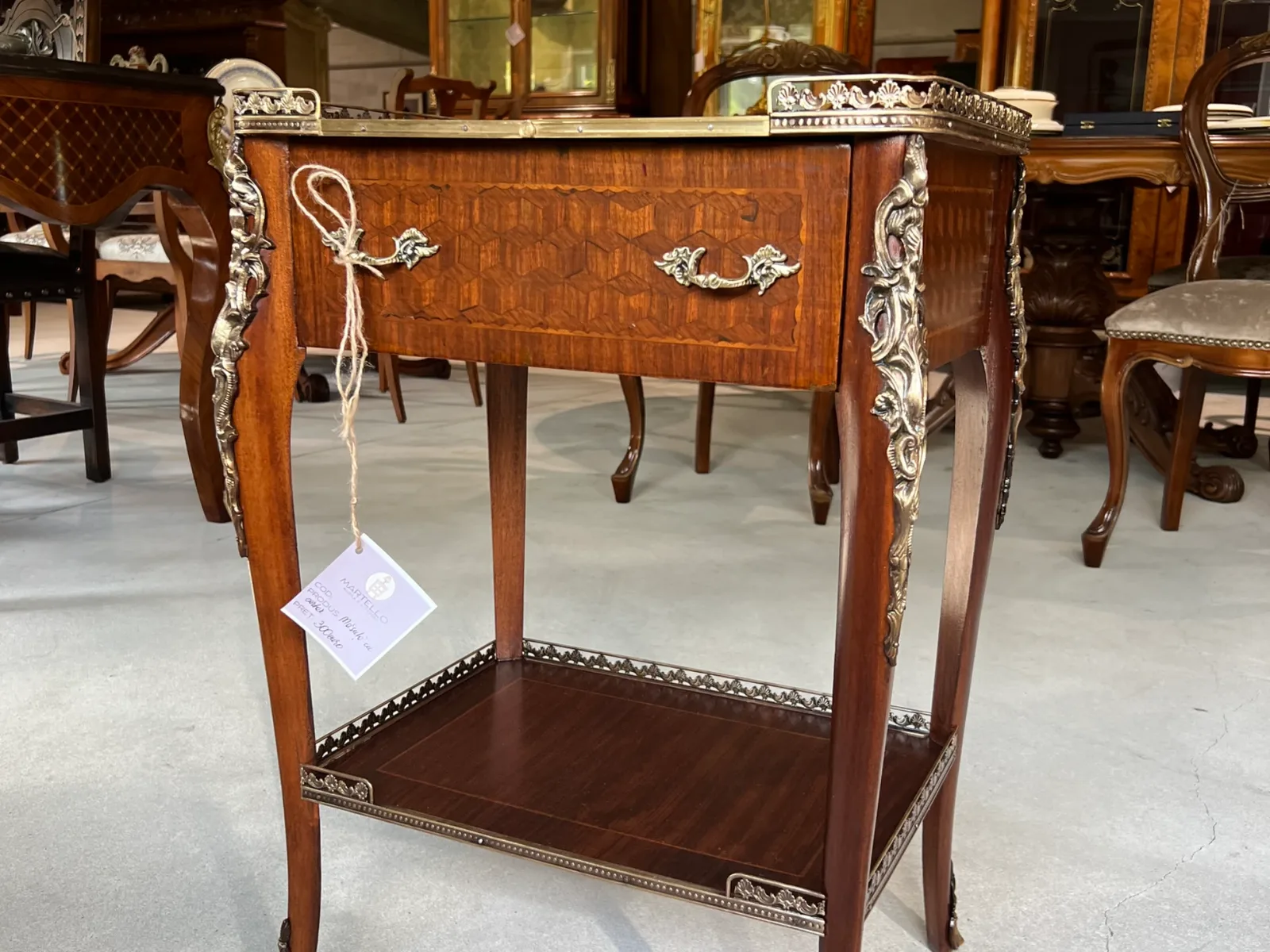
What you'll actually find in the Martello collection
The collection spans a wide range of pieces for every part of a home: dressers hand-carved in another century, display cabinets in solid wood with original glass, mirrors in carved frames no longer made today, complete dining sets conceived as the centerpiece of a home, and chandeliers that transform a room's atmosphere entirely. Every piece is one of a kind — once sold, an identical one won't appear again in the collection, much like in a gallery rather than a mass furniture store. The difference between a one-of-a-kind piece and mass-produced furniture, even good-quality furniture, is explored at length in our article on one-of-a-kind pieces versus series furniture, useful for anyone weighing the two directions.
How to book a visit and what the process looks like
Booking a showroom visit is simple — a message or a call — and the Martello team sets aside dedicated time to walk you through the collection unhurried, not a rushed few-minute tour. On site, you can touch every piece, ask about the wood species, the era, or any detail that matters to your decision. If a specific piece already caught your eye, you can check availability by phone beforehand so you don't make the trip for something already sold — being one of a kind, pieces are never restocked. Once you've chosen, delivery follows, organized directly by the team, across Moldova and Romania, so distance from Nimoreni is never a real obstacle. For broader context on what vintage furniture actually means and how to choose it well, our complete guide to vintage furniture and antiques is worth reading before your visit.
Who Chișinău is a good starting point for
For Chișinău residents, the 15 minutes to Nimoreni are shorter than an ordinary drive through traffic to the city center — a small distance for a collection with no equivalent in the city. But the showroom doesn't serve the capital alone: buyers from across the rest of Moldova make the trip specifically for pieces in the collection, and a growing number of clients from Romania travel or arrange delivery, drawn by rarities they can't find at home. Chișinău remains the natural starting point, though — the city where the question "where can I find authentic vintage furniture" comes up most often, and where the answer, just a few kilometers away, is a curated collection rather than a gamble. You can browse some of the available pieces directly in the Martello catalog before scheduling a showroom visit.