Complete Guide: Vintage Furniture and Antiques in Moldova — How to Recognize Real Value
In an increasingly crowded market of mass-produced furniture, more and more discerning collectors and homeowners across Chișinău and Moldova are turning their attention to pieces with history. Yet the distance between a simply old chest of drawers and a genuinely valuable piece is vast — one that only a trained eye can measure. This guide walks through the difference between vintage furniture and antiques, how to recognize authenticity, and how to bring such pieces gracefully into a modern home.
Vintage or Antique? Definitions Worth Knowing
The two terms are often used interchangeably, yet the distinction matters enormously for value. An antique is conventionally at least 100 years old — nineteenth-century furniture or earlier, frequently made entirely by hand using techniques nearly lost today. A vintage piece is typically between 20 and 99 years old and belongs to a clearly defined stylistic era — Art Deco, mid-century, interwar — without yet reaching antique status. Both categories can carry significant value, but the criteria differ: antiques are judged on rarity and provenance, vintage pieces on condition, design, and era. We unpack these nuances fully in our dedicated article on vintage versus antique furniture.
The Marks of Authenticity: Dovetails, Patina, Maker's Marks
The authenticity of an old piece reveals itself in details mass production cannot convincingly imitate. The first sign is the dovetail joint, visible on the sides of drawers — hand-cut, with slightly uneven pins, unlike the perfectly symmetrical, machine-routed dovetails of recent industrial furniture. The second is patina — the layer of color, sheen, and wear accumulated naturally over decades, impossible to fake convincingly. Genuine patina is uneven: deeper where hands have touched the wood thousands of times, lighter in sheltered areas. The third sign is maker's marks — workshop stamps, manufacturer labels, inventory numbers, or signatures hidden under drawers or on the back of a piece, confirming origin and sometimes even the exact era of production. Hand-cut screws and nails, slightly irregular, further betray genuine age, unlike the perfectly standardized hardware that followed the 1900s. Our guide on how to recognize quality solid wood rounds out these criteria with everything related to structure and weight.
Why a One-of-a-Kind Piece Outvalues Series Furniture
An authentic vintage or antique piece is, by definition, one of a kind — once sold, it never repeats. This rarity is the exact opposite of series furniture, produced identically by the thousand, whose value declines from the very first day of use. The difference isn't only aesthetic; it's the economic logic of collecting: a rare piece in good condition with clear provenance tends to hold, or even grow, its value over time, while industrial furniture depreciates steadily. We explore this distinction at length in one-of-a-kind piece or series furniture: why the difference matters, essential reading for anyone buying with their head, not just their eyes.
Wood Species and Their Impact on Value
The wood a piece is made from directly shapes both its durability and its collectible value. Walnut is prized for its rich grain pattern and deep, warm brown tone, traditionally used for statement pieces — desks, secretaries, dining sets. Oak impresses with exceptional hardness and longevity, which is why so many nineteenth-century oak pieces have survived intact to this day. Cherry brings a refined reddish hue that deepens beautifully with age, favored for bedroom furniture and decorative pieces. Recognizing the correct wood species helps you accurately estimate a piece's age and origin — we compare all three in detail in walnut, oak, or cherry: how to choose your wood species.
What's Worth Collecting: Pieces with Real Value Potential
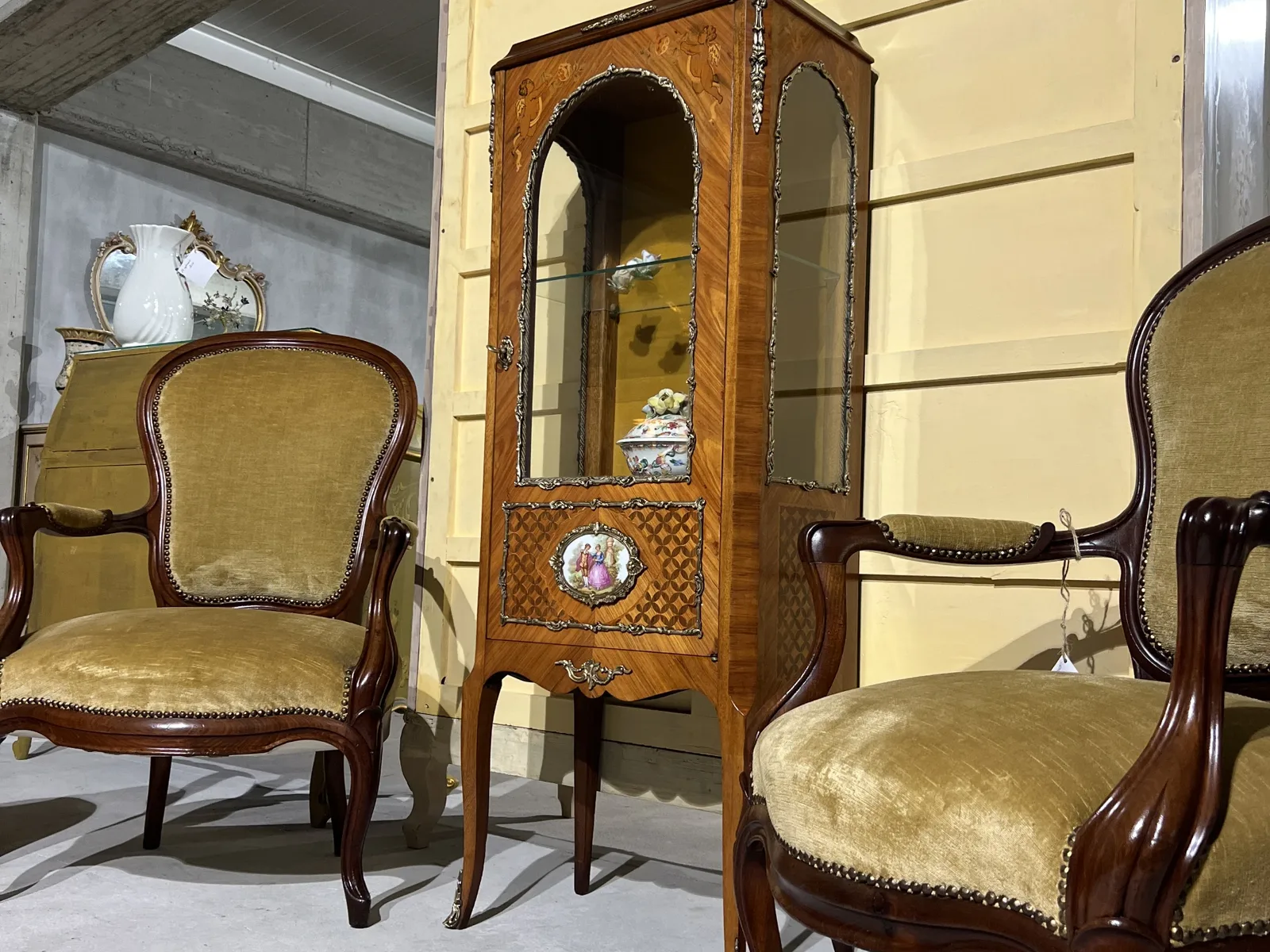
Not every old piece is a good investment. Experienced collectors look for specific types that combine rarity, craftsmanship, and steady market demand. Vintage display cabinets, with curved glass and original hardware, remain highly sought after for living and dining rooms — discover them in our guide to the vintage display cabinet. Vintage chests of drawers, especially those with marquetry or bombé lines, become centerpieces for the hallway and bedroom, detailed in vintage chest of drawers: a centerpiece for hallway and bedroom. And sets of Savonarola chairs, with their folding X-frame structure inherited from the Renaissance, are among the most recognizable pieces of historical furniture — their full story is told in Savonarola chairs: the history of a piece and how to showcase it today. Through all of this, quality furniture remains, as we show in quality furniture, an investment that holds its value, a tangible asset that doesn't depend on passing trends.
Alongside physical authenticity, provenance — the documented history of ownership, workshop, or collection a piece comes from — can meaningfully affect its value. A piece with clear provenance, even without notarized paperwork but with credible clues (family labels, old photographs, correspondence with a known dealer), inspires far more confidence in a collector than a piece "found" with no trace of its past. Not every vintage or antique piece arrives with a complete file, but a serious seller should be able to explain, at least broadly, where a piece comes from and what repairs or interventions it has undergone over time. Transparency about a piece's history is, in fact, one of the criteria behind every piece we select for our collection.
One frequent myth is that old furniture is automatically fragile or impractical for daily use — false, as long as the structure is sound: well-cared-for solid wood easily withstands the rigors of everyday life, often better than modern furniture made of composite materials. Another myth is that any scratch or sign of age "ruins" a piece — on the contrary, fine traces of use are part of the patina and character of the object, as long as they don't affect the structure. Finally, many believe a piece's price automatically rises just because it's "old" — false: age only matters combined with genuine authenticity, condition, and rarity. A well-chosen vintage armchair, for instance, can be worth more than an older piece that's damaged or altered — a subject we explore further in vintage armchair: how it adds character and comfort to the living room, just as an authentic floor clock with a working mechanism always remains more valuable than a decorative replica — the full story in the Tempus Fugit floor clock: the accent that gives a room gravitas.
Bringing Old Furniture into a Modern Home
The most common fear among those drawn to old furniture is that a piece from another century will look out of place in a contemporary interior. The reality is the exact opposite: a well-chosen vintage or antique piece becomes a room's anchor point, the contrast that gives depth to an otherwise uniform décor. The basic rule is balance — a bombé chest from the nineteenth century can sit perfectly beside a contemporary sofa, provided the color palette and proportions are thought through as a whole. We explain exactly how to make this mix feel natural, not forced, in how to combine vintage and modern furniture with elegance.
Care: How to Preserve a Piece's Value Long-Term
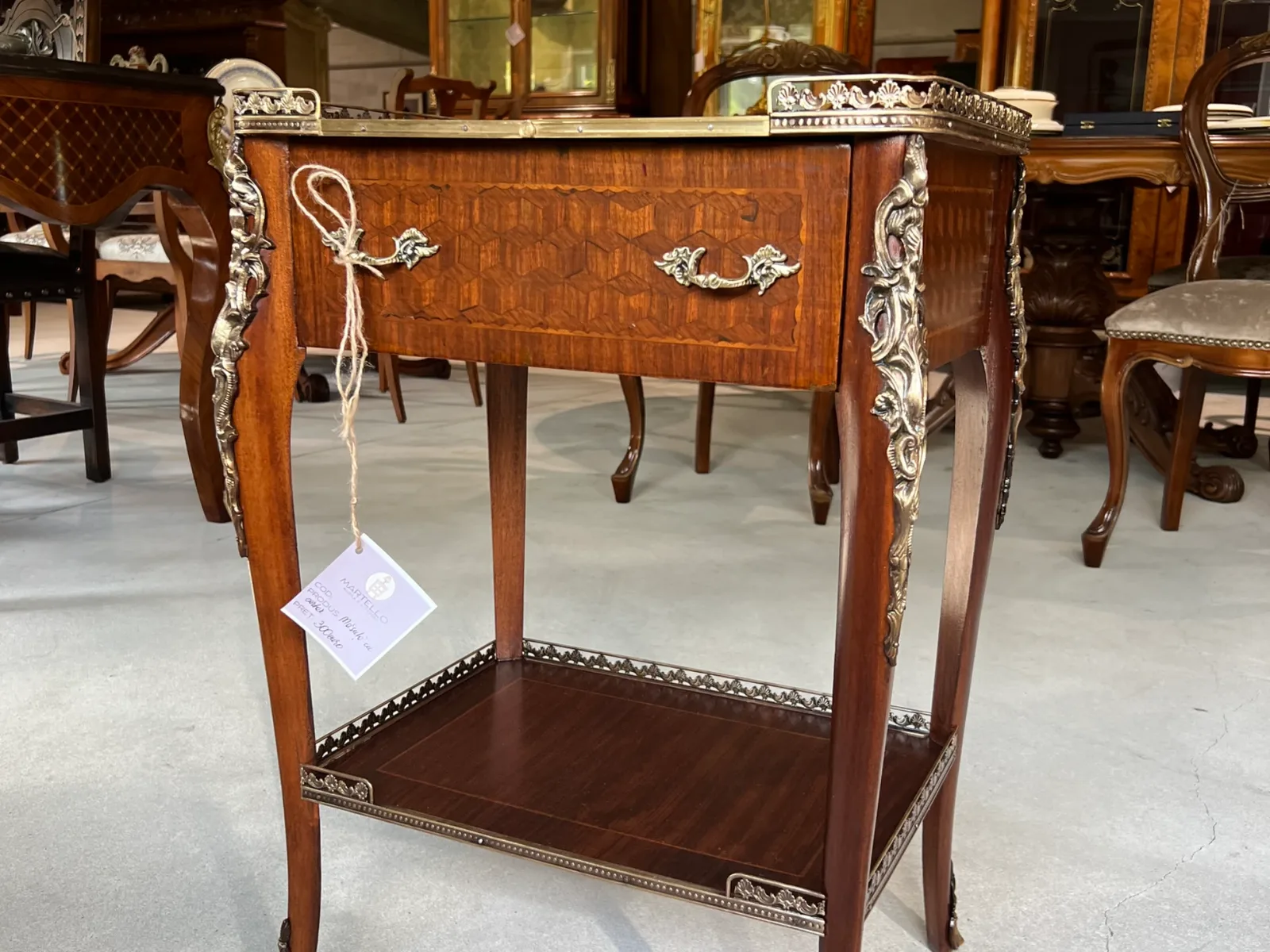
A piece's value is largely preserved — or destroyed — by how it's cared for. Solid wood needs consistent humidity (ideally 45-55%), protection from direct sunlight, which fades patina, and periodic treatment with natural wax rather than lacquers or synthetic products that seal the wood and stop its natural breathing. Original hardware — handles, hinges, locks — should never be replaced with modern equivalents, as this dramatically reduces collectible value. We've written a dedicated, practical guide on exactly this subject in caring for vintage wood furniture: the owner's guide.
Why Moldova Is Rediscovering Furniture with History
Across Chișinău and Moldova, interest in furniture with a story is steadily growing, as more homeowners move away from anonymous, mass-produced furniture toward pieces that say something about them. It's a movement running parallel to what's happening in Romania and across Europe — a return to durability, craftsmanship, and objects that aren't discarded after a decade. At Martello Mobili, we continuously select one-of-a-kind pieces — vintage and antique — checked for authenticity, structural condition, and their potential to sit gracefully within a contemporary interior. Every piece in our showroom in Nimoreni, Ialoveni (15 minutes from Chișinău) is individually chosen, not manufactured, which is why, once sold, it never repeats.
Choosing the Right Piece for Your Home
Before buying any vintage or antique piece, check the three essential criteria discussed throughout this guide: authenticity (dovetails, patina, maker's marks), structural condition (the wood should show no active woodworm damage or major cracks), and fit with your space — proportion, color, function. The safest way to evaluate all of this remains a direct visit to a showroom with a curated collection, where you can touch the wood, check the joinery, and ask questions about provenance. You can browse our entire collection of one-of-a-kind furniture online, or discover our selection of vintage pieces in the dedicated category. Whether you're after a conversation piece for the living room or a chest with history for the bedroom, thoughtfully chosen furniture becomes, over time, far more than an object — it becomes part of the story of your home.