The Tempus Fugit floor clock: the accent that gives a room gravity
Some pieces of furniture simply fill a space, and some give it a voice. The floor clock from the Martello collection, known as Tempus Fugit — "time flies," the old motto engraved for centuries on heirloom clock faces — belongs firmly to the second category. It is not a utilitarian object but a quiet witness to the passing hours, with a presence few other pieces can match. Set in a living room, a generous entrance hall, or beside a home office desk, a well-chosen floor clock changes how you experience the whole room: it adds depth, rhythm, and a discreet gravity that only comes with old, settled homes.
Why a floor clock, and not a wall clock
The difference is not just one of proportion. A wall clock is looked at; a floor clock is lived alongside. Its height — typically between 1.80 and 2.20 meters — turns it into a second "character" in the room, scaled to a person rather than to a mere decorative object. The tick of the pendulum and the measured, unhurried chime add a dimension the eye alone cannot supply: the sound of time passing, in a home where the things that matter don't change with every passing trend. This is precisely why, historically, floor clocks were always heirlooms, handed down carefully from one generation to the next, alongside the family silver and its vintage furniture pieces.
The anatomy of a piece worth your attention
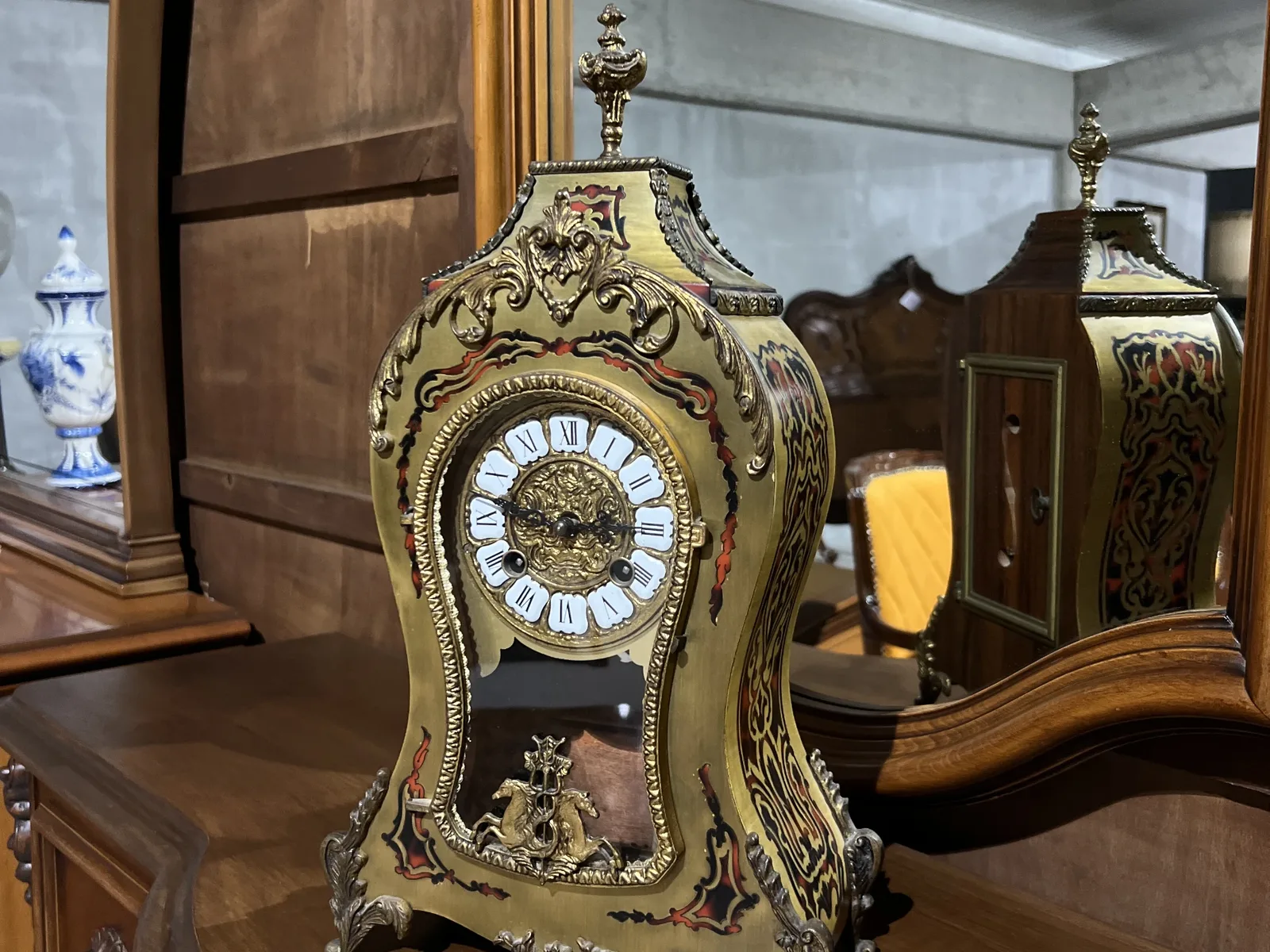
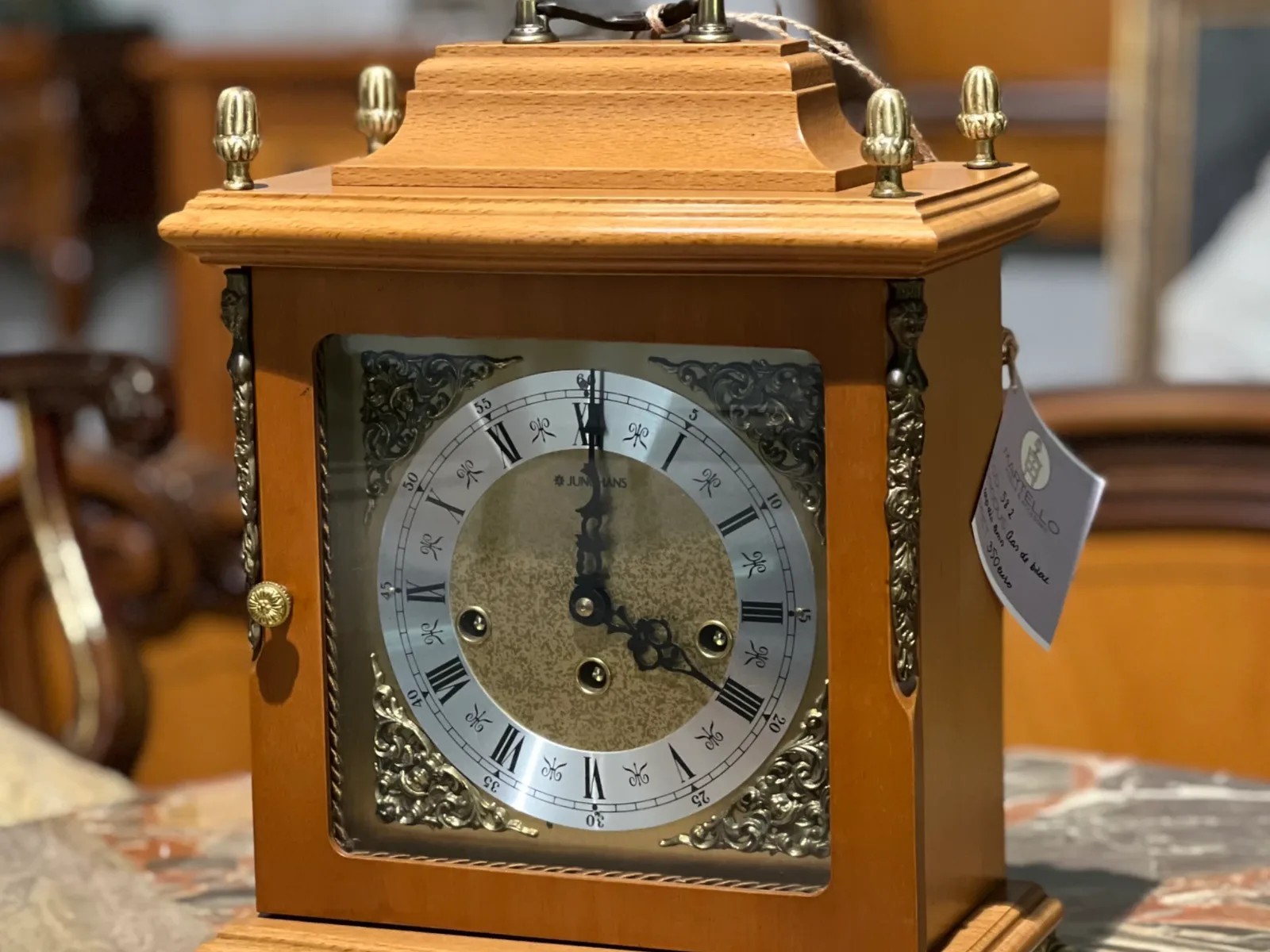
A quality floor clock reveals itself in a handful of details worth checking before you decide. The case matters most: solid wood — walnut, cherry, or oak — ages beautifully, develops a warm patina over the years, and survives decades of use, unlike thin veneers that eventually lift and peel. The dial, whether hand-painted with Roman numerals or kept simple and classical, should sit in proportion to the rest of the case, never oversized or garish. The movement — usually with a visible pendulum behind the glass panel of the lower door — is the heart of the piece: a well-regulated movement chimes the hour at even intervals and can be silenced for the night without losing its accuracy. Finally, the feet and base need to be stable, with a footprint wide enough that the clock never "walks" across the floor over time.
Where to place it in the home
A floor clock needs room to breathe around it — it should never be squeezed into a tight corner among other pieces. The most natural spot is the entrance hall, where it becomes the first impression of the home, a quiet statement of the owner's taste. It works just as well in a generous living room, next to a reading chair or a solid-wood bookcase, where its gentle ticking becomes the soundtrack to a quiet evening. In larger bedrooms, placed well away from the bed, it can anchor a private sitting corner alongside an armchair and a small table. Avoid bathrooms, kitchens, and any space with high humidity or sharp temperature swings — solid wood needs a stable climate to keep its shape and finish intact.
How to choose the right floor clock for your interior
The first criterion is the overall style of the home. In an aristocratic interior, with warm tones and solid wood left visible, a clock with a carved case and gilded dial slots in naturally. In a countryside home or a manor with rustic-elegant touches, a simpler oak or walnut case with clean lines works better than excessive ornamentation. The second criterion is scale: measure your ceiling height and the width of the available space before deciding, since a floor clock that is too small looks lost, while one too massive dominates a small room awkwardly. The third criterion, often overlooked, is sound — listen to the chime before you choose, if you can; some movements ring crystal-clear, others favor a deeper, gong-like tone, and the preference is entirely personal. Because we are talking about one-of-a-kind pieces, chosen individually for the Martello collection, every clock carries its own particularities of finish and sound — once sold, it is never repeated.
Caring for a solid-wood floor clock
Looking after a piece like this is simple but needs consistency. Wipe the case with a soft, dry or barely damp cloth, avoiding solvents and silicone-based products, which clog the pores of the wood. Once or twice a year, apply a thin coat of natural furniture wax and buff it well — this feeds the finish and brings out the depth of the patina. Keep the piece away from direct sunlight, which fades wood unevenly over time, and away from heat sources such as radiators or a fireplace placed too close. The pendulum movement should be set by a clockmaker at installation so it chimes accurately; after that, upkeep is limited to periodically winding the spring or changing the batteries, depending on the model. For general principles that apply to any piece like this, our guide to caring for vintage wood furniture remains a useful reference year after year.
A one-of-a-kind piece, not a mass-produced product
At Martello, we are not working from a catalog of endlessly repeated models. We select every floor clock for its rarity, its finish, and its character — exactly as we select every other piece in our showroom in Nimoreni, Ialoveni, just 15 minutes from Chișinău. The difference between a piece found this way and mass-produced furniture is immediately obvious: the proportions, the weight of the wood, the sound of the movement — all of it tells the story of an object that was chosen, not assembled on a line. And if you are wondering how a piece like this compares to a genuine antique from the last century, our piece on vintage furniture versus antiques can help clarify your criteria.
How to integrate it with the rest of your furniture
A floor clock should never "compete" with the rest of the room's furniture — it should complete it. If your furniture is already in walnut, oak, or cherry, choose a case from the same family of woods, or with a closely matching finish tone, for visual unity. Leave open space around it — at least half a meter on every side — and avoid placing it next to other tall pieces that would steal its presence. Browse the full Martello furniture collection to see how a floor clock pairs with armchairs, bookcases, and side tables in a coherent whole. A piece like this is not bought often — which is exactly why it deserves to be chosen patiently, the same way it was once patiently chosen for our collection.