One-of-a-kind piece or mass-produced furniture: why the difference changes the whole home
In every interior there comes a moment when you sense something is missing. On paper the room is complete: sofa, table, chest, lighting. And yet it feels borrowed from a catalogue your neighbour owns too. The difference between a beautiful home and one with character rarely lies in budget and almost always in the choices: a single one-of-a-kind piece, placed exactly where it belongs, says more than ten correct but anonymous objects. At Martello we believe furniture is not bought, it is chosen — and that distinction deserves to be explained in full.
What a one-of-a-kind piece truly means
A one-of-a-kind piece is not simply an expensive object. It is a piece with identity: a bombé chest with a walnut veneer you will never find again, a mirror in a carved solid-wood frame following its own logic, a floor clock carrying the marks of decades. What unites them is rarity: once sold, such a piece never repeats in the showroom. We do not manufacture series — we select and curate pieces with a story, each chosen for its character. It is the exact opposite of the industrial logic in which thousands of identical units roll off the same line.
Mass-produced furniture: the comfort of uniformity and its limits
Series furniture has its merits, and it is only fair to acknowledge them. It is predictable, immediately available, easy to replace. For a temporary study or a rarely used guest room it can be the rational choice. The problem appears when you want your home to represent you. Mass production optimises for the lowest common denominator: neutral shapes, standard dimensions, materials that survive shipping at a competitive price. The result is functional but rarely memorable. And in recent years so-called "fast furniture" — cheap, designed to be replaced within a few years — has become one of the least sustainable categories of household consumption.
Material tells everything: solid wood versus chipboard and MDF
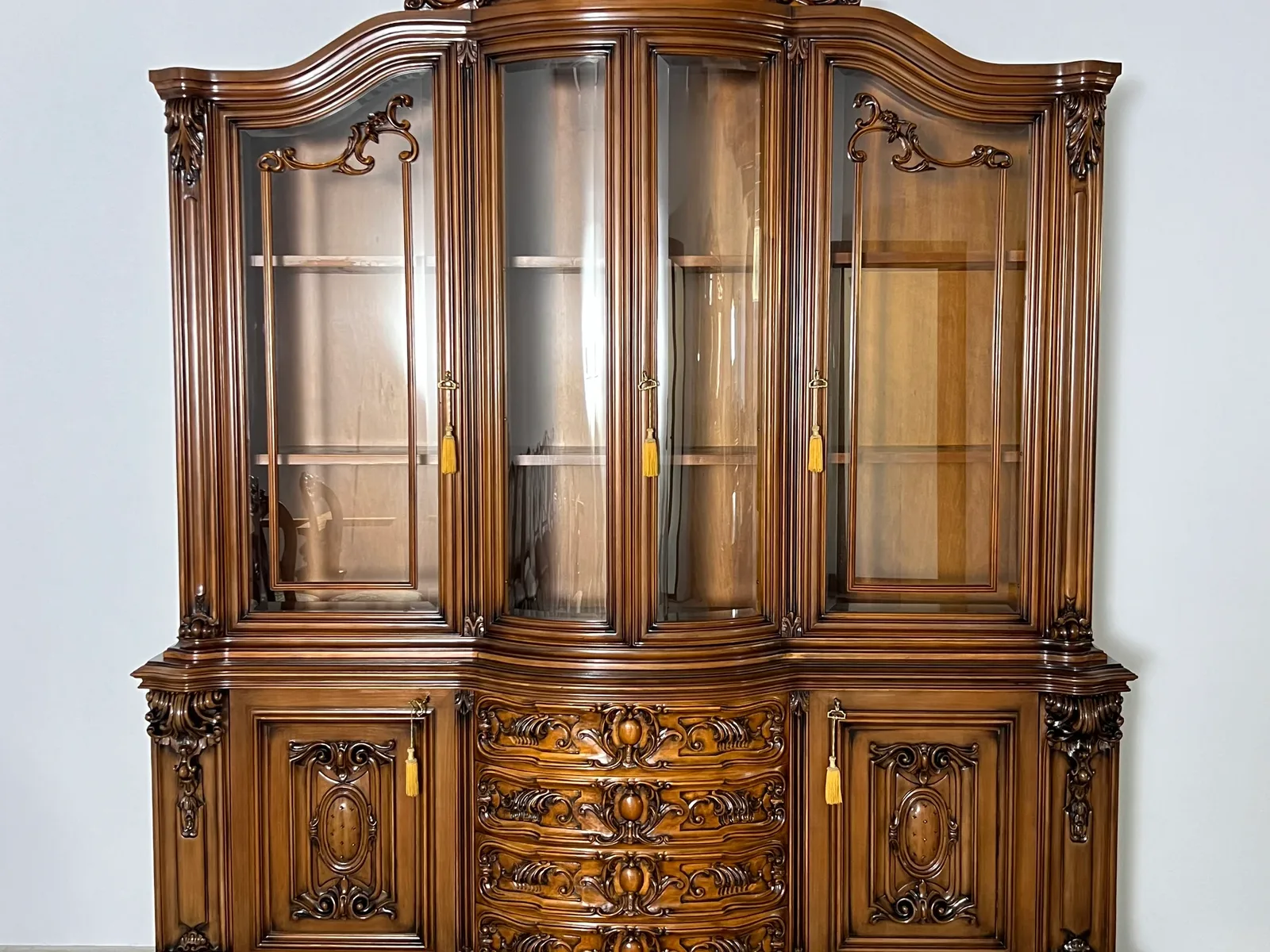
This is where the gulf shows most clearly. Modern series furniture relies heavily on melamine chipboard, MDF and veneers a fraction of a millimetre thick, glued onto a core that cannot be repaired. A deep scratch effectively means the end of the piece. The one-of-a-kind pieces we select are, almost without exception, made of solid wood — walnut, oak, cherry, mahogany — timbers worked in an age of craftsmanship, with dovetail joints and structures built to last generations. Such wood can be maintained and brought back to life dozens of times. If you want to learn to tell the difference with your own eye, we wrote a dedicated guide on how to recognise quality solid wood.
Patina and story: the value that gathers over time
There is one thing no factory can print: patina. It is the fine layer of wax, dust and light that settles on wood across decades, hard to imitate and impossible to rush. Serious collectors know that genuine patina follows use — it appears where hands touch, where drawers slide, where a foot rests. In the same way, a piece's provenance, its documented history, is often the strongest argument for authenticity and can raise its value considerably. A mass-produced piece depreciates from day one. A well-chosen one-of-a-kind piece holds or even grows its value — a subject we detail in the article on quality furniture as an investment that keeps its value.
How to build a home with character, piece by piece
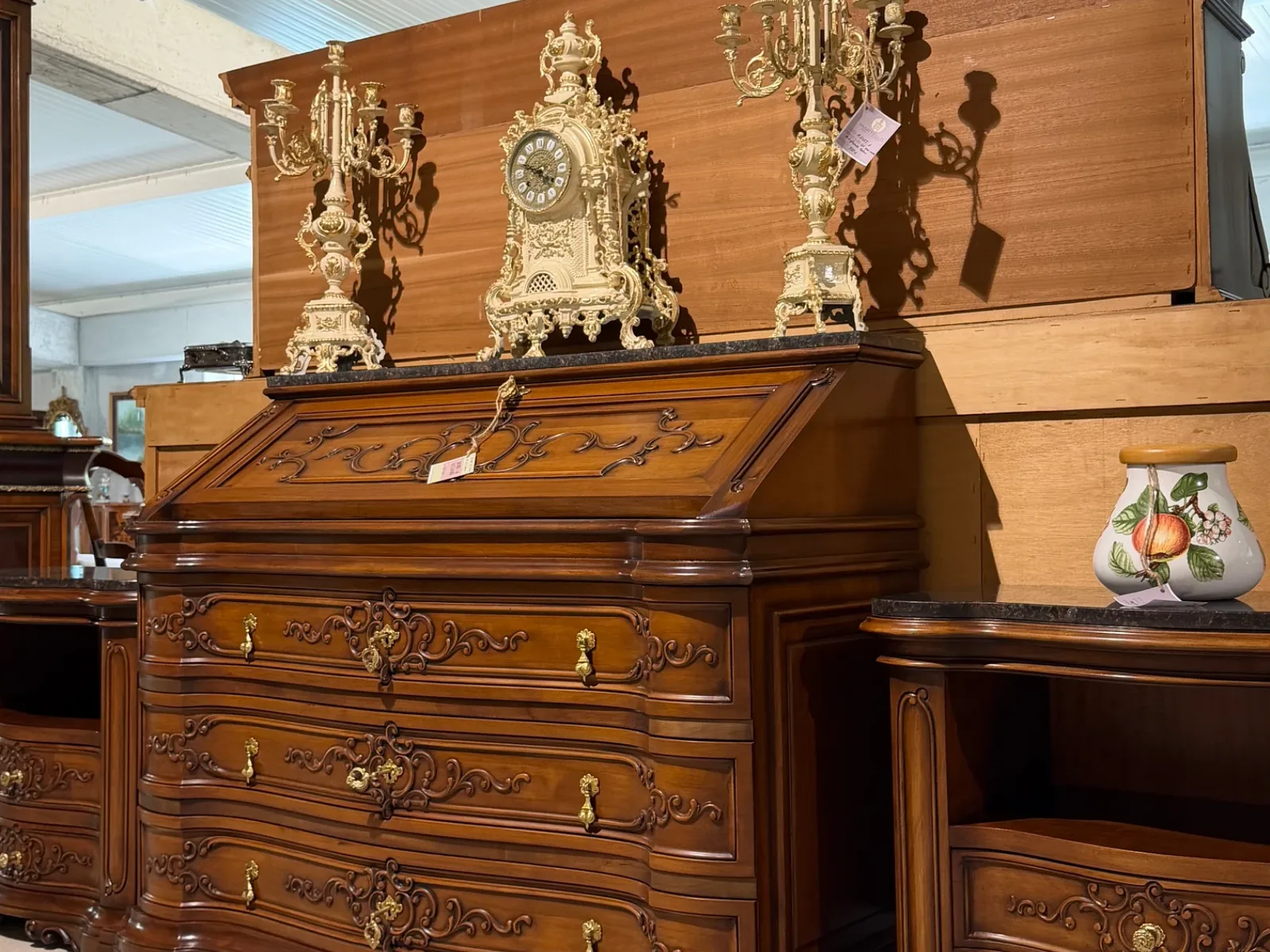
The secret is not to buy everything at once, but to let the home grow. An interior with soul is built over time, adding one piece at a time that resonates with you: a coffee table with a marble top that becomes the jewel of the living room, a vintage armchair that anchors a reading corner, a display cabinet holding the few things that matter. One-of-a-kind pieces combine naturally with more discreet contemporary elements — and it is precisely that contrast which gives depth. If the balance of old and new interests you, it is worth reading how to combine vintage and modern furniture with elegance.
Why the one-of-a-kind piece is the choice of the moment
The trends for 2025 and 2026 confirm what Martello has held from the start. Designers speak of individuality, of interiors that tell the inhabitant's story, of slow curation instead of rushing to fill rooms. Sustainability pushes in the same direction: the most eco-friendly piece of furniture is the one that already exists and will last decades more. The aristocratic aesthetic, with its tactile materials and quiet elegance, rests on exactly these principles — we explore it at length in the guide to the aristocratic style in interior design.
How to choose at Martello, across Moldova and Romania
Every piece in our collection is selected one by one, for its character, its timber and its condition. You can see and touch them in the showroom in Nimoreni, Ialoveni, fifteen minutes from Chișinău, or discover them across the entire Martello collection in the catalogue. If pieces with history appeal to you, the vintage furniture section is where the most beautiful interior stories begin. Choose the single piece that speaks to you — and let the home build itself around it. Because in the end, a one-of-a-kind piece does not decorate a space; it turns it into yours.