How to mix vintage and modern furniture with elegance, not museum stiffness
The most common reason a living room "doesn't come together" isn't a lack of budget — it's the lack of a clear mixing rule. You have a contemporary sofa, a table with minimal lines, perhaps a quiet rug, and the room still feels cold, like a showroom rather than a home. The answer isn't to pick a side, vintage or modern, but to make them talk to each other. A chest of drawers carrying the patina of time next to an armchair with clean lines doesn't create conflict, it creates depth: the contrast between eras is exactly what gives a home the feeling of being curated, not bought from a single catalogue. At Martello we see this pattern constantly with clients from Chișinău to cities across Romania: memorable homes always combine at least two furniture eras, with restraint and a single anchor piece.
Start from one statement piece, not a shopping list
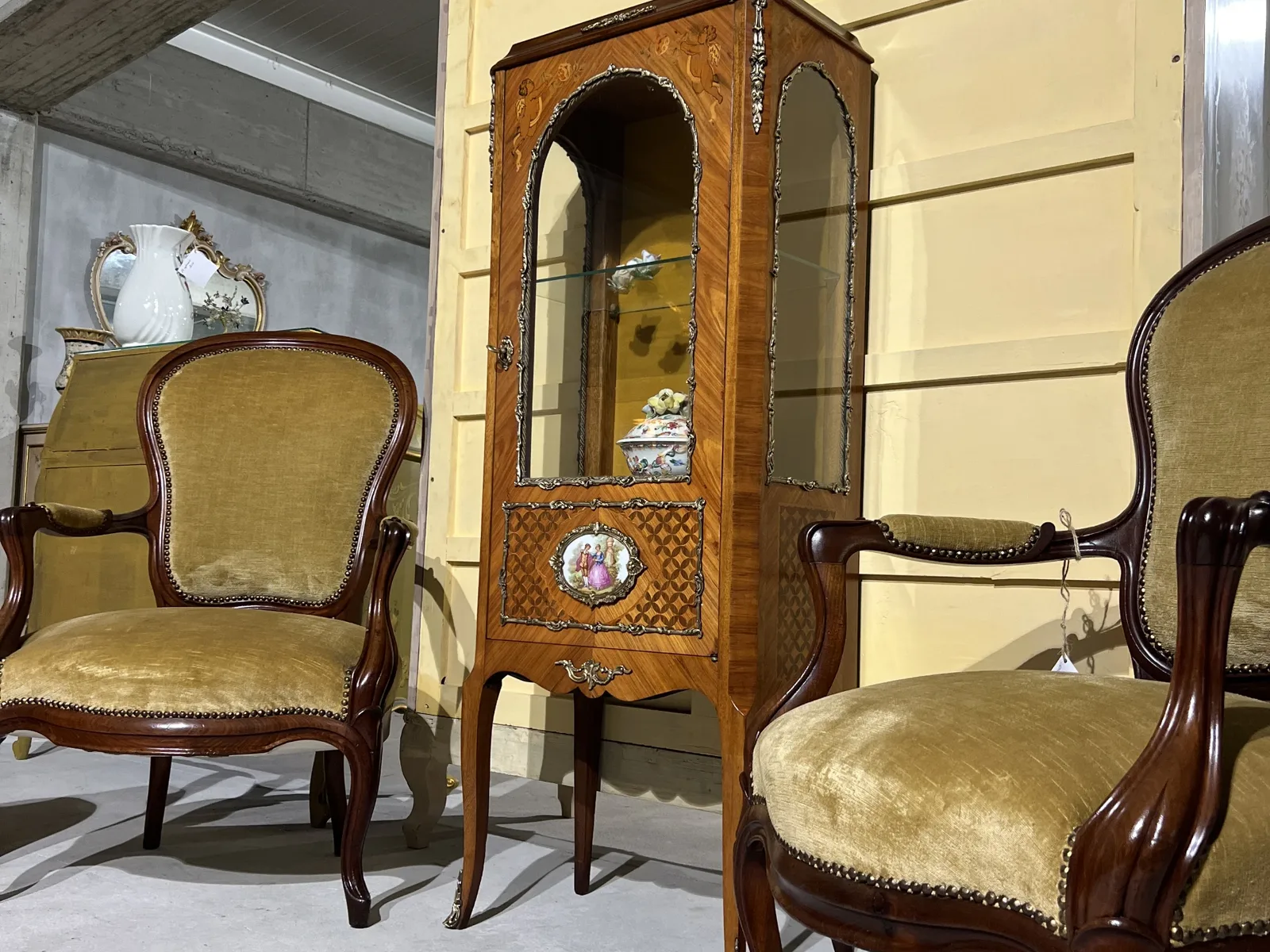
A successful room doesn't begin with "what am I still missing" but with a single piece around which everything else is built. It could be an inherited vintage display cabinet, or a walnut-veneer chest discovered in the Martello collection. This piece becomes the anchor: the rest of the furniture, however contemporary, relates to it through colour, proportion, or material. Without an anchor, any mix of styles reads as accidental; with one, even a modern sofa gains historical weight by association.
A unified colour palette holds everything together
The difference between a successful eclectic living room and a chaotic one almost always lies in the palette. Choose three or four base tones — warm wood shades, a velvety beige, an accent of deep green or burgundy — and repeat them across both the vintage and the modern pieces. An aristocratic colour palette, built from natural, earthy hues, works beautifully precisely because it blurs the gap between eras: the eye registers colour harmony before it notices the difference in style.
Play with contrasting textures and forms
Vintage furniture usually brings carved lines, curves, subtle ornament, and solid wood aged by decades. Modern furniture brings straight lines, smooth surfaces, metal or glass. Placed carefully side by side, these contrasts flatter each other: a vintage armchair in velvet upholstery next to a straight, modern sofa becomes the room's focal point precisely because it is different. The golden rule is never to mix more than two dominant textures per room — beyond that, the effect turns visually tiring instead of refined.
Respect proportion: a substantial piece needs room to breathe
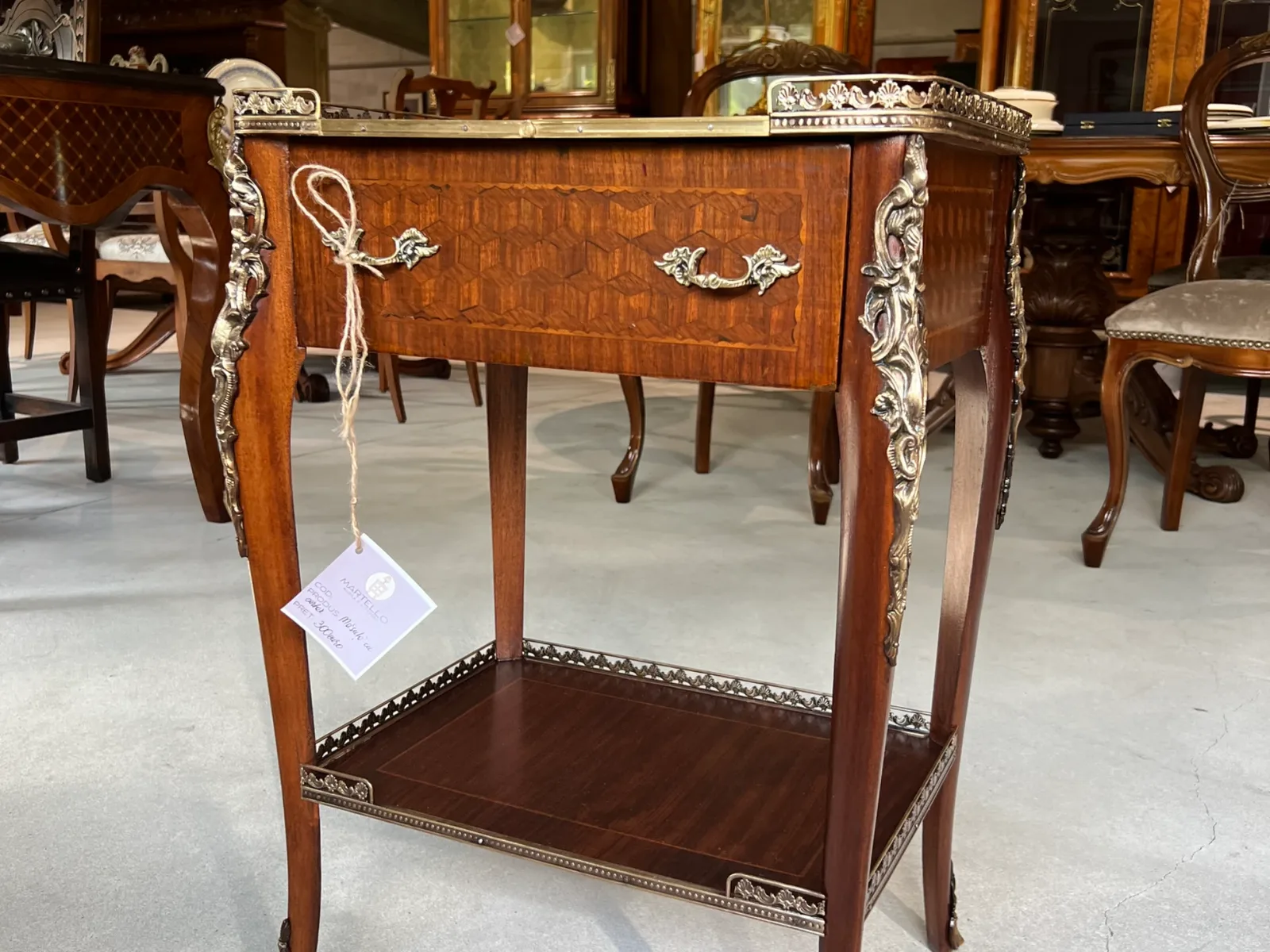
Authentic vintage pieces, especially those in solid wood, often carry a stronger physical presence than modern furniture, which is designed for slim lines and efficient production. When combining the two worlds, leave space around the older piece — a bare wall behind a bombé chest, a clear zone next to a floor clock — so its visual weight doesn't collide with the density of contemporary furnishings. In smaller living rooms, one generous vintage piece says more than three small ones mixed without hierarchy.
Rugs and textiles are the invisible thread
If the colour palette is the skeleton of the mix, textiles are the thread that stitches it together. A well-chosen rug, with a discreet pattern or a tone that echoes both the vintage wood and the modern upholstery, visually unifies pieces that would otherwise share nothing. Cushions, curtains, and throws can pick up a single decorative detail from the statement piece — a colour from its carving, a shade from its patina — and repeat it quietly throughout the room, creating a narrative thread the eye follows without consciously noticing it.
An often overlooked yet decisive factor is light. A solid-wood vintage piece with a natural finish behaves completely differently under cool light than under warm light. Cool, industrial-style bulbs flatter the lines of modern furniture but flatten the patina and warmth of old wood, making a vintage piece look like it came from storage rather than a well-kept home. Warm, dimmable, layered lighting — a reading lamp beside the armchair, a discreet chandelier above the table, hidden spots for decorative accents — flatters both the aged veneer of older pieces and the clean lines of modern ones, without creating a visual break between styles. In homes across Chișinău and the rest of Moldova, where autumn and winter evenings run long, this detail matters even more: a well-lit room, with warm, well-placed sources, is what separates a coherent design from a mere mix of styles.
Don't confuse "vintage" with "old and worn out"
The difference between an elegant combination and one that looks simply dated lies in the quality of the vintage pieces chosen. An authentic, well-preserved vintage piece, with solid structure and a cared-for finish, will sit beautifully next to quality modern furniture. A worn piece with no design value will throw off the balance no matter how good the rest of the room is. That's why at Martello we don't manufacture furniture — we curate one-of-a-kind pieces, each checked for structure and authenticity, knowing that once sold, it never reappears in the showroom.
Common mistakes to avoid
The most frequent mistake is mixing too many eras at once — baroque, mid-century, industrial, and minimalist in the same room create visual noise, not refined eclecticism. The second is treating the vintage piece as secondary decor, tucked into a corner, instead of giving it the central role its patina and history deserve. The third is ignoring scale: a low vintage chest next to a very tall modern sofa breaks the visual balance of the whole room, even if each piece, taken alone, is beautiful.
If you'd like to see this combination in person, visit the Martello showroom in Nimoreni, Ialoveni, just 15 minutes from Chișinău, where vintage and contemporary pieces sit side by side, ready to be matched to your home. Browse the full range in the Martello catalogue, or explore the vintage furniture category directly for truly one-of-a-kind anchor pieces.