Vintage or Antique: How to Choose the Right Piece for Your Home
You're facing a decision many buyers put off for months: a 1960s vintage chest of drawers, with clean lines and half a century of story, or a genuinely antique piece, over a hundred years old, with fine marquetry and a particular historical weight? Both can be excellent choices — the real question isn't which is "better" in the abstract, but which fits you, your home, and how you actually live in it. This guide doesn't retrace the definitions step by step — you'll find those in full in our guide to vintage furniture and antiques — instead, it helps you decide, practically, which direction to take.
Briefly, as a starting point: a vintage piece is at least 20 years old — typically a few decades, most often from the 1950s-1980s — and carries the clear stamp of a style such as Art Deco or Mid-Century. A genuine antique is at least 100 years old, often coming from the nineteenth century or earlier, made using techniques nearly lost today. That age gap isn't just a historical curiosity — it translates directly into price, into how the piece behaves in your home, and into how much effort it takes to keep it as you found it. And if the “Old Money” look appeals to you — the quiet, understated elegance of family interiors — both categories work, as long as you choose solid wood and pieces with history; see our guide to the aristocratic style.
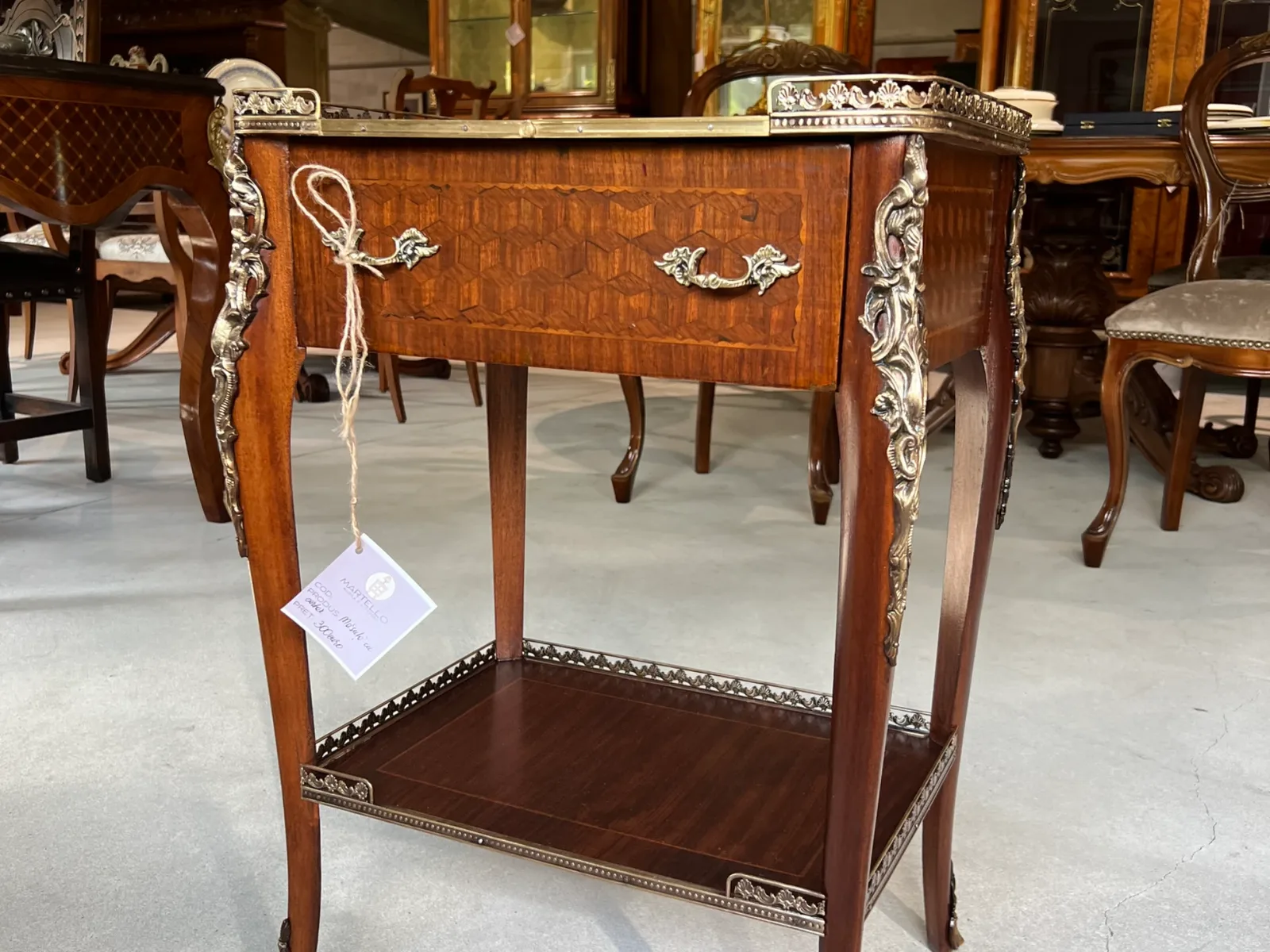
An everyday piece or a statement piece: your profile matters more than the label
The first question worth asking isn't about age — it's about role. Do you need a chair you sit on daily, a chest of drawers for seasonal clothes, a desk you lean your elbows on for hours? Then vintage furniture is, in most cases, the wiser choice — wood from the 1960s-70s was built for everyday use, the structure is robust, and one more scratch doesn't change the piece's character, it simply adds to it. If instead you're looking for the piece that "anchors" a room — a rarely opened display cabinet, a wall mirror, a hallway chest no one uses as storage — then a genuine antique with marquetry or inlay shows its full potential right there, as an object to be admired rather than handled daily. The simple rule: the more a piece gets touched, opened, and drawn into daily routine, the more robust vintage wins over the refined fragility of an antique.
Realistic budget: what to expect, in relative terms
Without inventing exact figures — price depends enormously on the piece, the wood species, and condition — there is nonetheless a consistent pattern in the market: genuine antiques, rarer and harder to find in good condition, typically cost more than comparable vintage pieces of similar size and function. Rarity explains the gap — for every curved 1960s chest still in circulation, there are far fewer genuine nineteenth-century pieces, intact and with credible provenance. If your budget is aimed at one memorable piece but limited, vintage gives you more value for every leu spent — strong character, solid structure, a more accessible price. If your budget allows and you're after exactly that rare piece with historical weight, a genuine antique remains, as we explain in our article on quality furniture as an investment, an asset that holds or even grows in value over time.
The upkeep commitment: how much time and care you're willing to give
This is where the vintage-versus-antique difference gets very practical. Vintage furniture, usually built from solid walnut, oak, or cherry with simple finishes, tolerates everyday life well — a periodic wipe-down and the occasional wood oil are enough. Antiques with gold leaf, fine marquetry, or intricate inlay demand a completely different discipline: constant humidity, strict avoidance of direct light, and, for any significant intervention, a specialist's advice rather than an occasional restorer's. If you already know you don't have the time or patience for that level of attention, be honest with yourself before buying — a well-chosen vintage piece will give you steady satisfaction without the constant pressure of fragility.
Authenticity, briefly: what's worth checking either way
We won't retrace the full authenticity test here — wood weight, joint type, patina uniformity — because we cover it step by step in our guide to recognizing quality solid wood. We'll keep just the principle: whether you choose vintage or antique, always check the structure before the looks. A piece that's beautiful to look at but has compromised wood isn't a good choice at any price, regardless of its claimed age.
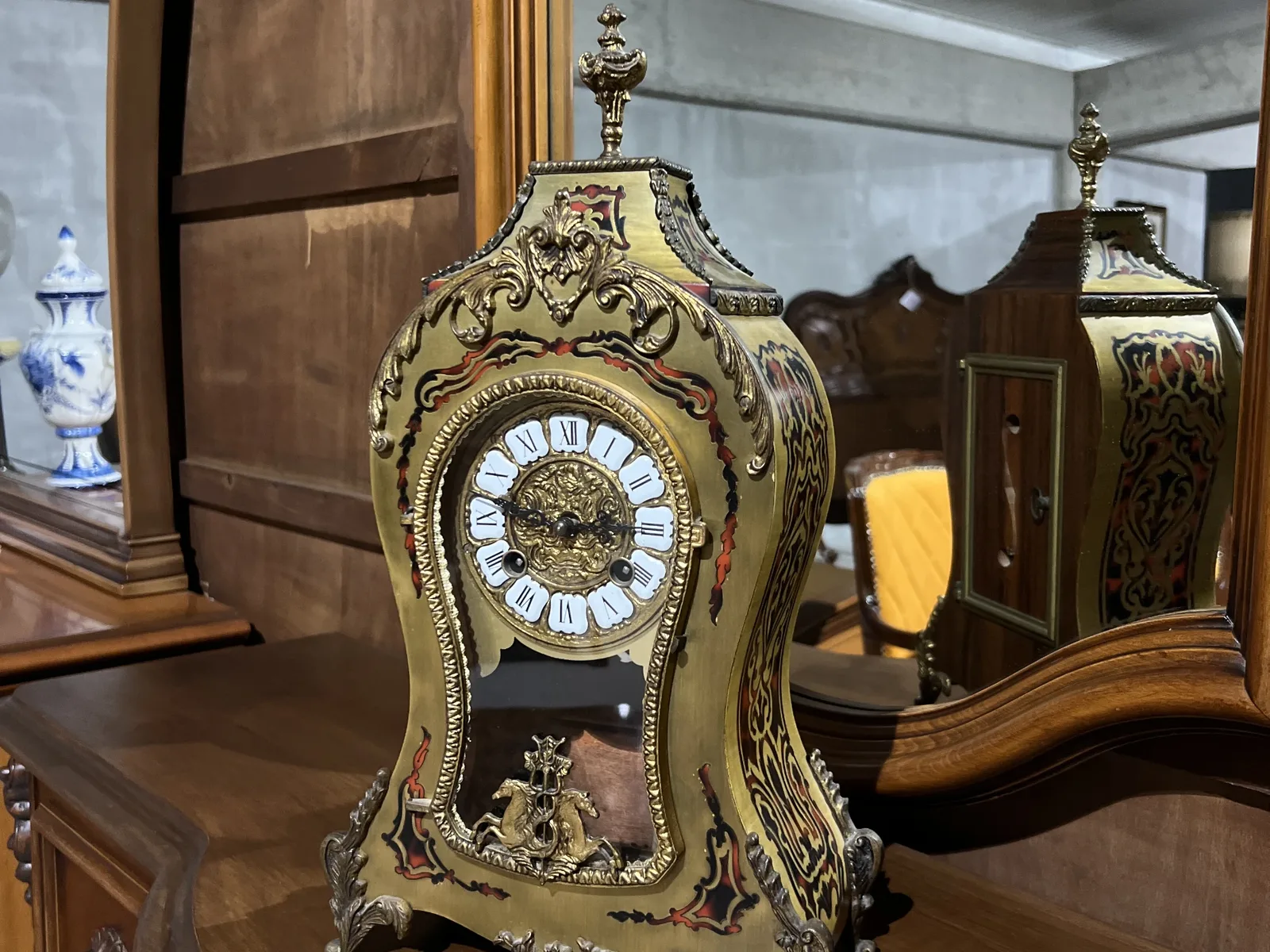
What the choice looks like in a modern interior
The good news is you don't have to pick a single direction for the whole house. A contemporary home actually benefits from the mix: robust vintage pieces in daily use, in the kitchen or the study, and one or two genuinely antique pieces treated as focal points in the living room or hallway. We walk through exactly how to build that balance without it feeling forced in our guide to combining vintage and modern furniture. The core idea stays simple: every piece earns its place through the role it plays in your home, not just through its age.
4 questions to ask before you buy
Before deciding, run the piece through this short test. How often will it be touched? Daily means vintage; rarely means you can also consider an antique. How much ongoing upkeep are you willing to sustain? If the answer is "minimal," stick to robust pieces, not gold leaf or fragile marquetry. What role does the piece play in the room — utilitarian or statement? A kitchen chair and a living-room display cabinet have completely different requirements. And finally, how much does documented history and rarity matter to you, beyond function? If the answer is "a great deal," a genuine antique is worth the extra budget; if you prefer character without practical compromise, vintage remains the wiser choice.
One-of-a-kind pieces, chosen for your profile
At Martello we don't manufacture furniture — we curate one-of-a-kind pieces, vintage and classically inspired, each chosen for its condition, rarity, and fit with a particular type of home and buyer. You'll find them in our showroom in Nimoreni, Ialoveni, 15 minutes from Chișinău, with delivery across Moldova and Romania. Explore our vintage furniture collection for robust, everyday pieces, or browse the full Martello catalog if you're after that rare statement piece capable of giving an entire room its weight. Whichever you choose, every piece is one of a kind — once sold, it never repeats.