The Vintage Vitrine: The Piece That Turns a Collection Into a Study in Taste
In every thoughtfully composed home there comes a moment when the eye settles not on the sofa or the table, but on a vitrine. Behind the glass, a porcelain service, a few old books, an inherited vase, a small sculpture suddenly acquire importance. A vintage vitrine does exactly that: it does not store, it stages. And in 2026 it is returning with real force, precisely because interiors are turning back toward carefully gathered objects, collected colour and personal stories rather than industrial uniformity.
Why the vintage vitrine is back in force
Design trends for 2026 speak of a warmer, more layered elegance, one in which pieces with history matter more than novelty. Interiors are built from objects gathered over time, from hand-glazed ceramics, painted surfaces and rich textures. Expressive glass, curvaceous forms and deep palettes, from sapphire blue to emerald green, are returning naturally. In this context the vitrine is no longer utilitarian furniture but a frame. It gives rhythm to a wall, adds verticality to a room and, through its transparency, lets light circulate instead of being blocked by a solid cupboard. It is no accident that designers speak of the vitrine as a piece that delivers, in a single gesture, volume, transparency and a layer of honest nostalgia that new furniture simply cannot buy.
How to recognise a quality vintage vitrine
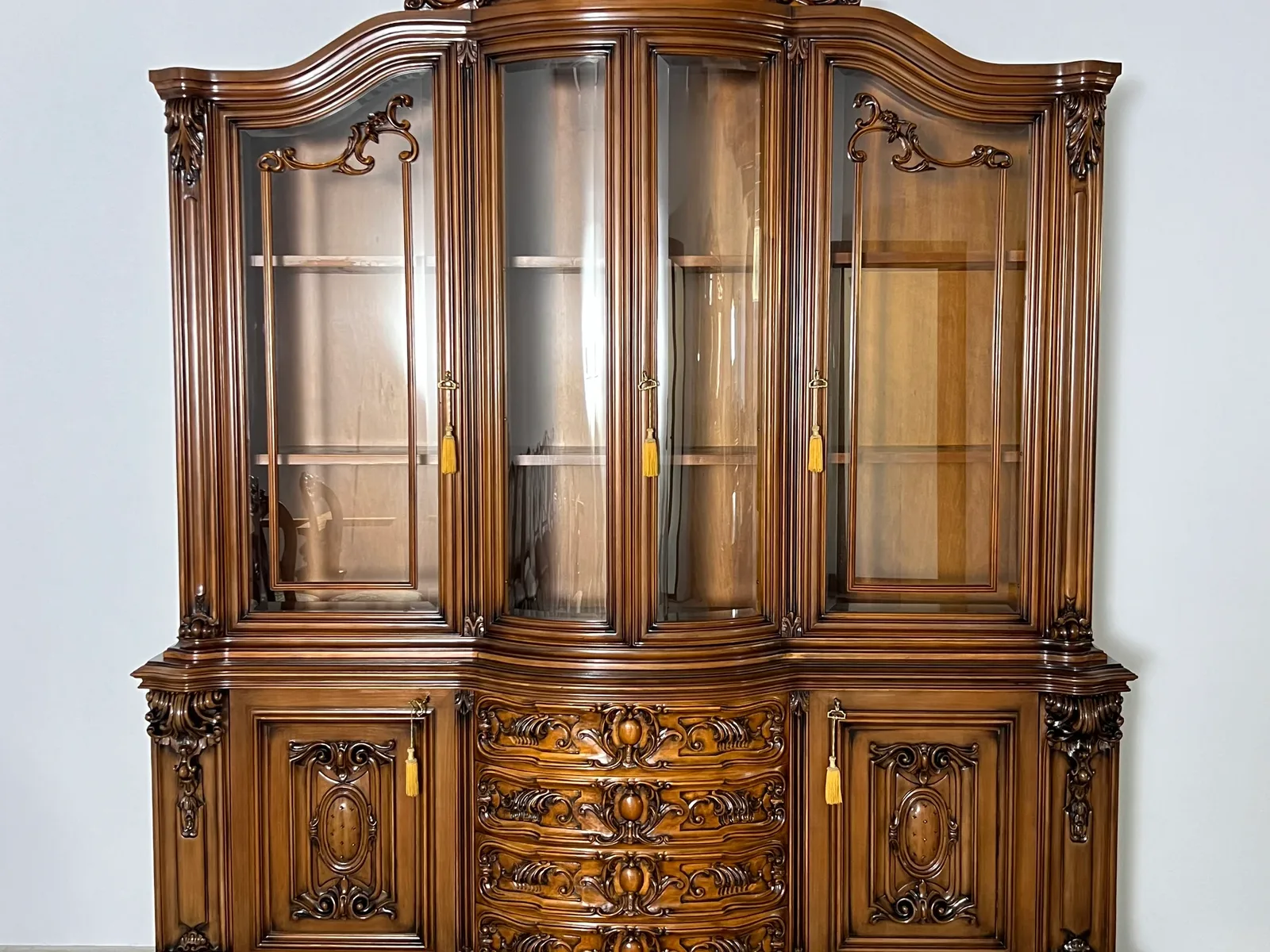
The difference between an ordinary piece and a remarkable one is read in the details. Look at the species of wood: walnut, oak or cherry age beautifully and develop a patina no modern veneer can imitate. Check the joinery, the weight, the way the doors close, the original glass with its small imperfections that betray its age. Bronze hardware, working keys, adjustable shelves and a solid-wood back rather than thin plywood are signs of genuine quality. Another precious clue is the glass: old panels, sometimes curved or bowed, with a faint veil in their transparency, are almost impossible to reproduce today and lend the piece an unmistakable character. At Martello we select each vitrine with exactly this critical eye, because a well-chosen piece stays beautiful for decades. To better understand how authentic wood reads, it is worth reading the guide on caring for vintage wooden furniture.
Styles worth knowing
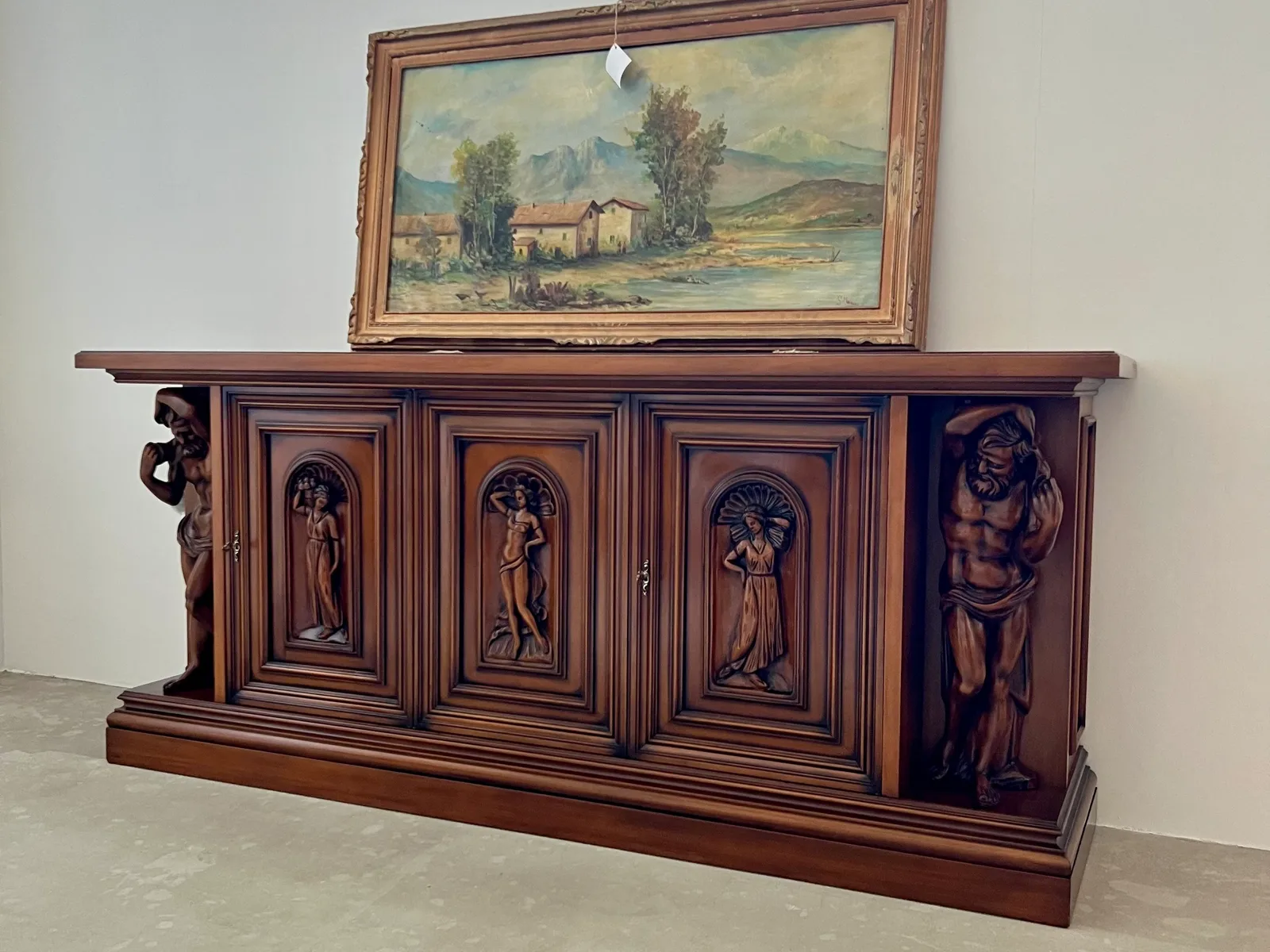
A vintage vitrine is not an anonymous object but part of a tradition. The Louis XVI style brings straighter forms, a neoclassicism inspired by antiquity, with fluted legs and balanced proportions. The earlier Louis XV style is recognised by generous curves and a decorative, rococo air. Biedermeier vitrines, which appeared in Central Europe after the Napoleonic wars, are perhaps the most modern to the eye: clean lines, luminous veneers, ornament reduced to the essential, often with ebonised accents. There are also tall vitrines, with slender legs and a single glazed body, designed for drawing rooms, as well as buffet vitrines — lower and heavier, suited to standing beside the dining table. Knowing which family your piece belongs to helps you present it correctly. We explored these nuances further in the article on vintage furniture versus antiques.
What to display, and how to do it with taste
A poorly arranged vitrine clutters; a considered one breathes. The secret, decorators say, is variation: objects of different heights, textures that complement one another, empty spaces that let the eye rest. Group blue-and-white porcelain on the shelves, a few leather-bound volumes, a vase, a piece of coloured glass. Do not fill every centimetre. The editorial rule is simple: fewer objects, but chosen ones, say more than a crowded collection. A tried-and-tested trick is to work in odd-numbered groups, of three or five objects, and to quietly repeat one colour, a thread of blue or a gilded accent, from one shelf to the next, so the eye always has somewhere to travel. For the accents that make the difference, draw inspiration from our guide on the Sicilian vase and decorative accents, which sit naturally behind glass.
Where to place it and how to light it
Position changes everything. A vitrine works beautifully on a living-room wall, in the dining room beside the table, in a hallway that welcomes guests, or even in an elegant study as a mark of refinement. Ideally, give it a wall of its own, so it does not compete with too many paintings or the television and remains the protagonist. Avoid direct sunlight, which fades the wood and the textiles inside. A warm, indirect light, on the other hand, turns the vitrine into an almost theatrical object come evening. Layers of light, a chandelier above, a lamp alongside, a discreet LED on a shelf, make the objects glow. You will find the full principles in the article on refined ambient lighting. And if you are working with a contemporary interior, the old vitrine becomes a striking counterpoint, as we explain in the guide on how to combine vintage and modern furniture.
A one-of-a-kind piece, never a repeat
The charm of a vintage vitrine lies precisely in the fact that it does not repeat. Every piece in the Martello collection has its own history, its own patina, its own small imperfections that make it alive. Once sold, it does not return, and that is its very beauty: you will not walk into another home and see exactly the same vitrine. You can view them at leisure in our showroom in Nimoreni, Ialoveni, just 15 minutes from Chișinău, from where we deliver across Moldova and Romania. Explore the vintage collection or browse the full Martello catalogue to find the piece that will showcase your collection for years to come.