Refined ambient lighting: how light turns an interior into an aristocratic home
In a premium interior, light is never a technical afterthought — it is a compositional tool, as important as the choice of furniture or textiles. A well-placed chandelier, the warm glow of a table lamp in the right corner, or the quiet reflection in a mirror can completely change how a room feels. At the Martello showroom in Nimoreni, Ialoveni, just 15 minutes from Chișinău, we see time and again how fine furniture reveals a different depth once it is placed under thoughtfully layered light. This guide walks through the principles of refined ambient lighting — light layering, colour temperature and the role of the chandelier — for anyone who wants a truly refined interior, not simply a lit one.
Why layers of light matter
Interior designers speak of three essential layers: ambient (general) light, task light and accent (decorative) light. An aristocratic interior never relies on a single strong ceiling fixture; instead it draws on a combination of these layers, activated differently depending on the time of day. In the evening, general lighting can be dimmed to a minimum while table lamps and wall sconces take over, creating an intimate scene. This layering technique is exactly why European manor houses and boutique hotels always feel warm, whatever the hour. A well-fitted dimmer on every circuit is, in fact, the simplest investment for controlling all these layers with a single gesture, without swapping bulbs or fixtures every time a different mood is needed.
Colour temperature: the difference between a cold room and a welcoming one
Colour temperature, measured in Kelvin, defines the tone of light: below 3000K the light is warm and golden, close to candlelight; above 4000K it turns white and clinical, suited to an office but rarely to an elegant living room. For living areas and bedrooms, we recommend sources between 2200K and 2700K — the range in which solid wood, velvet and bronze show their colour and texture at their best. A piece made from walnut, oak or cherry only reveals its true depth under warm, well-calibrated light. Beyond Kelvin, it is worth paying attention to the Colour Rendering Index (CRI): for solid-wood pieces and fine upholstery, a CRI above 90 preserves the true tones of the materials, while cheaper sources with a low CRI can make them look dull and artificial.
The chandelier: the centrepiece that gives a room its character
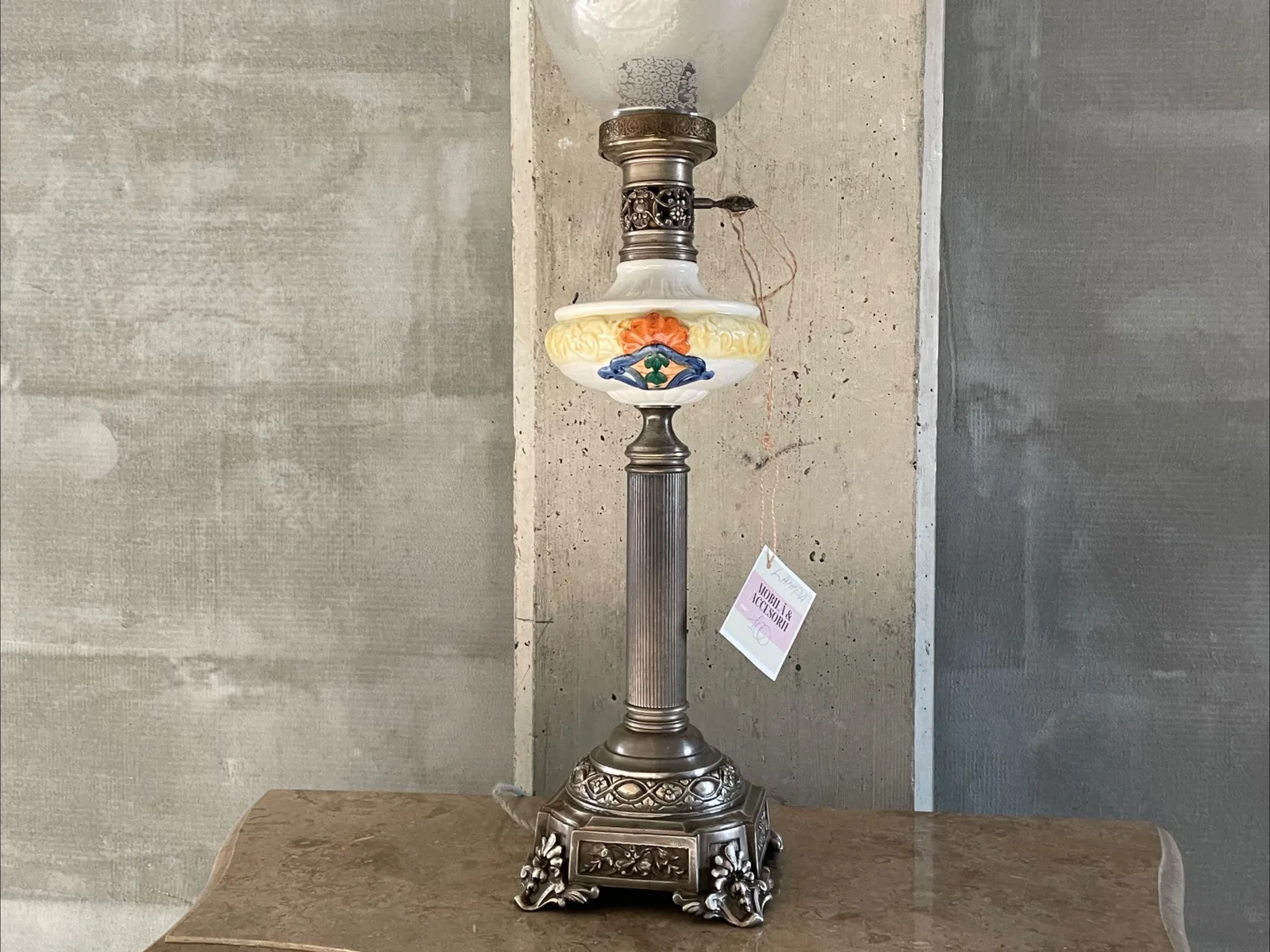
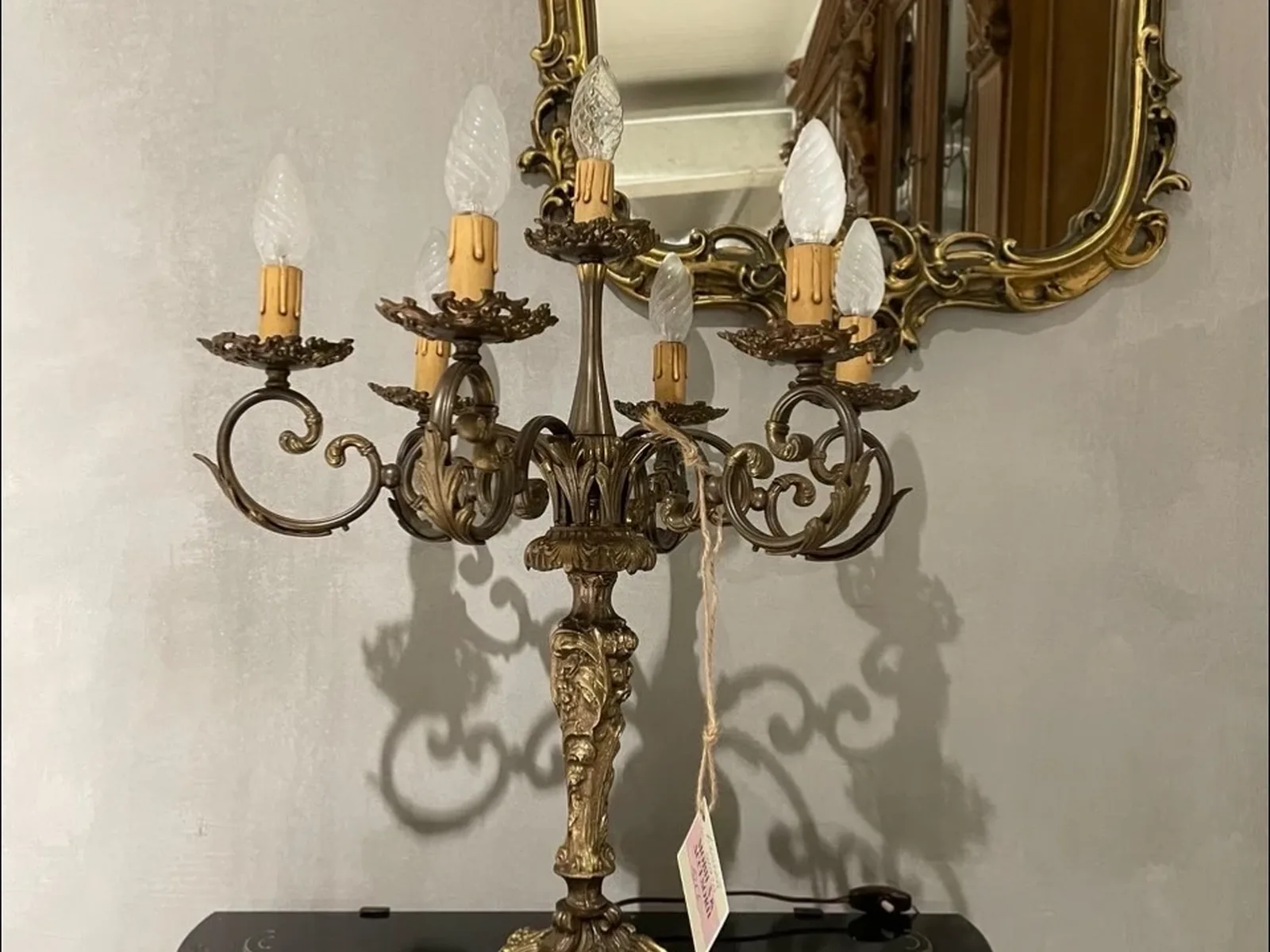
A chandelier in crystal, bronze or porcelain is never just a light source — it is a piece of jewellery for the room, visible from every angle. Choosing one depends on the proportions of the space, the ceiling height and the overall style of the furniture: a grand, baroque chandelier calls for a generous dining room and equally statement furniture, while a hand-painted porcelain model suits a more romantic bedroom. For a deeper look at materials and shapes, read how to choose the right chandelier or the guide to refined chandeliers. Within the Martello collection, every chandelier is chosen for its rarity — once sold, it will not reappear in the showroom.
Table lamps, sconces and accent light: evening needs its own script
After sunset, general lighting should come down, letting low sources take the lead — table lamps on a console, wall sconces, or hidden lighting inside a display cabinet. A vintage table lamp with warm light placed beside a reading chair or on a nightstand entirely changes a room's mood, turning a functional space into a comfortable one, ready for the evening. This kind of accent lighting is just as essential in a bedroom styled after a boutique hotel, where privacy matters as much as elegance.
Lighting room by room: living room, dining room, bedroom and study
Every room follows its own lighting logic. In the living room, pair a chandelier or a discreet ceiling fixture with two or three accent sources — a table lamp, a sconce, perhaps hidden light behind a bookcase. In the dining room, a chandelier hung at the correct height above the table sets the entire scene for a festive dinner. In the bedroom, avoid relying on strong overhead light in the evening and favour symmetrical lamps on either side of the bed. In the study, a task lamp with neutral light around 3000–3500K supports concentration without tiring the eyes through the day.
Materials that amplify light: marble, mirrors and patinated metal
Good lighting also depends on the materials around it. Marble reflects warm light gently and adds depth to a room, mirrors framed in solid wood multiply light sources and visually widen a space, while patinated bronze or brass on furniture legs catches small reflections that give a room a lived-in, jewel-like quality. These details, paired with well-considered lighting, are the true signature of an authentic aristocratic interior — refined, never loud.
Common mistakes to avoid
The most frequent mistake is relying on a single strong ceiling fixture with no additional layers — the result is a flat room with no depth. The second is mixing different colour temperatures within the same space, which creates a visually inconsistent effect. The third is misjudging the chandelier's proportion relative to the room: a model too small gets lost, one too large overwhelms the space. Avoiding these simple pitfalls is what separates a correct interior from a memorable one.
To see these principles applied to real pieces, visit the Martello catalogue or browse the chandelier collection, where every piece is selected for its rarity and character. The showroom in Nimoreni, Ialoveni remains the ideal place to see how crystal, bronze and solid wood respond to both natural and artificial light, before choosing the right piece for your home.