Refined Chandeliers: What Size and Height to Choose for Each Room
The most common mistake when choosing a chandelier has nothing to do with taste and everything to do with proportion: the piece gets picked straight from photographs, admired for its shape and sparkle, without ever being measured against the room's actual dimensions. The result only becomes visible after installation — a chandelier that's too small looks like a lost jewel under a generous ceiling, while one that's too large dominates the space aggressively, "eats" the air out of the room, and turns a refined piece into something hard to look at. Getting the size right isn't a minor technical detail — it's the foundation every lighting decision should start from. Before choosing the material — crystal, bronze, or porcelain — it's worth working through this proportion calculation first, since it's the only thing that guarantees the piece you choose will actually work in its space.
The basic rule for a dining room: the right diameter
The starting point is the table, not the room as a whole. A well-chosen chandelier is generally between half and two-thirds the width of the tabletop — generous enough to cover the dining area, but never so wide that it spills past the table's edges and looms over the chairs. For a table set for six, that usually means a mid-sized chandelier, well suited to a dining room of ordinary proportions; for long tables seating ten to twelve, a more elegant solution is often an elongated fixture, or a pair of smaller pieces aligned along the table's length, rather than a single massive centerpiece. The room itself matters too: a smaller dining room may call for a more restrained chandelier than the table alone would suggest, precisely so the overall proportion stays balanced.
Mounting height: the distance from table to ceiling
The second decision, just as important as diameter, is the height at which the chandelier's base hangs. For a standard ceiling, roughly two meters seventy centimeters high, the ideal distance between the tabletop and the base of the fixture is eighty to ninety centimeters — enough not to obstruct the sightline of anyone seated at the table, while keeping the light concentrated exactly where it's needed. For taller ceilings, above two meters eighty, that distance can grow proportionally, a few extra centimeters for every additional interval of height, so the chandelier doesn't end up looking "stranded" somewhere overhead, far from the table. The practical rule stays the same: a chandelier should feel tied to the table, not to the ceiling.
A generous living room versus a small one
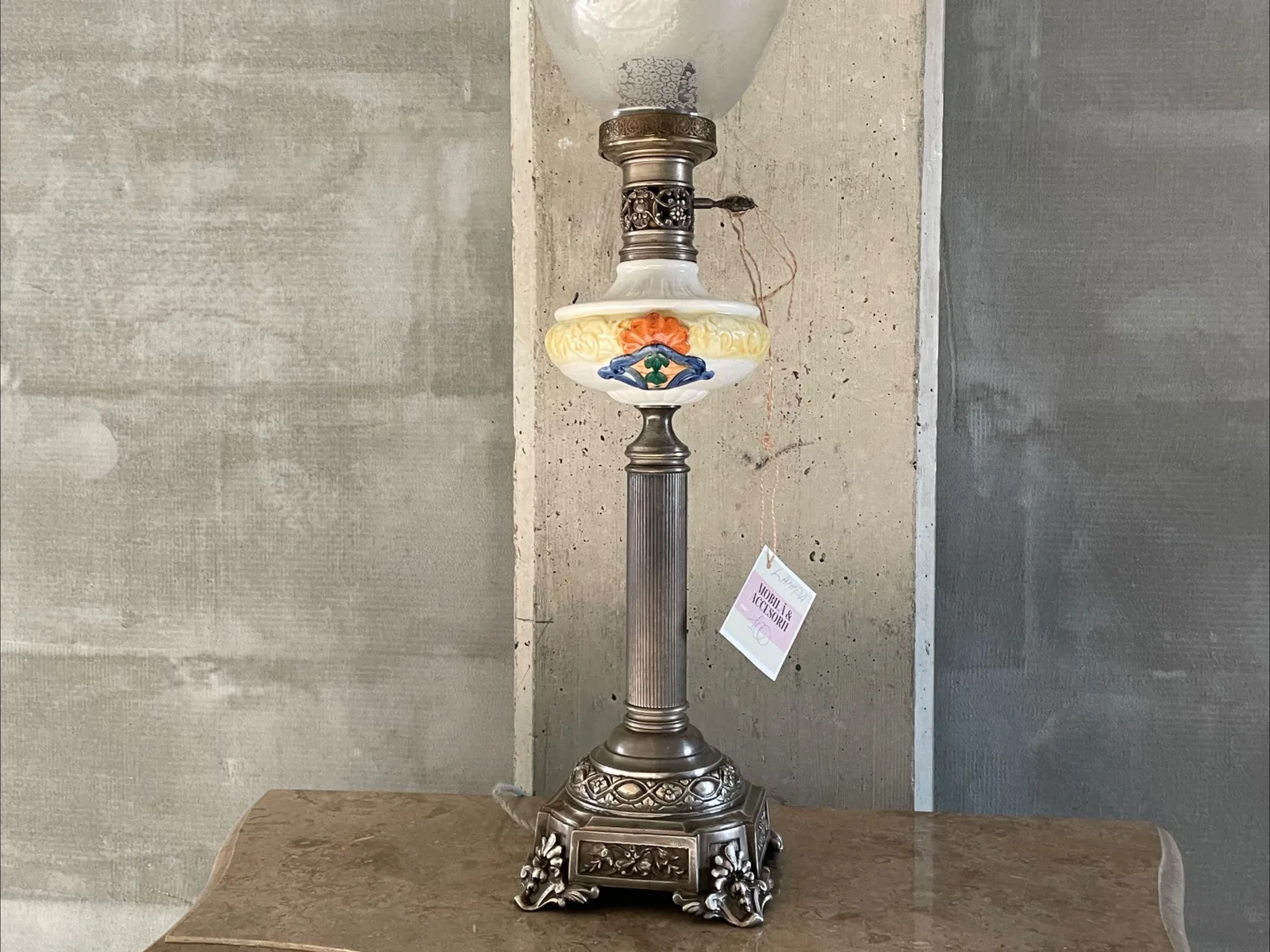
A central chandelier works best in generous living rooms, with high ceilings and enough breathing room around the furniture — there, it can genuinely become the room's focal point, visible from multiple angles. In a small room, or one with a low ceiling, a single large chandelier risks visually overwhelming the entire space and making it feel even more cramped. In these cases, the more elegant — and more aristocratic — solution is to skip the central fixture altogether in favor of a set of wall sconces or table lamps, which spread light across several low, warm points instead of imposing one dominant piece. We've covered this approach in detail, with concrete pairing examples, in our guide to vintage table lamps and warm evening light.
Hallways and interior staircases: proportion on the vertical axis
Hallways and interior staircases follow their own rules of proportion, because the space reads vertically rather than horizontally. A hallway chandelier needs to be narrow enough not to crowd the passage, and tall enough in form — not necessarily in size — to visually fill the void overhead, without hanging so low that it becomes an obstacle. For a stairwell, a different principle applies: the chandelier is often suspended from a long chain or rod so that its lowest point lands roughly level with the top-floor railing, creating a continuous vertical line that visually ties every level of the house together. It's one of the few situations where an elongated, almost sculptural piece works better than a compact chandelier.
The visual signs of a wrong choice
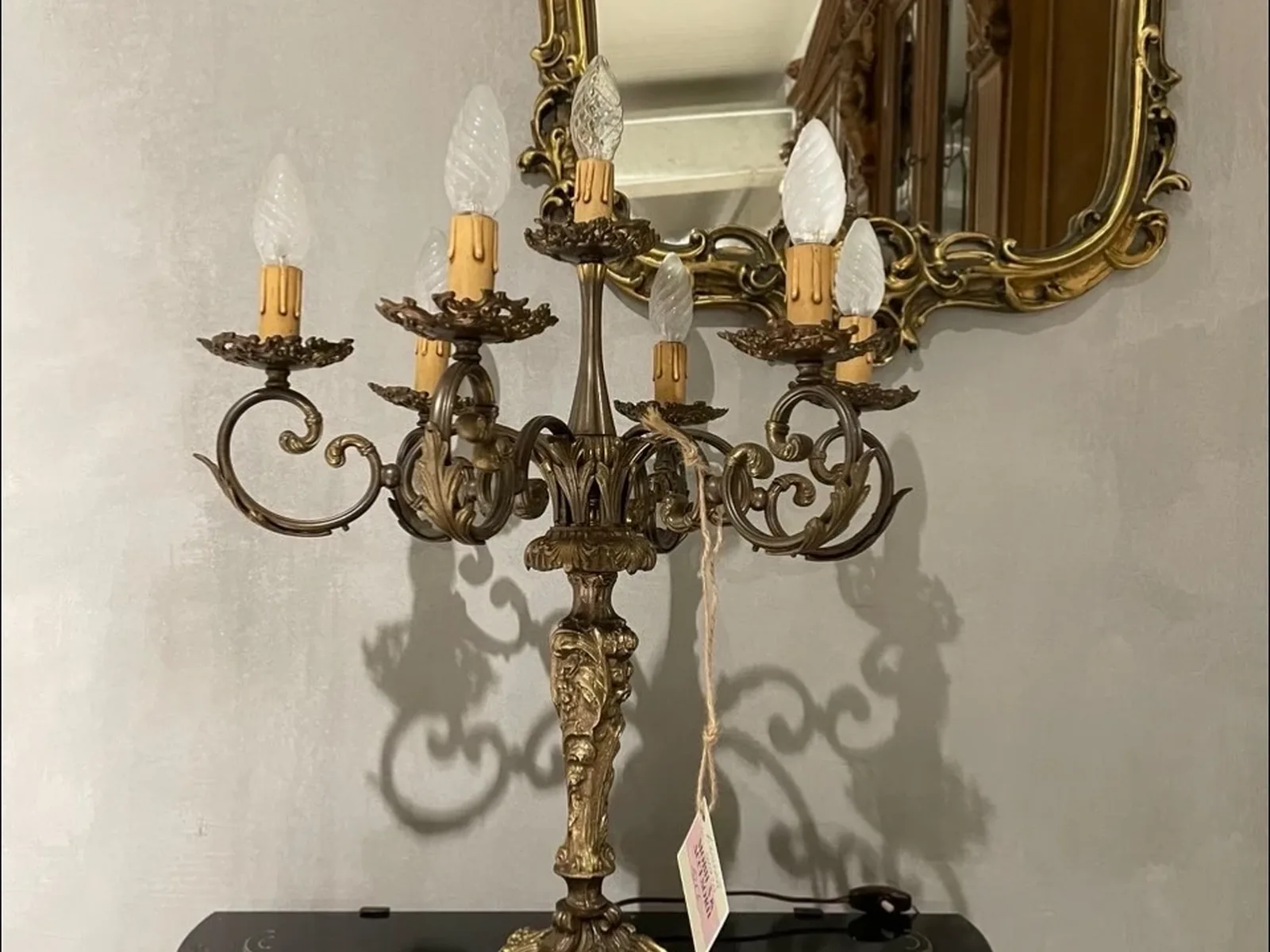
A chandelier that's too small is easy to spot: it looks suspended in empty space, surrounded by too much unfilled room, and its light fails to reach the entire table or seating area, leaving the corners in shadow. A chandelier that's too large sends the opposite signal — it touches or nearly touches the table's edges, visually collides with a nearby mirror's frame or with wall sconces, and, seen from the doorway, reads as the first and only thing in the room, at the expense of everything else. Neither situation tends to reveal itself through repeated glances at photographs — both become obvious instantly, though, once the piece is viewed at true scale, in its own space.
Why testing it in the showroom removes the guesswork
No proportion calculation, however precise, fully replaces the experience of seeing a chandelier hanging at its true height, at its exact dimensions, in a room's natural light. At the Martello showroom in Nimoreni, Ialoveni, roughly fifteen minutes from Chișinău, every piece can be examined up close, at true scale, before it ever comes home — an advantage no photograph, however well shot, can offer. For anyone who wants to explore the full range of sizes, shapes, and materials available, the Martello chandelier collection remains the simplest starting point, and for a direct comparison between materials, the guide to crystal, bronze, or porcelain chandeliers rounds out the decision. And for the bigger picture of how a chandelier fits within a home's layered lighting, the guide to layered ambient lighting gives the full context.