Crystal, Bronze or Porcelain Chandeliers: How to Choose the Light That Sets the Tone of the Whole Room
A chandelier is not merely a source of light; it is the first piece the eye seeks when you enter a room. It fixes the register of elegance before your gaze even reaches the furniture. And the choice begins with the material: crystal, bronze and porcelain tell three entirely different stories about light. Understanding them helps you buy not just a chandelier, but precisely the piece that matches the soul of your home. In the Martello chandelier collection you will find all three families, each a carefully curated rarity.
Crystal: the light that shatters into a thousand sparks
Crystal remains the absolute benchmark of luminous refinement. Its facets break light exactly like a prism, scattering fine reflections across walls and ceiling. In 2026 designers no longer see crystal only in its classic tiered, ballroom form: the trend brings it as an architectural accent — prisms suspended on clean lines, short drops that sharpen the silhouette, garlands that create movement without visual weight. The effect is still unmistakably elegant, yet lighter, more current, easier to place in transitional interiors. A crystal chandelier asks for generous space and, ideally, a high ceiling that lets the reflections breathe. It is the natural choice for a formal dining room or a living room where you want the light itself to be the jewel. It is worth considering the type of crystal too: hand-cut lead crystal plays with light far more vividly than ordinary glass, and the difference is instantly visible in the way the room ignites at dusk. Such a chandelier does not merely light the space — it stages it.
Bronze: warmth that never goes out of fashion
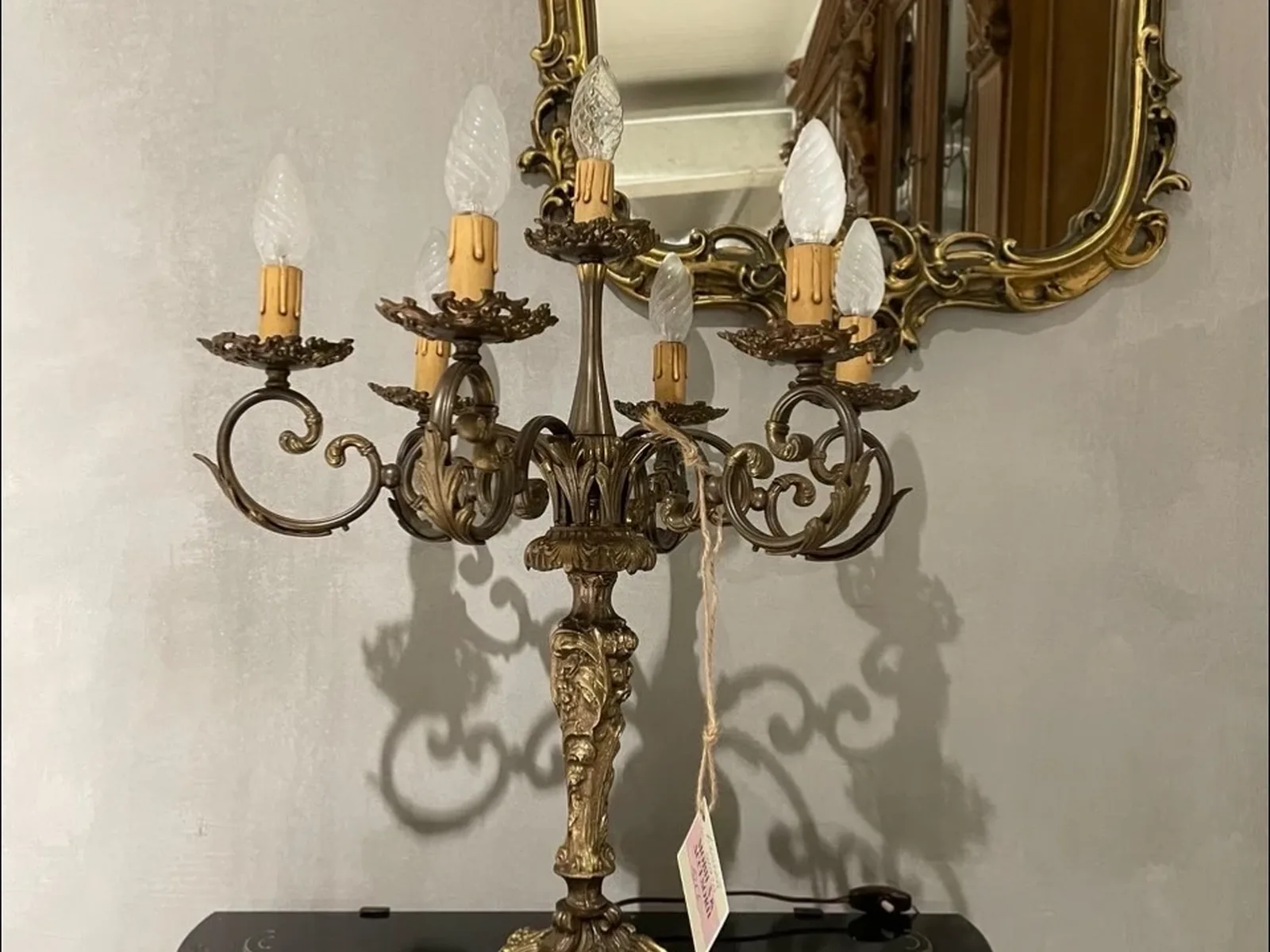
If crystal sparkles, bronze envelops. Its warm patina, from deep gold to antiqued brown, gives a room the air of a manor lived in by generations. Current trends confirm the rise of warm tones — champagne brass, soft gold and muted bronze dominate new collections, often in mixed finishes: antique bronze beside clear prisms, matte arms beside bright connectors. Bronze wears beautifully in interiors built on the aristocratic colour palette, where noble textures matter more than spectacle. It is the material that ages gracefully: the more time passes, the more precious the patina becomes. A bronze chandelier sits equally well with the solid wood of a classic dining room and the modern accents of a transitional interior, precisely because its warm neutrality ties the styles together.
Porcelain: elegance that surprises through delicacy
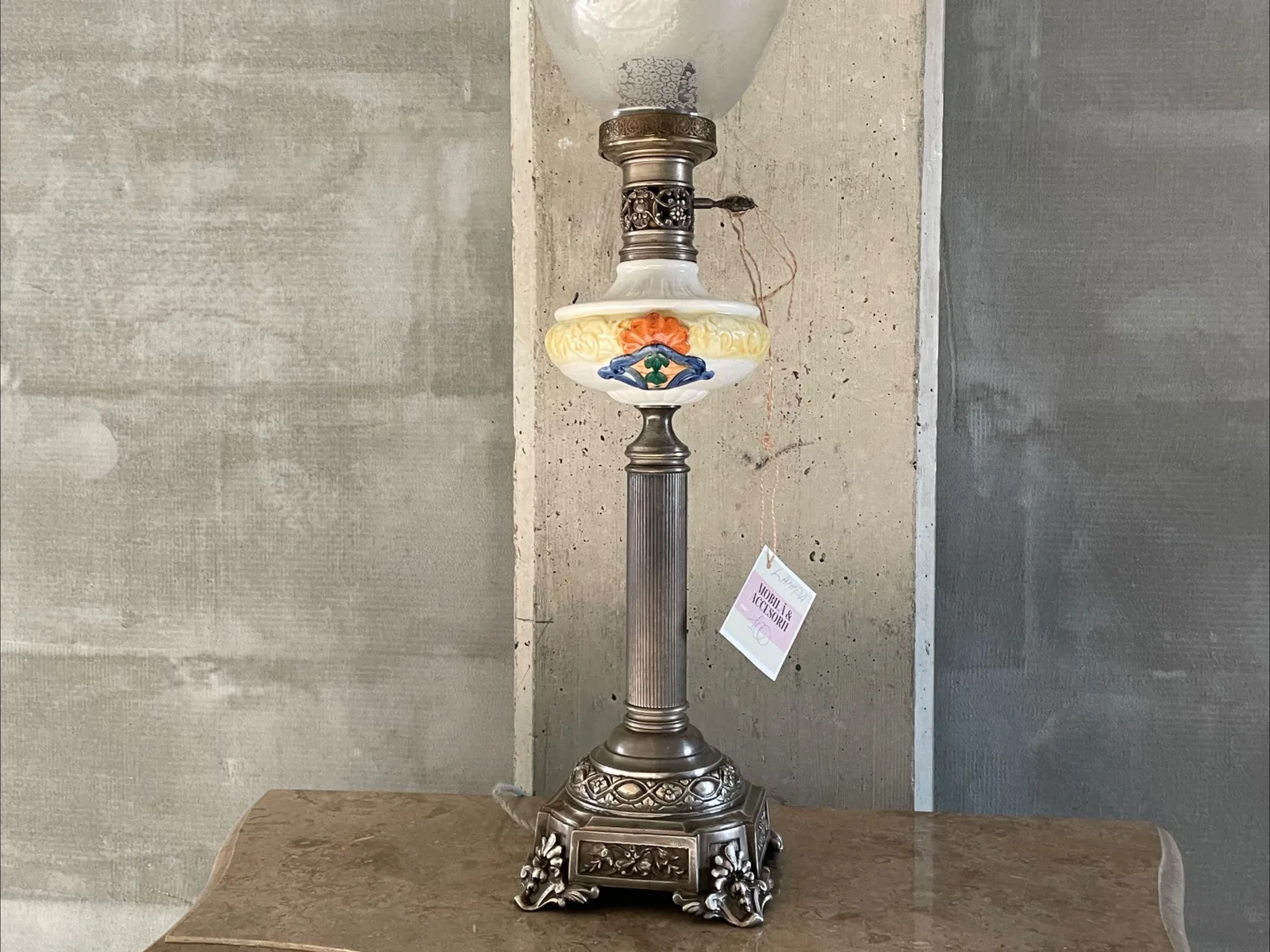
Less expected but deeply refined, porcelain brings a romantic, sculptural note to lighting. Moulded flowers, slender arms and shades of ivory or Saxony blue turn the chandelier into a genuine piece of decorative art. Natural and textural materials — ceramic, alabaster, textured glass — are returning strongly to lighting design precisely because they soften the glare and enrich the fixture's daytime appearance. A porcelain chandelier splendidly dresses a bedroom, a boudoir or a feminine dining room, where warm light is meant to be diffuse and caressing. It is the choice of those who prefer poetry to spectacle.
How to size the chandelier for the room
The classic mistake is a chandelier that is too small, lost against the ceiling. The rule designers use is simple: add the length and width of the room in metres, then multiply the sum by roughly twelve — the result, in centimetres, gives you the right diameter. A room of 4 by 5 metres (sum of 9) thus calls for a chandelier of about 100 cm across. Above a table the logic changes: the fixture should span between half and two thirds of the tabletop's width, never wider, so it does not overwhelm. And if you choose a large model, let it be the hero of the room and keep the rest of the lighting discreet — a principle explained at length in our guide to layered ambient lighting.
At what height to hang it
Over a dining table, the bottom edge of the chandelier ideally sits 75–90 cm above the tabletop. At this distance the light falls generously on the plates, and diners can see one another without the fixture cutting their line of sight. In rooms with high ceilings, raise it a few centimetres for every additional metre of height. In a hallway or passage, the bottom edge should stay at least 2.1 metres from the floor so no one bumps into it. These simple benchmarks make the difference between a piece that feels designed for the room and one hung at random. For warmer evening moods, a vintage lamp or bedside light beautifully completes the central light.
Care, and why rarity matters
Each material asks for its own ritual. Crystal is wiped with a lightly dampened microfibre cloth, without harsh substances that would dull its facets. Bronze prefers dust removed gently and abrasives avoided, so the patina stays alive. Porcelain, the most fragile, is cleaned with a soft brush and a great deal of patience. Beyond upkeep, the true value of a fine chandelier lies in its uniqueness. At Martello we do not produce in series: we select unique pieces, rarities that, once sold, are never repeated. That is why a chandelier chosen today from the Martello catalogue becomes, in time, a family heirloom. We also recommend our complete guide to refined chandeliers to refine your choice. Come and see them in person in our showroom in Nimoreni, Ialoveni, just fifteen minutes from Chișinău — because the light of crystal and the warmth of bronze are truly felt only up close, in Moldova and Romania alike.