Walnut, Oak, or Cherry: How to Choose the Right Wood Species
Every solid wood furniture piece begins with a quiet but decisive choice: the wood species. Walnut, oak, and cherry are the three noble species that have dominated premium furniture for centuries, each with its own personality — in color, in hardness, in the way the grain catches the light in a dining room or a study. Getting it right isn't just about looks; it's practical, too. It affects how the piece lives day to day and how gracefully it ages. In the Martello collection, every one-of-a-kind piece is selected precisely for how its wood species tells a story about the home, not just about furniture.
Why the Wood Species Changes Everything
Solid wood is not a uniform material. Density, grain direction, porosity, and natural tannin content differ radically from one species to another, and these differences directly shape how a chest of drawers or a table ages. A piece made from a species suited to the household's lifestyle lasts generations; one chosen purely from a photograph can disappoint over time. That's why, before choosing an oval or round table for the dining room, it's worth understanding what species lies beneath the veneer or the lacquer finish.
Walnut — Depth and Understated Elegance
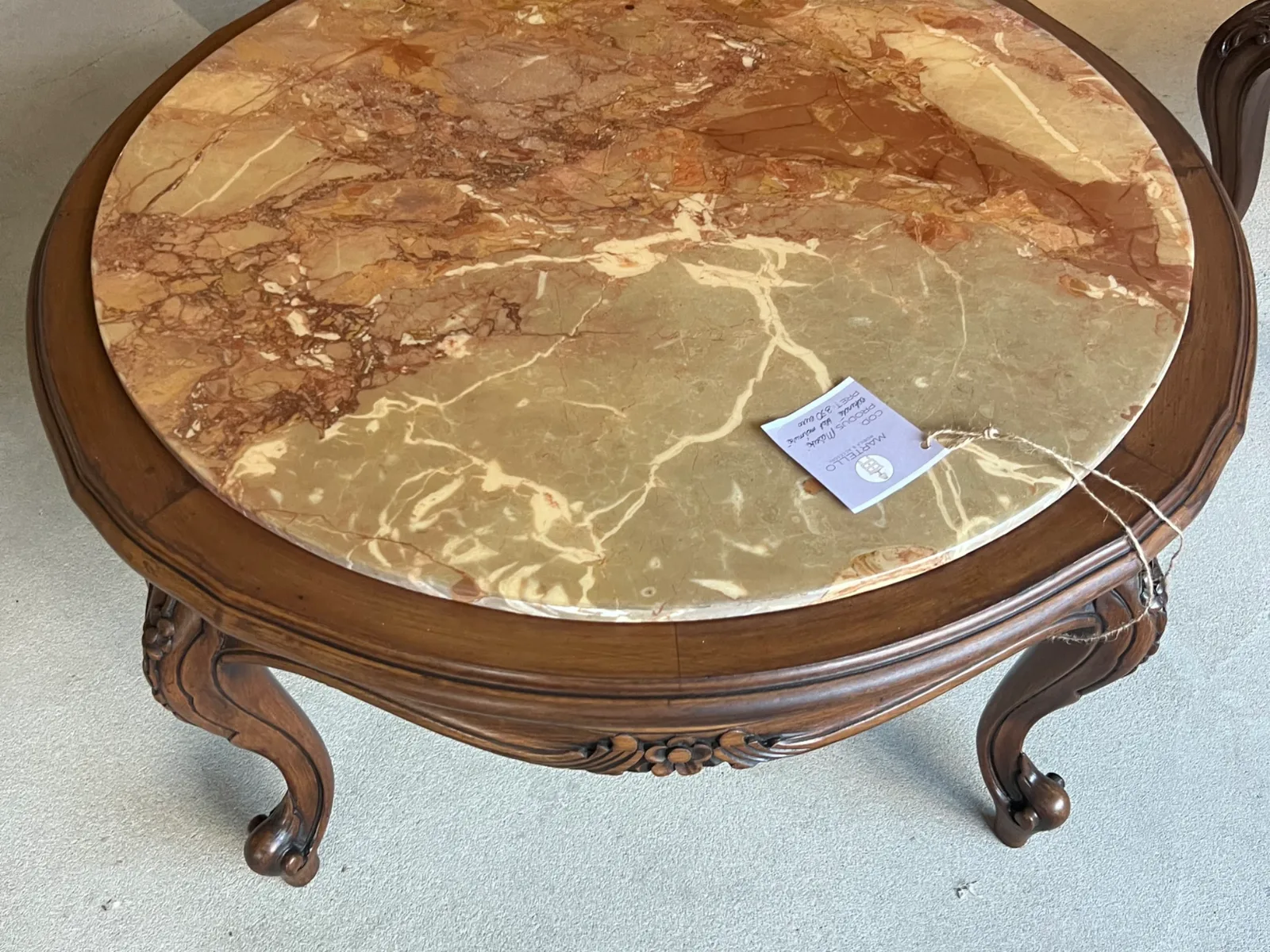
American or European walnut carries a warm color, ranging from chocolate brown to nearly purplish tones, with a wavy, highly characterful grain that rarely repeats identically from one piece to another — which is why an authentic walnut chest is practically always a one-of-a-kind. It's a medium-to-high hardness species, easy to shape into curves, hence its popularity in Empire and Biedermeier styles and in vintage bombé chests. Walnut suits aristocratic interiors remarkably well, where its warm tones converse with patinated brass and velvet upholstery. In a classic-style living or dining room, a solid walnut table becomes the room's center of gravity.
Oak — Classic Strength Across Generations
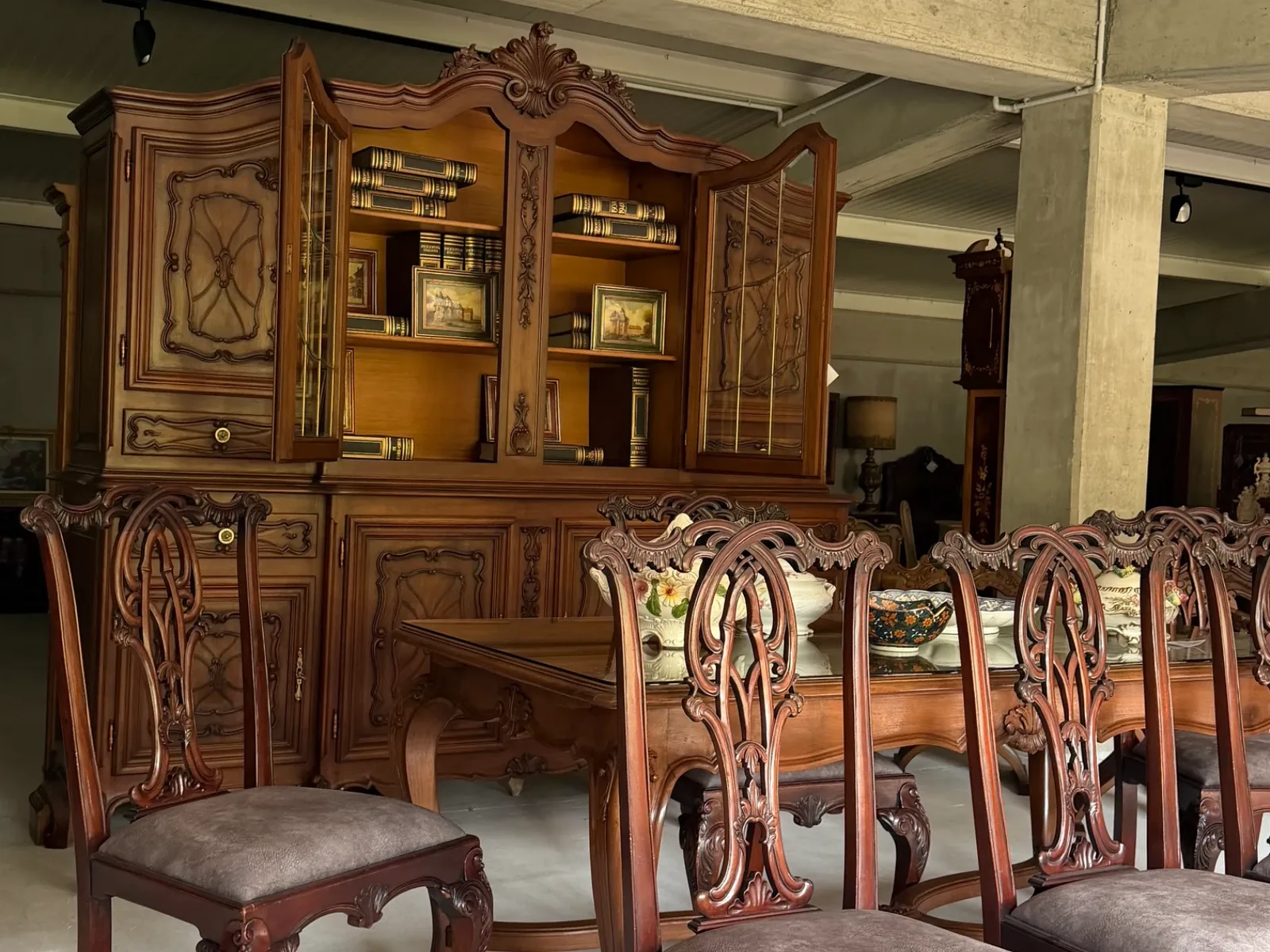
Oak is the defining species of large-scale European furniture: hard, dense, with a straight and visible grain that stands out beautifully when brushed or sanded to reveal the growth rings. It withstands daily use exceptionally well, which is why it remains the natural choice for dining tables meant for long family gatherings and festive meals, and for bookcases under constant load. Its color ranges from sandy blond to golden brown, and with age it develops a noble patina rather than degrading. It's no accident that oak dominates solid wood libraries built to last a lifetime.
Cherry — The Warmth That Ennobles Any Room
Cherry has the finest grain of the three species, an almost velvety texture to the touch, and a color that visibly deepens over time — from a fresh salmon-pink to a dark honey shade, then to a deep reddish-brown under the effect of natural light. This "maturing" is one of its most prized qualities: a cherry chest bought today will look even richer in color a decade from now. It's a softer species than oak, better suited to decorative pieces, secretaries, or fine chests, and less so for heavily-used tabletops. Cherry feels perfectly at home in a refined bedroom, where morning light brings out its warm glow.
Walnut vs. Oak vs. Cherry: A Practical Comparison
Weighed against each other, walnut offers the richest color contrast and the most "gallery-worthy" elegance, oak wins decisively on hardness and long-term durability, and cherry impresses with its fine grain and the way its color deepens with age. If a home sees heavy daily traffic — children, pets, everyday meals — oak remains the safest choice. If the piece is more of an object to be admired, a bombé chest or a secretary desk, walnut and cherry shine. Before buying, it also helps to know how to recognize quality solid wood, so as not to mistake a thin veneer for authentic solid timber.
How to Choose the Right Species for Your Room
The choice depends on light, palette, and function. In a room with cool, north-facing light, walnut and cherry bring instant warmth; in a bright, south-facing living room, lighter oak breathes more easily. For everyday pieces — tables, desks, bookcases — oak's hardness matters more than its looks. For jewel pieces — a hand-painted chest, a carved-frame mirror, a secretary desk — walnut and cherry add exactly the refinement an aristocratic interior is looking for. At the Martello showroom in Nimoreni, Ialoveni, just 15 minutes from Chișinău, all three species can be seen and touched side by side, which simplifies the decision enormously — photographs never truly capture real wood tones.
Caring for Noble Species, Year After Year
Regardless of species, solid wood needs the same basic care: stable humidity (ideally 45-60%), avoiding prolonged direct sunlight, which can bleach the surface unevenly, and periodic waxing or oiling depending on the finish. Walnut and cherry, being more porous, benefit from a nourishing oil every 6-12 months; oak requires less frequent but equally attentive care. For a detailed guide, caring for solid wood tables remains a useful reference for any owner. A solid wood piece, properly cared for, doesn't just endure — it gains value over time, which is exactly why quality furniture is an investment, not an expense.
Every piece in the Martello catalog is selected with these species differences precisely in mind, so every buyer knows exactly what they're bringing home: a rarity that, once sold, will never repeat.