Classic-style dining room: where a solid wood table turns dinner into a memory
There is a clear difference between a dining room that is merely "furnished" and one that tells a story. In homes across Chișinău and Moldova, more and more owners are moving away from impersonal furniture sets toward a considered composition: a substantial table, chairs with character, a chandelier that commands the ceiling, and textiles that warm the atmosphere. Classic style is not about rigidity but about balance — correct proportions, noble materials, and that unmistakable aristocratic air that never goes out of fashion.
The solid wood table, the starting point of any classic dining room
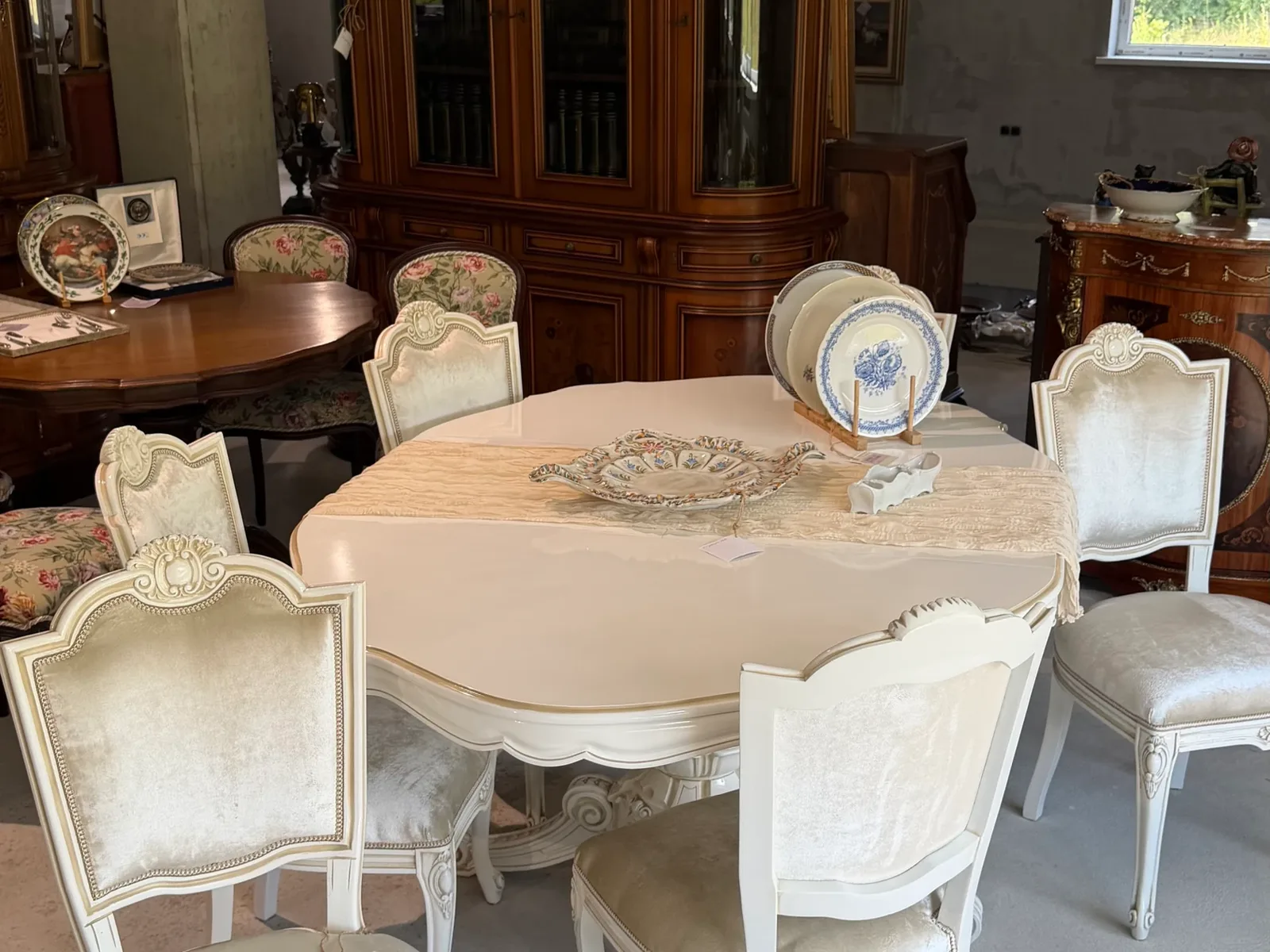
Everything begins with the table. In a classic dining room, it is never merely a surface for serving food but the piece around which the entire room is organized — the height of the chairs, the placement of the chandelier, even the traffic flow through the space. We favor tables in walnut, oak, or cherry, species that age beautifully and develop, over time, a patina that veneered wood can never replicate. If you are torn between an elongated shape and a round one, we have detailed the differences in a dedicated guide: oval or round table for the dining room. For families who host festive dinners often, an extendable solid wood table remains the smartest investment — flexible day to day, generous for celebrations.
Chairs: comfort, proportion, and a touch of theatre
Chairs make the difference between a functional dining room and a memorable one. High-backed models, subtly carved or upholstered in velvet, lend visual gravity to the table. One piece with a story worth knowing is the Savonarola chair, whose historical roots are worth understanding before integrating it into a contemporary interior — we cover it in depth here: Savonarola chairs: the history of a piece. The golden rule remains balance: chairs that are too heavy overwhelm a delicate table, while flimsy ones get lost next to a thick solid wood top. Always test the proportion before deciding.
The chandelier, the piece that sets the tone for the whole room
No classic dining room is complete without a statement chandelier. Crystal remains the classic choice for maximum refinement, but patinated bronze or richly decorated porcelain can bring a more bohemian, personal air. We have written a full guide on choosing such a centerpiece: crystal, bronze, or porcelain chandeliers. As a practical rule, the chandelier's diameter should be about 30 centimeters narrower than the table's width, and it should hang with at least 75 centimeters of clearance above the tabletop, so the light never obstructs the view across the table.
Textiles and light in layers
A classic dining room breathes through its textiles. Linen tablecloths, twisted-cotton napkins, heavy floor-length curtains — all of these absorb echo and soften a room otherwise dominated by wood and metal. We recommend combining at least three light sources: the central chandelier, wall sconces for ambient light, and candles or table lamps for more intimate evenings. We detailed how to choose the right materials for upholstery and drapery in our guide to velvet, linen, and natural leather. Warm light, around 2700-3000K, remains the standard for a welcoming dining room.
Color palette and wood species
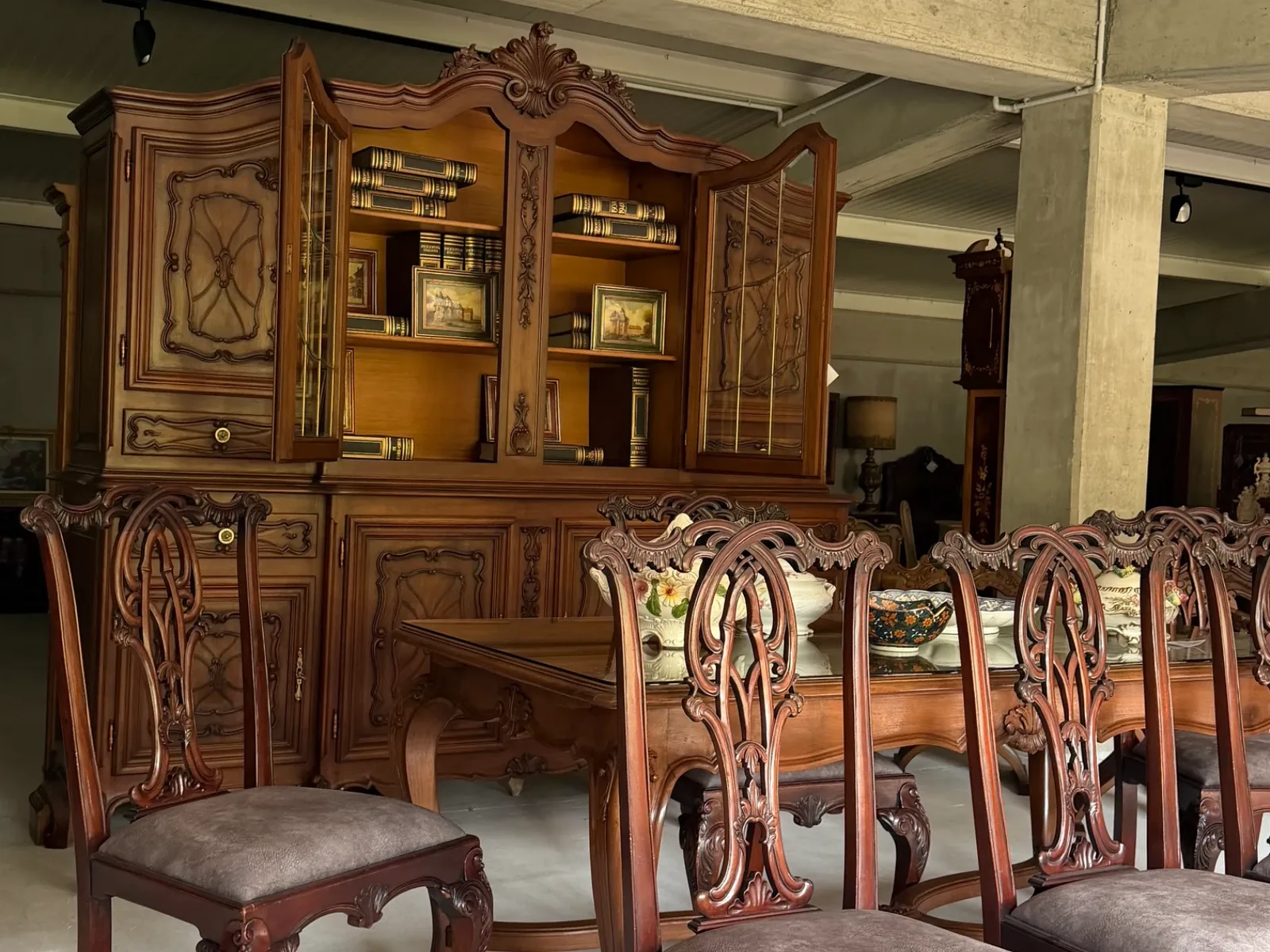
A successful classic interior rests on a restrained palette: cream tones, hunter green, a discreet burgundy, or petrol blue, set off by the warm wood of the furniture. The choice of wood species directly shapes the atmosphere: walnut brings depth and an aristocratic air, oak offers sturdiness and brightness, while cherry blends warmth with refinement. If you have not yet settled on a species, we compared the three in detail: walnut, oak, or cherry. Every piece in the Martello collection is selected precisely for these qualities of solid wood, increasingly rare in mass-produced furniture today.
How to organize the space so the dining room can breathe
The proportion between the table and the room matters as much as the choice of pieces. Leave at least 90 centimeters of clearance around the table for comfortable movement, and so chairs can be pulled back without hitting the walls or nearby furniture. A display cabinet or sideboard in solid wood, placed against a side wall, naturally completes the ensemble and provides space for festive tableware. If the dining room opens onto the living room, treat the two zones as a whole — unified through the same color palette and the same wood species.
Caring for solid wood dining furniture
A well-cared-for solid wood table can remain in the family for generations. Avoid direct sun exposure and heat sources, use coasters and trivets for hot dishes, and wipe up spills immediately. A natural wax applied two to three times a year feeds the wood and preserves its warm sheen without coating it in plastic film. For those looking to invest in a lasting piece, it is worth understanding the real difference between one-of-a-kind furniture and mass-produced furniture — a subject we covered in depth here: one-of-a-kind piece or mass-produced furniture.
At the Martello showroom in Nimoreni, Ialoveni — just 15 minutes from Chișinău — you will find one-of-a-kind furniture pieces, each selected for the quality of its wood and the story it carries. Once sold, a piece from our collection is never repeated, which is why visiting the showroom remains the best way to discover the table, chairs, or chandelier that will define your dining room. Browse the full Martello furniture collection or go straight to our dining room selection, for inspiration and pieces available now, in Moldova and Romania.