Oval or round table: the shape that sets the character of your dining room
Before the wood species, the finish and even the number of chairs, a dining table tells its story through the shape of its top. A circle and an ellipse completely change how people sit, look at one another and talk. Choosing between round and oval is not a matter of fashion but of your room's geometry and how you like to host. Here is how to decide well, using the same benchmarks interior designers rely on.
Round and oval: two philosophies of the same table
The round table is the most democratic shape imaginable. It has no head and no foot, everyone sits at an equal distance from the centre, no one is left "in the corner" and each guest can see all the others. Hence the sense of intimacy and the conversation that flows so easily. The oval table keeps the rounded corners and softness of the circle but adds length, meaning more seats and a more scenographic presence. In short, the oval blends the friendliness of the round with the capacity of a rectangular table, which makes it the ideal answer for elongated rooms.
The golden rule: how many centimetres per person
Comfort at the table is not an impression but a measurement. The American Society of Interior Designers and the ergonomics researchers at Cornell recommend a minimum of 60 cm of table edge per person, with 75 cm being ideal, the very figure used in fine-dining restaurant design. In concrete terms: a round table 90–110 cm across comfortably seats four, one of 110–137 cm reaches six, and from 137 cm upward you can host six to eight. For an oval, a top of roughly 180 x 100 cm elegantly seats six, while a 240 cm length climbs toward eight. When you calculate, always start from how many people you usually seat, not from the empty floor space, and leave at least 90–100 cm between the table edge and the walls or furniture, so chairs pull back without bumping into anything.
A trick we often use in the showroom: mark the outline of your dream table on the floor with painter's tape, place real chairs around it and "serve" an imaginary dinner. You will feel instantly whether the circulation breathes or the top smothers the room. This five-minute test spares you the most common mistake, a table one or two sizes too big for its space.
When the round table wins
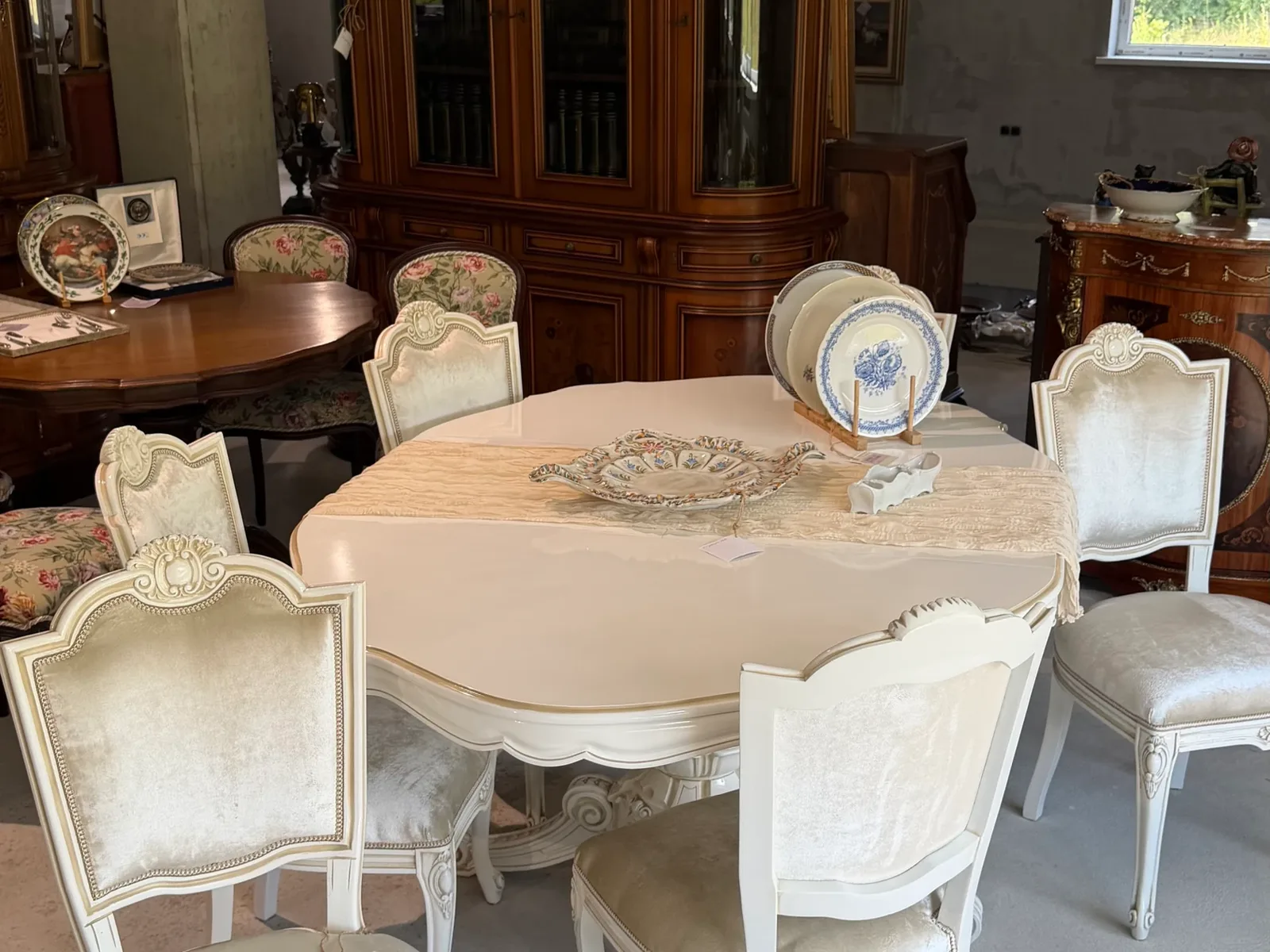
Round is the hero of small and square rooms. With no corners to cut across the traffic, a round table slips into open kitchens and apartment dining rooms better than any other shape, and with a moderate diameter you can squeeze in an extra chair when needed. It is no coincidence that, after a dip in the 2000s, the round table is making a strong comeback in 2025–2026 as newer homes come with more compact dining zones. For a couple or a small family that rarely hosts more than four to six guests, round is the warm and intelligent choice. See how it all comes together in a classic-style dining room conceived as a whole.
When the oval table wins
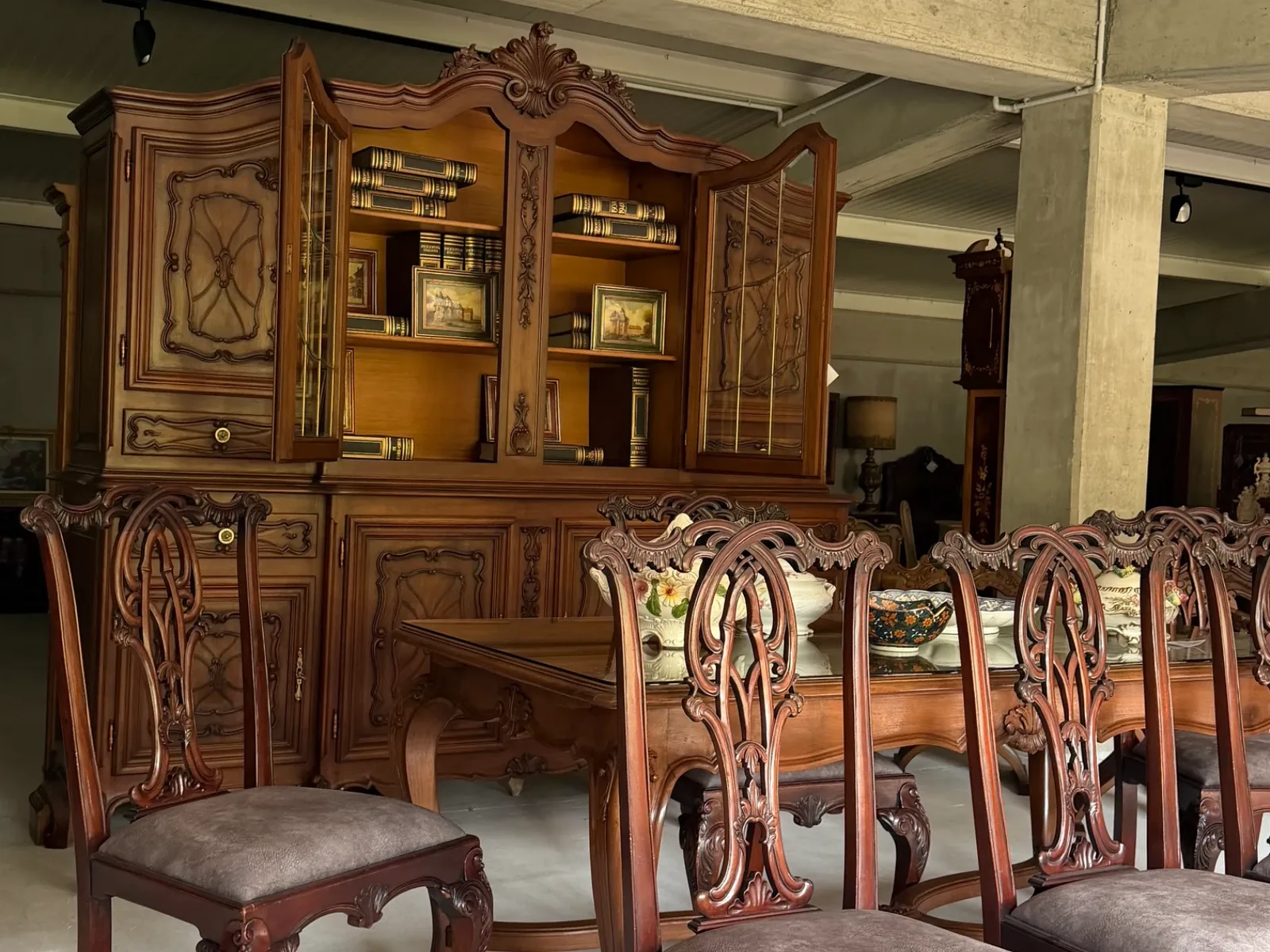
The oval shines in long, narrow rooms, where a round would leave the corners empty and a pure rectangle would feel too rigid and formal. Its extra length gives you additional seats without losing the flow of conversation that curved edges preserve. It is the table of great occasions, of Sunday lunches and of festive meals with many guests. If you dream of a piece with the sweep of a manor house, one that commands the room without smothering it, the oval offers that theatrical elegance which the Renaissance-style dining set brings to perfection.
The base changes everything: the power of the pedestal
A technical detail few anticipate, yet one felt at every dinner: the table base. For both round and oval tops, a central pedestal base is by far the most generous, because it frees the legroom entirely all the way around. No one knocks against a corner leg, and when needed you can slide in an extra chair without compromise. Aesthetically, the pedestal gives the table a sculptural silhouette, a column that anchors the whole room. As a proportion, a balanced base spans between half and two thirds of the top's length, so the table stands stable and harmonious.
Species and finish: where shape gains a soul
Shape sets the rhythm, but wood gives the soul. Walnut brings deep grain and a noble tone, oak means strength and living texture, while cherry warms beautifully over time, earning a reddish patina. If you hesitate between species, our guide to walnut, oak or cherry helps you choose with real understanding. And a beautiful table deserves chairs to match, whether discreet or bold, as we show in the article on colourful upholstered chairs. Once chosen, a solid-wood table rewards you for many years if you care for it properly, with the simple gestures in our guide to maintaining solid-wood tables.
Unique pieces, once sold never repeated
At Martello you will not see identical rows of tables. We select unique pieces, chosen one by one for their character, and once a table is sold it never reappears in the collection. That means the shape you choose, round or oval, comes with a rarity that cannot be reproduced. We look forward to welcoming you to view them at leisure in our showroom in Nimoreni, Ialoveni, just 15 minutes from Chișinău, from where we deliver across Moldova and Romania. Explore the full Martello collection or go straight to the dining room pieces, and let the right shape tell its own story.