How to Choose the Right Rug for Premium Furniture
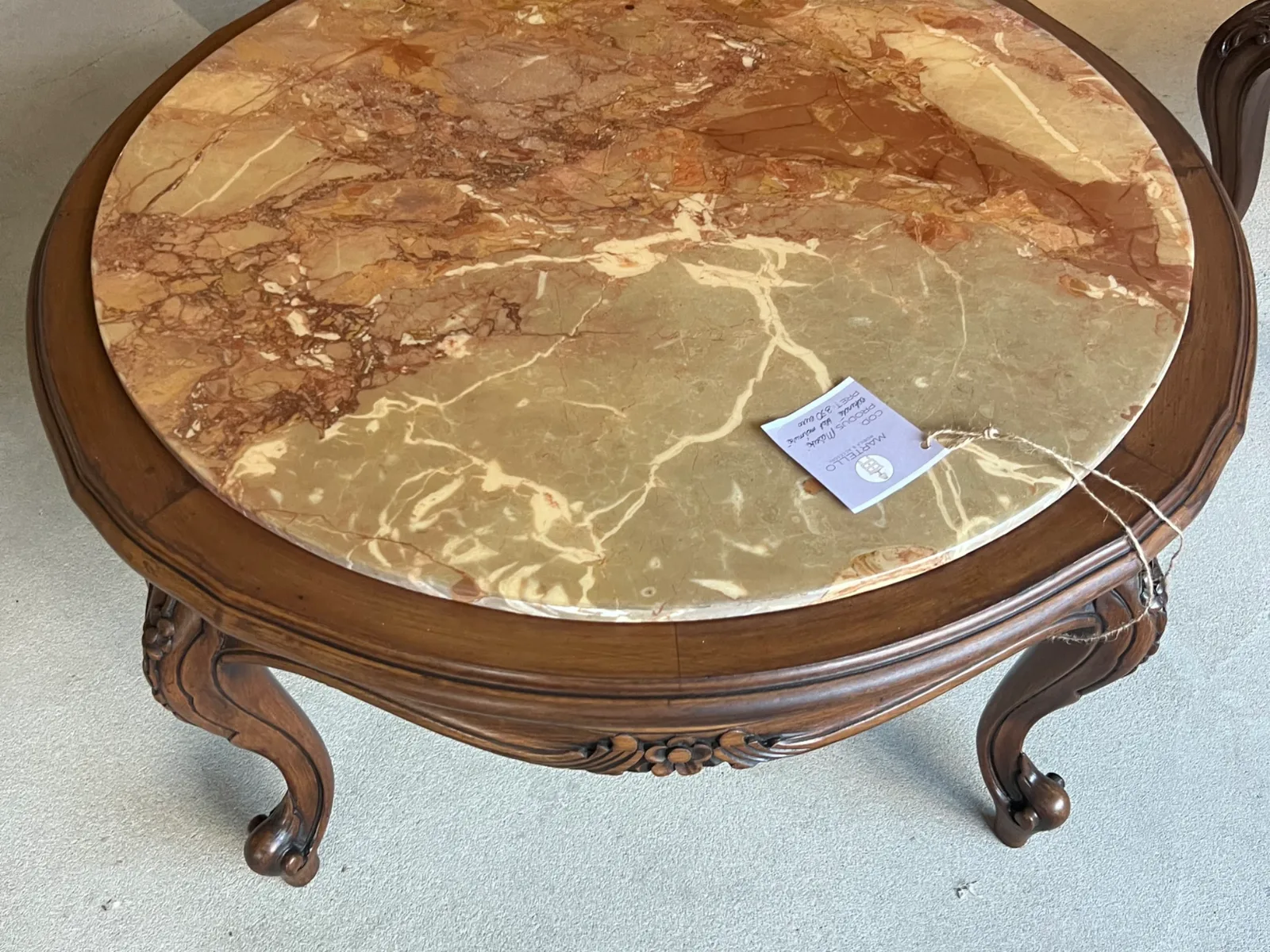
A well-chosen rug is more than a decorative accessory — it is the visual and tactile foundation of a room. In an interior built around premium furniture — a solid wood sofa upholstered in velvet, a marble-top coffee table, or a vintage armchair full of character — the rug ties every piece together into one coherent composition. Choose poorly, and an otherwise beautifully furnished room can feel unbalanced; choose well, and an ordinary living room becomes a genuinely refined space. In Chișinău and across Moldova, more and more homeowners investing in one-of-a-kind pieces from the Martello collection ask us how to pick the right rug, so we gathered the essential principles here.
Why the rug is the piece that ties a room together
A rug defines the boundaries of a seating area, absorbs sound, adds visual warmth, and — not least — protects solid wood flooring from scratches left by heavy furniture legs. In a living room built around pieces from the Martello living room collection, the right rug highlights the wood grain and upholstery texture instead of competing with them. The unwritten rule of aristocratic interior design is simplicity: a quality rug with a subtle pattern, or none at all, lets fine furniture remain the protagonist.
Getting the size right: the front-legs rule
The most common mistake is choosing a rug too small, one that seems to float in the middle of the room with no relation to the furniture around it. The classic rule, valid for generous living rooms and for arranging a small living room alike, is that at least the front legs of the sofa and armchairs should rest on the rug. In a dining room, the rug should extend roughly 60-70 cm beyond the table's edges, so chairs remain on it even when pulled out. In a bedroom, the ideal rug extends at least 40-50 cm from each visible side of the bed, creating a comfortable landing spot for bare feet in the morning.
Wool, silk, or blends: what to choose for each room
Natural wool remains the benchmark material for premium rugs: it is durable, resilient, bounces back after being pressed underfoot, and carries a matte, understated look that ages gracefully alongside solid wood. Silk, often used in accent rugs or fine oriental pieces, adds sheen and depth of color, but suits low-traffic areas — a bedroom or a study — better than a busy hallway. Wool-silk blends combine durability with luster, making them a balanced choice for a dining room or living room. Well-made synthetic rugs (viscose, treated polypropylene) can be practical for households with children or pets, but rarely match the texture and longevity of natural fibers.
Color and pattern: harmony with wood tone and upholstery
In an interior built around an aristocratic color palette — beige, cream, English green, muted burgundy, petrol blue — the rug should pick up one or two tones already present in the room rather than introduce an entirely new one. Alongside walnut or cherry furniture, with its warm reddish-brown tones, rugs in cream, beige, or olive create a pleasant contrast without overwhelming the eye. Next to lighter oak pieces, a rug with deeper accents — burgundy, deep navy — visually anchors the room. Bold geometric or striking floral patterns can work as a statement piece, but only if the rest of the room stays understated; next to already expressive furniture, a quieter rug is the safer choice.
Placement under furniture and zoning the space
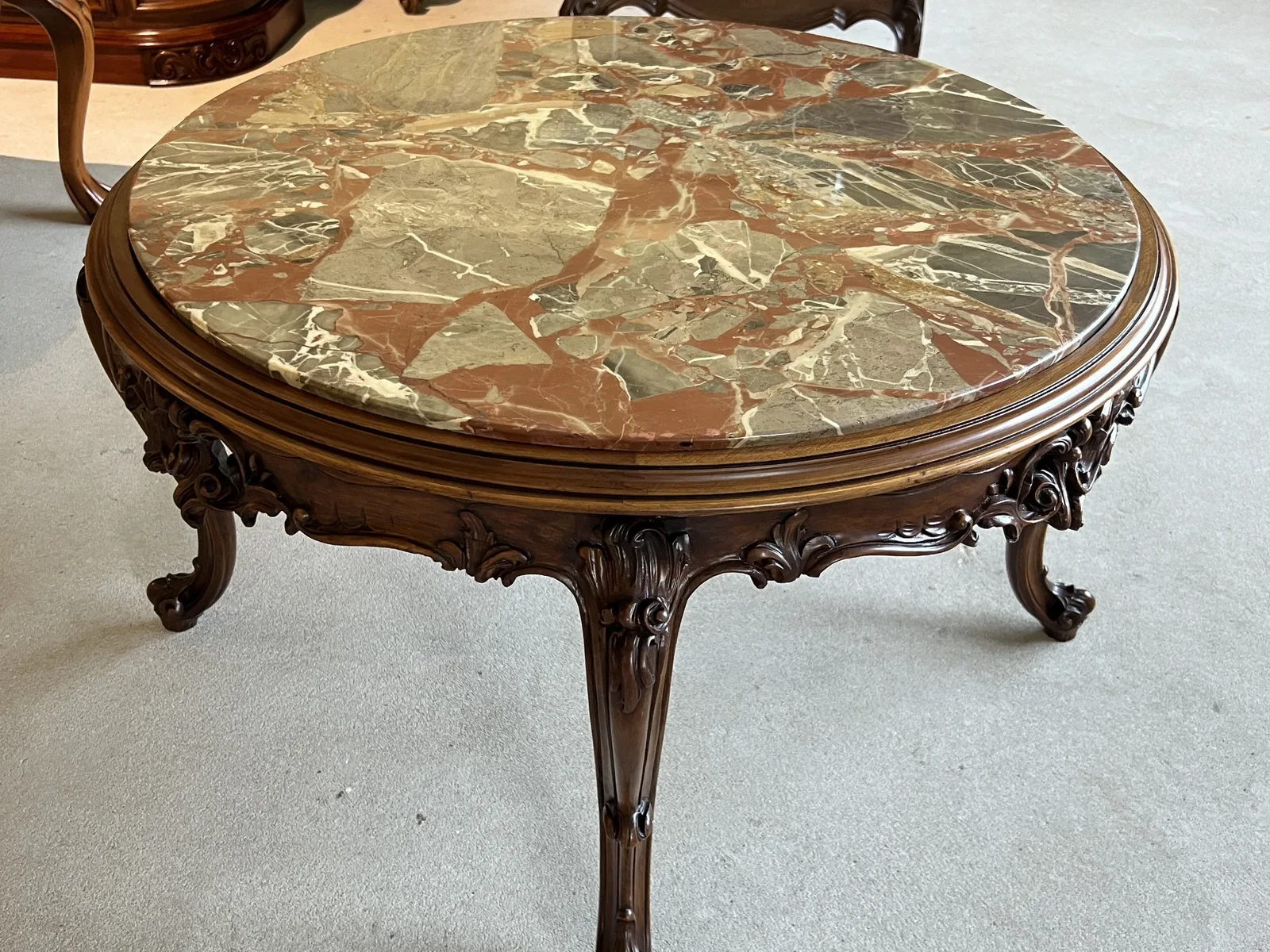
A well-placed rug does more than decorate — it organizes the space. Under a sofa next to a vintage armchair, or beside a marble-top coffee table, the rug should be centered on the conversation area, with its edges aligned symmetrically to the furniture. In a multi-purpose room — a living room combined with a reading nook — different rugs within the same color family can visually separate zones without fragmenting the space. Avoid letting a rug's edge cut a piece of furniture exactly in half: either place it clearly underneath, or clearly outside it.
Care and longevity: protecting the investment
A quality wool rug, paired with solid wood furniture, is a long-term investment and deserves to be treated as one. Regular vacuuming without an aggressive rotating brush on fine fibers prevents fiber wear. Rotating the rug every 6-12 months evens out fading caused by natural light, particularly important near large windows. Fresh stains should be blotted immediately, never rubbed, and periodic professional cleaning — once a year for high-traffic areas — keeps natural fibers resilient. Much like the proper care of vintage wood furniture, a few simple, consistently repeated habits make the difference between a rug that wears out quickly and one that gains character over time.
Common mistakes to avoid
Undersizing remains the most common mistake, closely followed by choosing a material unsuited to the traffic in that area — fine silk in a busy hallway, for instance. Another trap is ignoring texture: a long, fluffy pile rug placed next to vintage pieces with classic lines can create an unwanted clash of styles, while a flat weave with a discreet pattern pairs naturally with a vintage armchair or a chest of drawers with history. At the Martello showroom in Nimoreni, Ialoveni — just 15 minutes from Chișinău — we always recommend that clients bring a photo of the room, or even test one-of-a-kind pieces directly beside the rug they are considering, to see how the two elements interact in natural light.
Choosing the right rug is, at its core, an exercise in balance: not so understated that it reads as an afterthought, nor so bold that it overshadows the beauty of a one-of-a-kind piece. With the principles above — correct sizing, material suited to the space, harmonized color, and consistent care — any room furnished with premium pieces gains the visual coherence that defines a truly refined interior.