Small Living Room Design: Choosing Premium Furniture That Lets the Space Breathe
A small living room doesn't have to mean a small amount of style. In fact, with the right pieces, a room of sixteen to twenty square meters can feel more refined than a generous salon crowded with furniture chosen at random. The secret lies in proportion, in giving every piece a precise role, and in abandoning the idea that more furniture equals more elegance. At Martello Mobili, we believe a small living room actually demands more discipline in selection — every one-of-a-kind piece from our collection has to earn its place.
Proportion matters more than square footage
The first instinct in a small living room is to buy small furniture just so it fits. The result often looks like a dollhouse. The real rule is different: pieces with correct proportions, visible legs rather than solid bases that touch the floor along their entire length, and clean lines. A room of eighteen square meters can easily hold a generously sized sofa if the rest of the pieces stay understated and low. Silhouette matters more than centimeters.
Multifunctional pieces win the battle for square meters
A premium small living room is built around pieces that do two jobs at once. A vintage sideboard can hold bar essentials while also displaying a porcelain service. A rolling bar cart moves from corner to corner as needed and visually disappears when not in use, unlike a fixed cabinet. A coffee table with a hidden drawer or a double top saves visual space without sacrificing function. The goal isn't to minimize furniture, but to make each piece work harder.
Mirrors — the oldest trick, still the most effective
Nothing opens up a small living room faster than a well-placed mirror. We don't mean an ordinary wall mirror, but a piece with a solid wood frame or carved details, positioned perpendicular to a window so it multiplies natural light in the room rather than just reflecting a blank wall. We covered this in depth in our guide to large decorative mirrors, and the conclusion still holds: a generously sized, well-chosen mirror is worth as much as an extra window.
A light palette, but never sterile
A small living room visually "breathes" when walls and large textiles (sofa, rug, curtains) stay in light tones — cream, ivory, warm beige, pearl gray — letting the solid wood of the furniture add warmth and weight without overloading the space. Sterile white isn't necessary; an aristocratic palette, with natural hues and gentle contrast, works far better than bold combinations. We detailed this principle in our article on the aristocratic color palette — especially useful if the living room opens directly onto a hallway or kitchen.
Choosing the right sofa for a small living room
This is where most people go wrong: they choose a smaller sofa "just to make it fit," and end up with a room that looks unfinished. In a tight space, a solid wood sofa with dense upholstery and correct proportions — even slightly more generous than you'd think necessary — anchors the whole room far better than two small armchairs placed apart. We explain the full criteria in our guide to choosing a solid wood living room sofa. The short rule: one well-chosen sofa beats two mismatched armchairs.
The coffee table that ties the whole room together
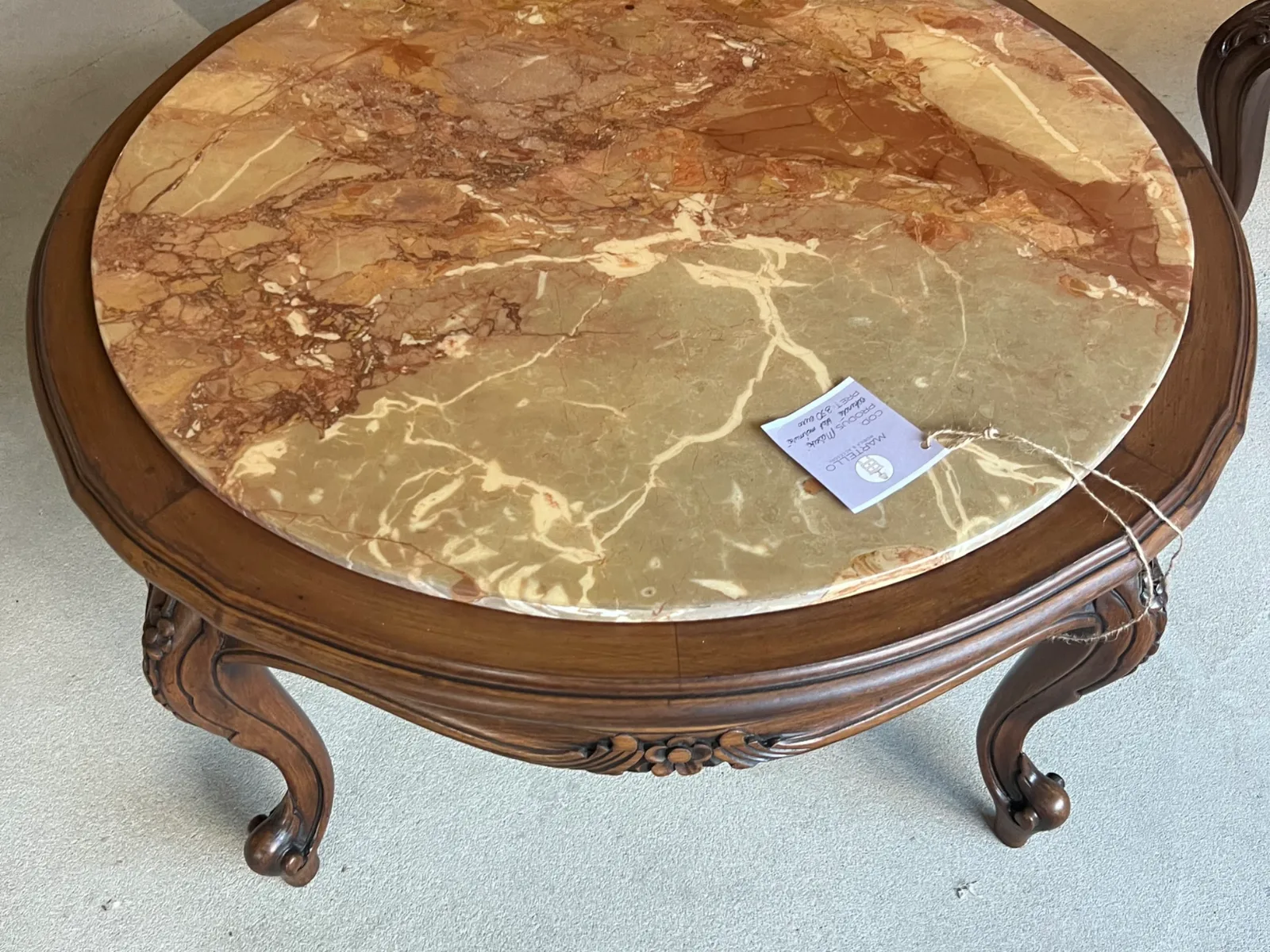
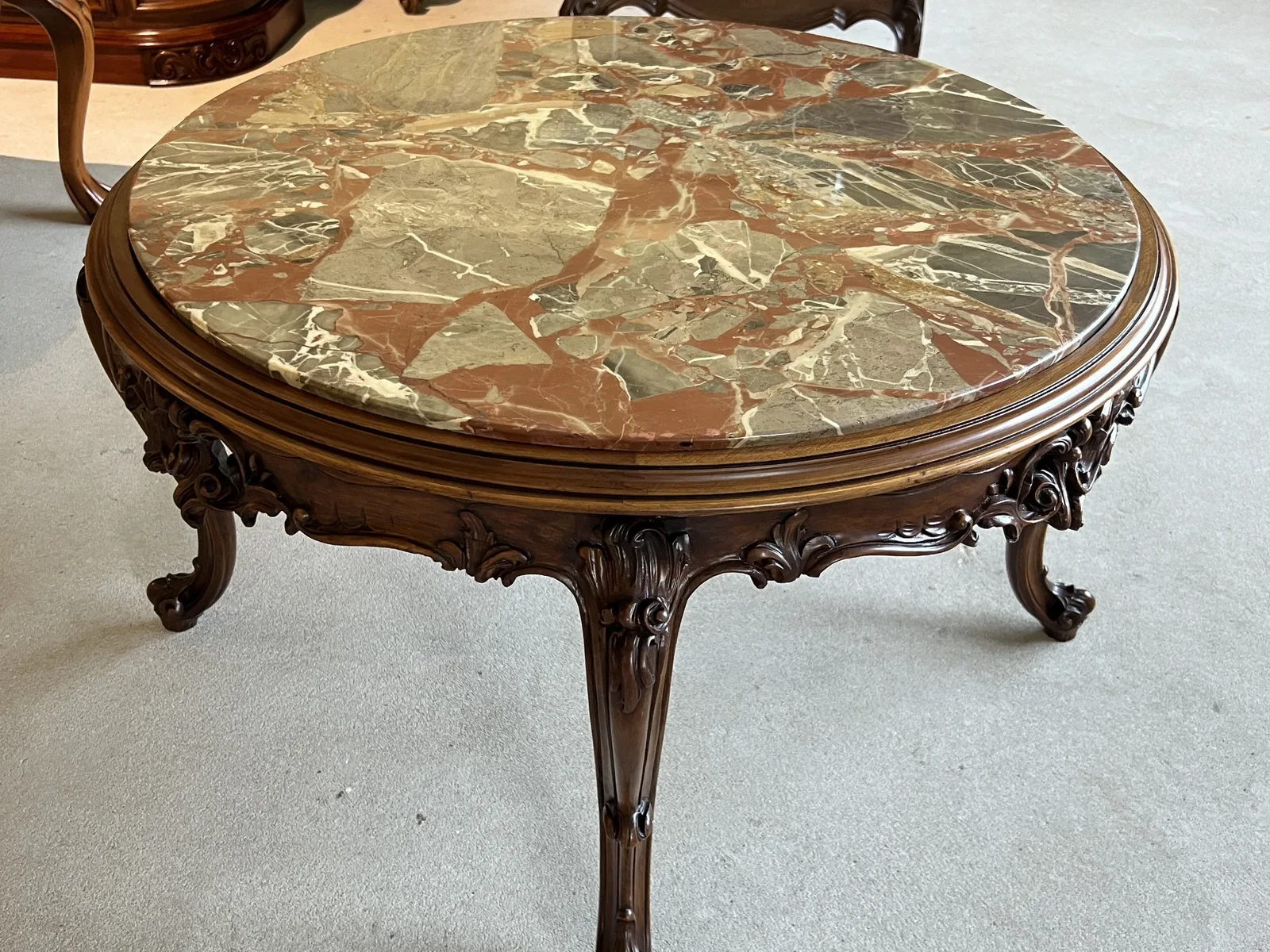
In a small living room, the coffee table isn't an accessory — it's the room's visual point of balance. A low table with a marble top and an elegant wood or patinated metal base adds refinement without visually taking up space — marble, by nature, lets light pass through more than solid wood or glass. We dedicated an entire article to this subject: the marble-top coffee table. Choose one, well chosen, instead of a nested set of smaller tables.
Why one-of-a-kind pieces matter even more in a small space
In a spacious living room, one lapse of taste gets lost among other pieces. In a small living room, every object is visible, on display, judged. That's why we recommend carefully selected, one-of-a-kind pieces rather than mass-produced furniture made in thousands of identical copies. A piece from our living room furniture collection, once sold, is never repeated — meaning your living room won't look like your neighbor's. Clients from Chișinău and across Moldova, as well as from Romania, often come to our showroom in Nimoreni, Ialoveni (just fifteen minutes from Chișinău) specifically to see and touch these pieces before deciding — real proportions matter enormously in a small space, and a photograph can never fully convey them.
Once the large pieces are in place, a small living room comes together through small, well-chosen details. A few cushions in natural textures — linen, velvet, heavy cotton — and a throw casually draped over the arm of the sofa add a sense of comfort without taking up extra space. Light matters just as much as furniture: a warm table lamp beside an armchair makes a small room feel lived-in and inviting, unlike a single harsh ceiling fixture that flattens everything. Resist the temptation to fill every free corner with decor; in a tight space, two or three carefully chosen accents — a vase, a small clock, a piece of art — say more about taste than an overstuffed display cabinet. The rule is simple: in a small living room, every object has to earn the space it occupies.
A well-designed small living room isn't a "compromise" version of a large one — it's a different exercise in elegance, where every piece counts double. With correct proportions, a few multifunctional pieces, a well-placed mirror, and a calm color palette, a tight space can become the most refined room in the house. The rest is a matter of patience in selection and choosing quality over quantity.