Large Decorative Mirrors: How to Visually Expand Any Room
A well-chosen large mirror does more than reflect an image: it rearranges the way a room feels. It doubles the light, adds depth to a narrow hallway, and turns a modest living room into a space that breathes. In homes with real personality, a mirror is never a last-minute functional afterthought — it is a decorative piece considered from the very start, just as important as a sofa or a dining table. In the Martello collection, large decorative mirrors with solid wood frames are selected precisely for this double role: everyday utility and a genuine visual statement.
Why a large mirror completely changes how a room feels
The eye reads a room through its light and through the lines that define its perspective. A generous mirror, placed thoughtfully, multiplies natural light sources and visually pushes the walls outward. The effect is especially valuable in a Chișinău apartment with small windows, or in an attic living room where every square metre counts. It is no coincidence that a generous mirror is the first decorating move recommended for compact living rooms, ahead of any other piece of furniture.
Where to place it for maximum effect
Placement accounts for half the effect. Positioned perpendicular to, or facing, a window, a large mirror captures daylight and sends it deep into the room, lighting corners that would otherwise stay in shadow. In an entryway, a tall mirror near the front door offers both function and a first moment of elegance for anyone crossing the threshold. In a dining room, hung above a console or a chest of drawers, it doubles the effect of a chandelier and the table setting below it. The old but still valid rule is simple: hang a mirror where it reflects something beautiful — a window, an artwork, a chandelier — never a blank wall.
The solid wood frame: the soul of the mirror
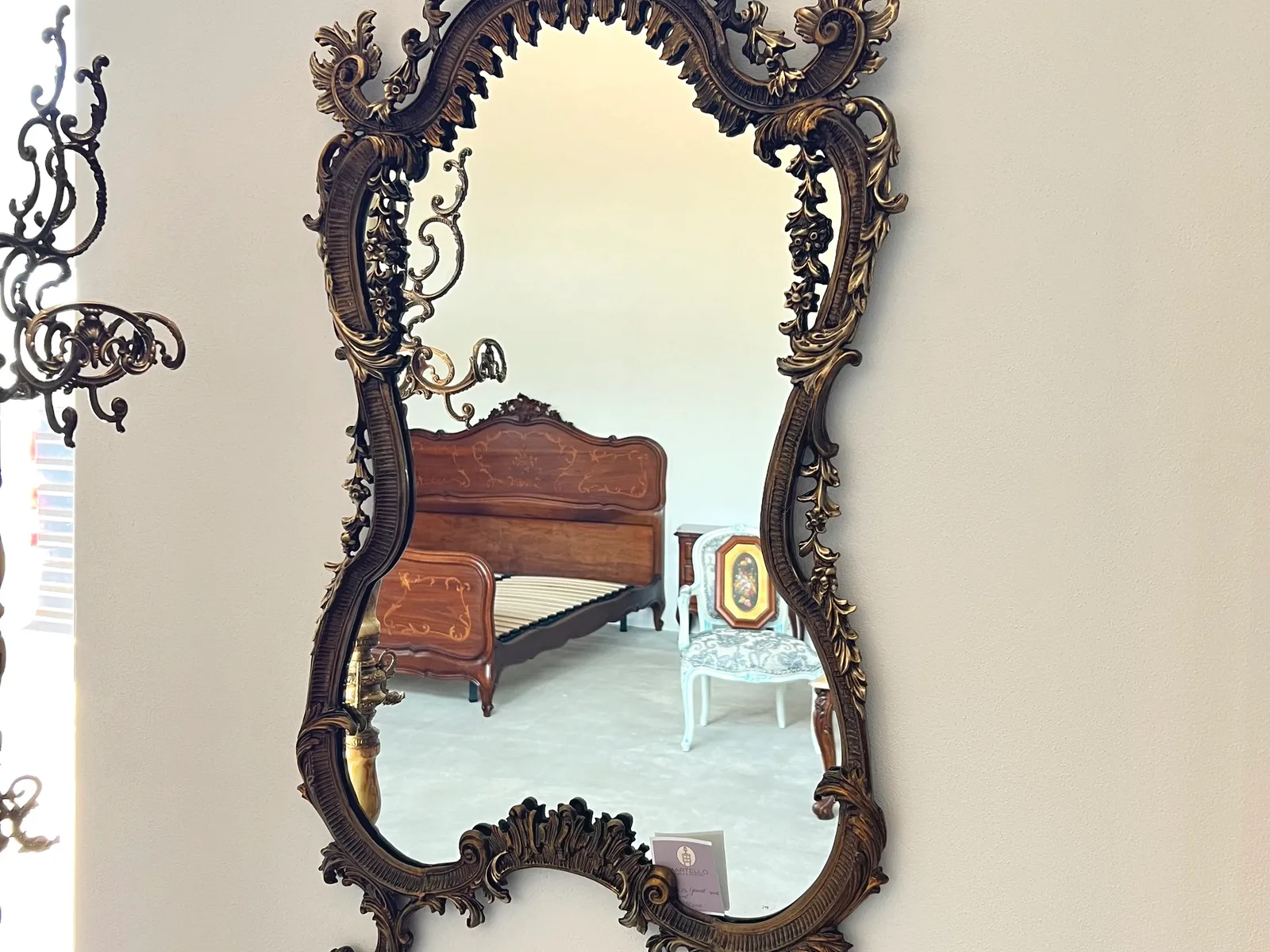
A large mirror without a frame to match remains a purely utilitarian object. It is the frame that gives it character, visual weight, and a clear sense of style — Baroque, Renaissance, hunting lodge, or elegant rustic. Solid wood, carved or finished with a patina, brings a warmth that a metal or plastic frame simply cannot match, and a piece crafted with genuine attention to detail ages beautifully, gaining character over the years. At the Martello showroom in Nimoreni, Ialoveni, just 15 minutes from Chișinău, you can see and feel the difference between a thin, mass-produced frame and a truly sculptural one, conceived as a one-of-a-kind piece. We wrote more extensively about this in our guide to solid wood-framed mirrors.
Which wood species to choose for the frame
Not every wood species ages or behaves the same way. Walnut has a warm, chocolate-brown tone that fits naturally into an aristocratic interior, while oak, lighter and with a visible grain, brings sturdiness and a slightly more rustic-elegant feel. Cherry, with its reddish undertones, deepens beautifully in colour over time and gives a frame an almost velvety look. The right choice depends on the rest of the furniture in the room — a mirror frame in the same wood species as the bed, dresser, or dining table creates a visual coherence the eye registers instantly, even without being able to name it. For anyone torn between options, our detailed comparison of walnut, oak, and cherry explains the differences in tone, hardness, and long-term behaviour of each species.
The mirror as a centrepiece in the bedroom and hallway
In the bedroom, a large mirror takes on a double role: practical, for the morning routine, and aesthetic, when it is paired into a harmonious set with a matching chest of drawers. A mirror-and-dresser pair, made from the same wood species and sharing the same stylistic line, gives the room a sense of continuity, as if the pieces had always belonged together. In the hallway, where decorating space is often limited, a generous mirror compensates for the lack of surface area and turns a transitional zone into a corner of the home with its own identity.
Playing with natural and artificial light
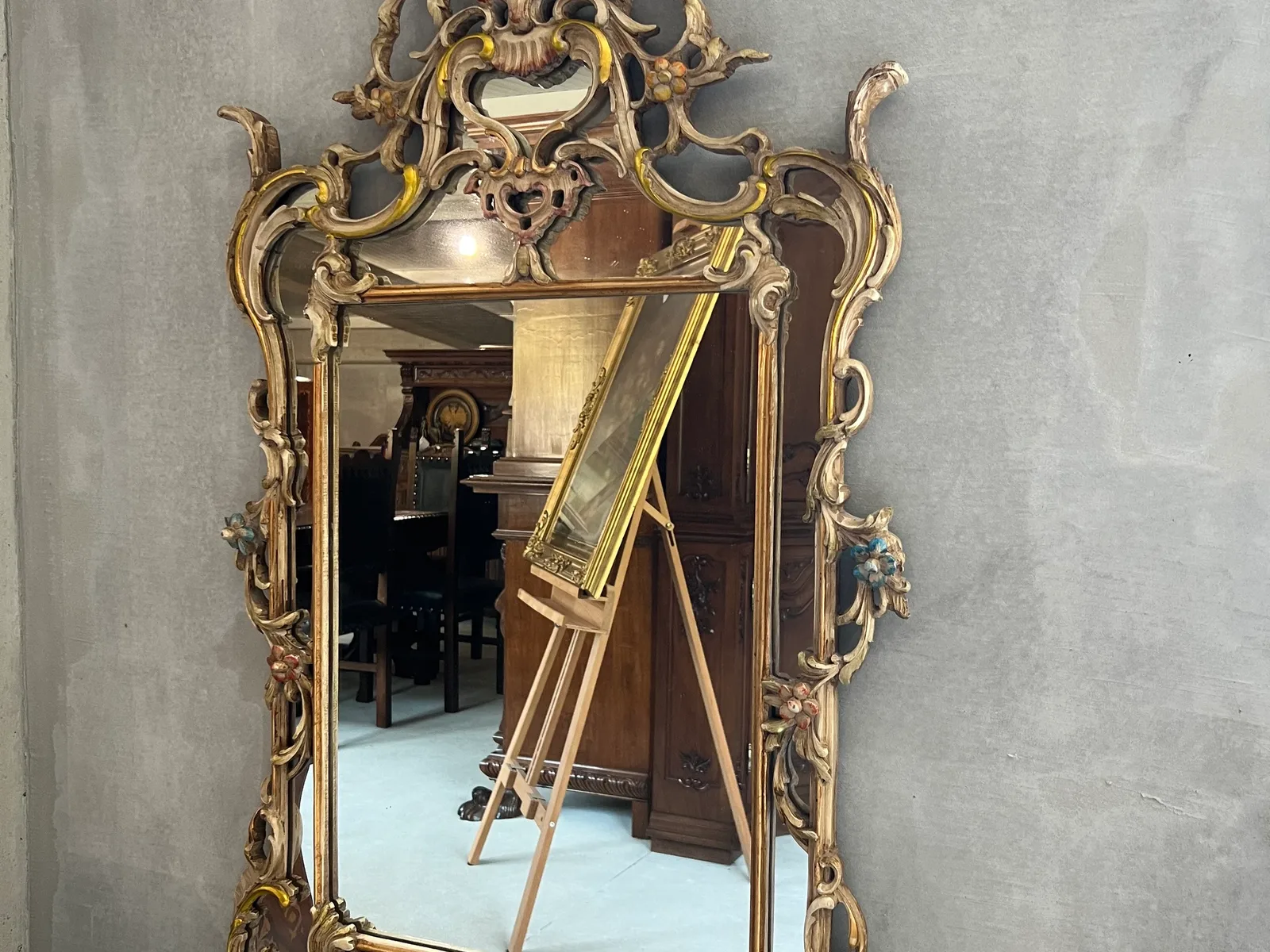
A large mirror never works in isolation — it enters into dialogue with every light source in the room. Placed near a table lamp or beneath a chandelier, it multiplies the sparkle of crystal or bronze and adds depth to an autumn evening, when natural light fades early. For anyone who wants to study this interplay of reflections in more depth, we also recommend our guide to refined ambient lighting, useful for building coherent layers of light in any room.
How to choose the right shape and size
A mirror's shape should be in dialogue with the rest of the furniture: a round or oval frame softens a room with straight lines and many angles, while a vertical rectangular shape emphasises the height of a generous ceiling. The correct size depends on the wall it hangs on — the basic rule is that a mirror should cover at least two-thirds of the width of the furniture piece beneath it, whether a console, a dresser, or a mantelpiece. You can explore the available pieces directly in the Martello mirror collection, where every piece is one of a kind and, once sold, is never repeated.
Care and longevity
A mirror with a solid wood frame needs modest but consistent attention: keep it away from excess humidity and from direct, prolonged sun exposure, which can dry out the wood over time. Dust it with a soft, dry cloth, and clean the glass surface without ammonia-based products, which can damage the frame's finish over time. Properly cared for, a carefully selected mirror remains, quite literally, the piece that best reflects a home's character — a rare detail meant to be passed down, not replaced.