The vintage armchair: the piece that turns a living room into a story, not just a place to sit
There is a fundamental difference between an armchair bought simply to fill a corner and one that the eye returns to on its own the moment you enter a room. The vintage armchair belongs to the second category. Leather patinated by decades of use, velvet with a discreet sheen, curved wood shaped with a craftsman's patience — together these compose an object that does not merely complete a living room, it gives it character. In a market dominated by mass-produced furniture, identical across thousands of copies, an armchair with history remains one of the few ways a home can say something about the people who live in it.
What actually makes an armchair "vintage," not just old
Age alone does not turn an armchair into a valuable object. What matters is the construction: a solid wood frame, hand-tied springs, upholstery that has aged gracefully rather than degraded. A genuine vintage armchair wears the marks of time as a quality, not a flaw — leather gaining a warm patina, wood taking on a deeper tone. This is exactly why, in the Martello collection, we curate every piece with care, seeking armchairs where the passing years have added value rather than taken it away.
Patinated leather or velvet: two personalities, the same refinement
The choice of material completely changes the tone of a room. Patinated leather, often in cognac or deep hunter green, brings a masculine note reminiscent of an English library or a country-house study. Velvet, on the other hand, in shades of burgundy, emerald or petrol blue, introduces a discreet sensuality suited to a living room designed for long evenings of reading and conversation. For anyone seeking complementary textures — cushions, drapes, matching upholstery — it is worth a detour through our guide to velvet, linen and natural leather, useful for understanding how these materials come together in a coherent interior.
Wingback, club, bergère or Chesterfield: shapes with their own identity
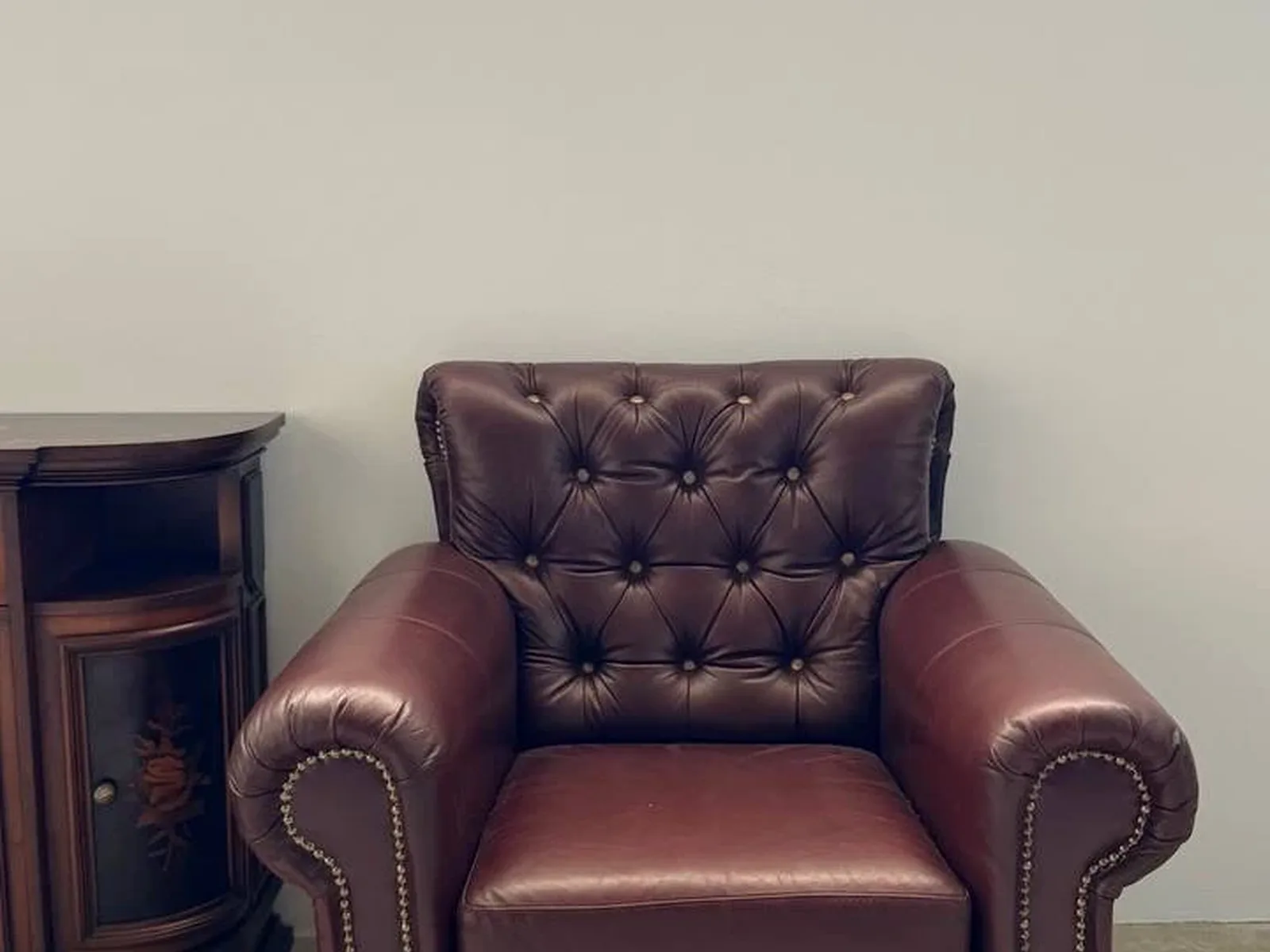
Each family of vintage armchairs comes with a recognizable silhouette. The wingback, with its tall back and side "wings," offers protection and intimacy, ideal beside a fireplace or a large window. The club chair, lower and wider, invites total relaxation, with rounded arms and understated tufting. The French bergère, with curved lines and slender legs, brings an almost feminine elegance. And the Chesterfield variant, with its diamond-shaped tufting and visible buttons, remains a benchmark of classic British style — a subject we covered at length in the history of Chesterfield sofas, equally applicable to armchairs from the same family.
How to choose the right armchair for your own living room
A good vintage armchair must be judged from three angles: its proportion relative to the rest of the room, the real comfort it offers when seated in, and its color harmony with the space. A small living room benefits from a compact armchair with clean lines, while a spacious room can support a more generous piece with a strong presence. Testing it in person matters enormously — which is why we invite furniture enthusiasts to step into our showroom in Nimoreni, Ialoveni, just 15 minutes from Chișinău, where every piece in the Martello catalog can be seen and felt directly, not just viewed in a photograph.
The reading corner: where the vintage armchair becomes indispensable
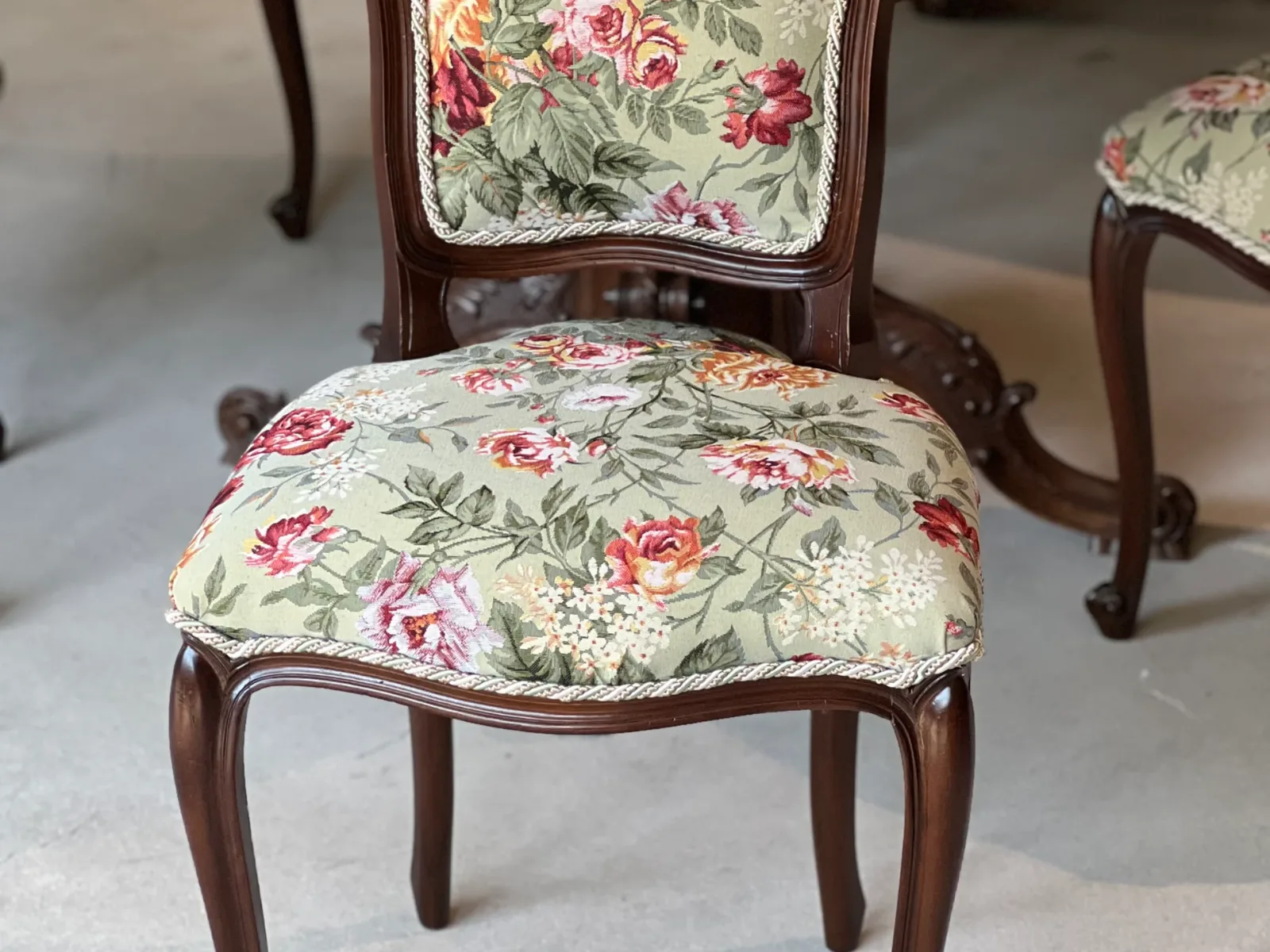
Perhaps the most natural use of a vintage armchair is creating a reading corner — a small space with a strong identity, made up of the armchair, a side table and a source of warm light. A well-chosen table lamp completely changes the evening atmosphere, turning a simple comfortable seat into a daily ritual. We wrote about this in our guide to the vintage lamp and warm light, a useful read for anyone wanting to complete the perfect corner. For the rest of a living room's furnishings, the living room category in the Martello collection offers a varied selection, from side tables to bookcases.
Care and pairing: how the armchair stays beautiful over time
A vintage leather or velvet armchair requires simple but consistent care: protection from direct sunlight, periodic cleaning with products suited to the material, and avoiding excessive humidity. We detail the correct steps in our guide to caring for vintage wooden furniture. And if you want to integrate a period armchair into a contemporary interior without it looking like a piece that wandered in from another house, it is also worth reading the article on the difference between vintage furniture and antiques, useful for understanding what you are actually looking for.
Interest in curated pieces with history and identity is not a passing trend but a natural reaction to a decade of disposable furniture. More and more homeowners in Chișinău and in Romania's major cities are choosing to invest in a single memorable piece rather than several anonymous objects — a vintage armchair is often the first step in that direction. The reason is simple: unlike an inexpensive upholstered chair, a piece with a solid structure and natural materials keeps, and even improves, its appearance year after year. It is a quiet form of sustainability — choosing something built to last rather than something discarded after a few years of use.
A one-of-a-kind piece, not one of thousands
Every armchair in the Martello collection is individually selected, which means that once sold, it will not be repeated. For clients in Moldova and Romania, this rarity is precisely the point of the search: not just another functional object, but a unique piece that will, over time, carry the imprint of its own home. A living room gains personality exactly through such choices — few in number, but full of meaning.