Chesterfield: the leather sofa that has outlasted three centuries of fashion
Some pieces of furniture capture a moment; others capture an entire era. The Chesterfield sofa belongs firmly to the second category. From the drawing rooms of eighteenth-century British aristocracy to today's living rooms in Chișinău and Bucharest, its silhouette — deep button tufting, rolled arms level with the backrest — has barely changed. A sure sign that when a shape is right, it needs no reinvention. Few furniture styles can claim such an unbroken run — from an English aristocrat's study to a universal benchmark of understated elegance.
A legend born in English drawing rooms
Tradition credits the sofa's origin to Philip Stanhope, the fourth Earl of Chesterfield, who is said to have commissioned, around the 1700s, a leather sofa elegant enough to receive important guests yet comfortable enough that a gentleman could sit in it without creasing his impeccably tailored coat. Whether or not the story has been polished by time, one fact holds: the style took firm shape in the nineteenth century, in private libraries, gentlemen's clubs and London law offices, where restraint and solidity mattered more than ornament. Unlike the French sofas of the same period, laden with visible carved scrollwork, the Chesterfield stakes everything on leather and proportion alone — a more restrained, almost masculine language, which explains how quickly it was adopted across Britain's legal and academic circles.
The anatomy of a design that needs no reinventing
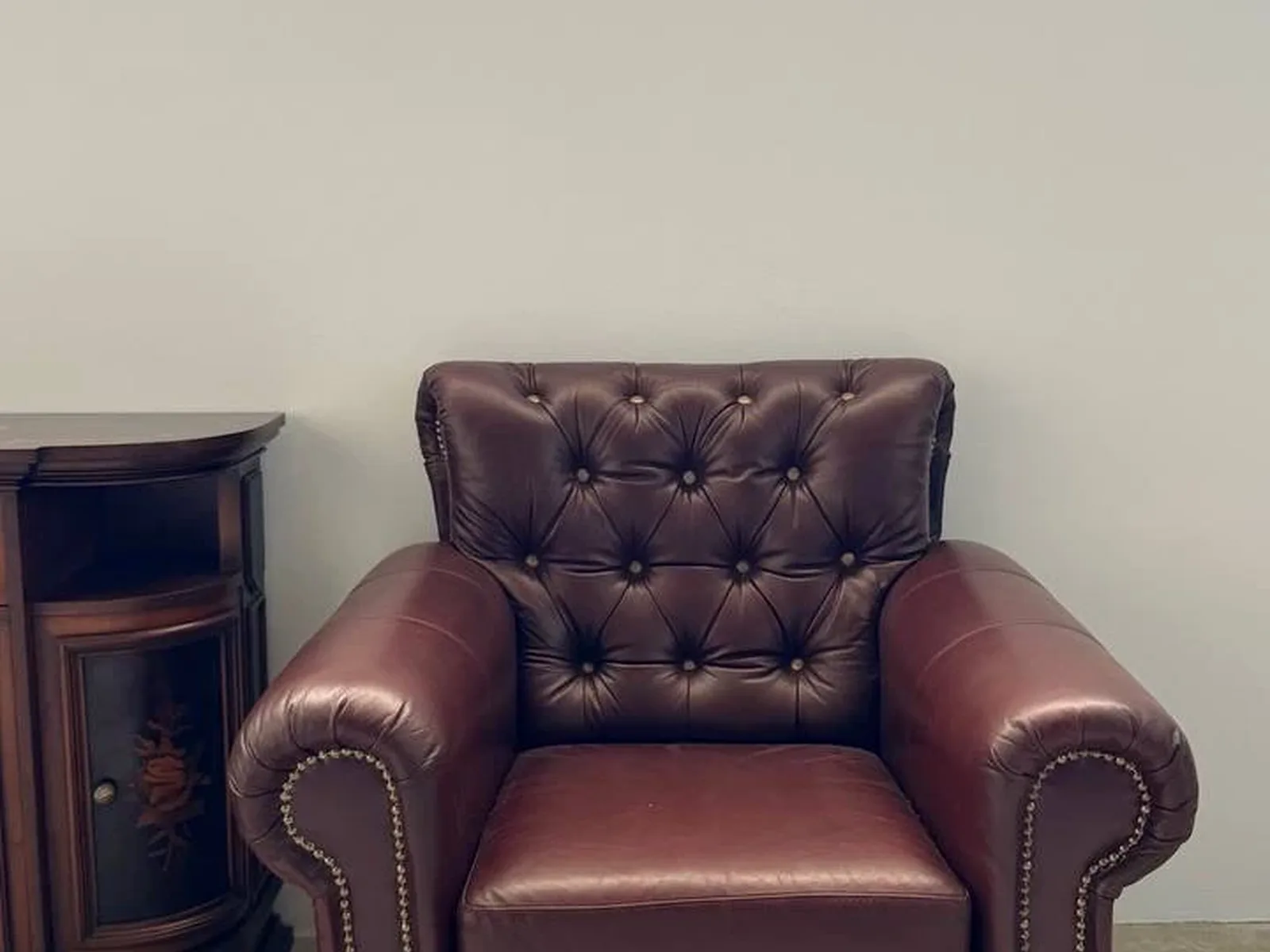
A handful of fixed traits, passed down unchanged for generations, make a Chesterfield instantly recognisable. Deep diamond tufting — rows of buttons sunk into the leather, casting a geometric play of shadow — is its visual signature. Rolled arms, equal in height to the backrest, give the silhouette an almost sculptural weight. Short, solid-wood legs anchor the piece visually to the floor, while the low backrest suits it equally to a library or a contemporary living room. It is a design that works because every element carries structural, not merely decorative, purpose. The tufting originally had a practical role too: the sunken buttons held horsehair or down filling in place inside the upholstery, keeping it from bunching unevenly — only later, through repetition and refinement, did the technique become the aesthetic signature we recognise today.
Patinated leather: the soul of a Chesterfield sofa
A Chesterfield sofa lives through its leather. Quality leather — typically aniline or semi-aniline, vegetable-tanned — never stays the same: it darkens gently over time, gains a soft sheen where it is handled most, and develops fine creases that trace the story of its use. This evolution, known as patina, is the opposite of wear: good leather does not fade, it deepens in character, which is why genuine pieces decades old are often more sought after than new ones. It is exactly why, when you care properly for a genuine leather sofa, you are investing in a piece that only looks better with each passing year. That is the exact opposite of furniture upholstered in synthetic materials, which visibly degrades over time and can never be restored to its original state — reason enough why genuine leather pieces remain, year after year, the safest investment in a living room.
From the gentleman's library to today's aristocratic living room
The twentieth century carried the Chesterfield well beyond private clubs, into hotels, newsrooms, and eventually private homes across the world. What has stayed constant is the context in which it reads: effortless elegance, heritage rather than trend. It is no coincidence that the Chesterfield sofa is one of the signature pieces of aristocratic interior style — that visual language of restraint, honest materials, and pieces that persuade through substance rather than volume. Set beside a matching armchair or a solid-wood table, a Chesterfield gives a living room a gravity that new, mass-produced furniture rarely reaches. It is no coincidence that it looks equally at home in a contemporary penthouse in central Chișinău and in a restored country manor in northern Moldova — one of the rare pieces of furniture that never reads as out of place.
How to recognise a genuinely valuable Chesterfield
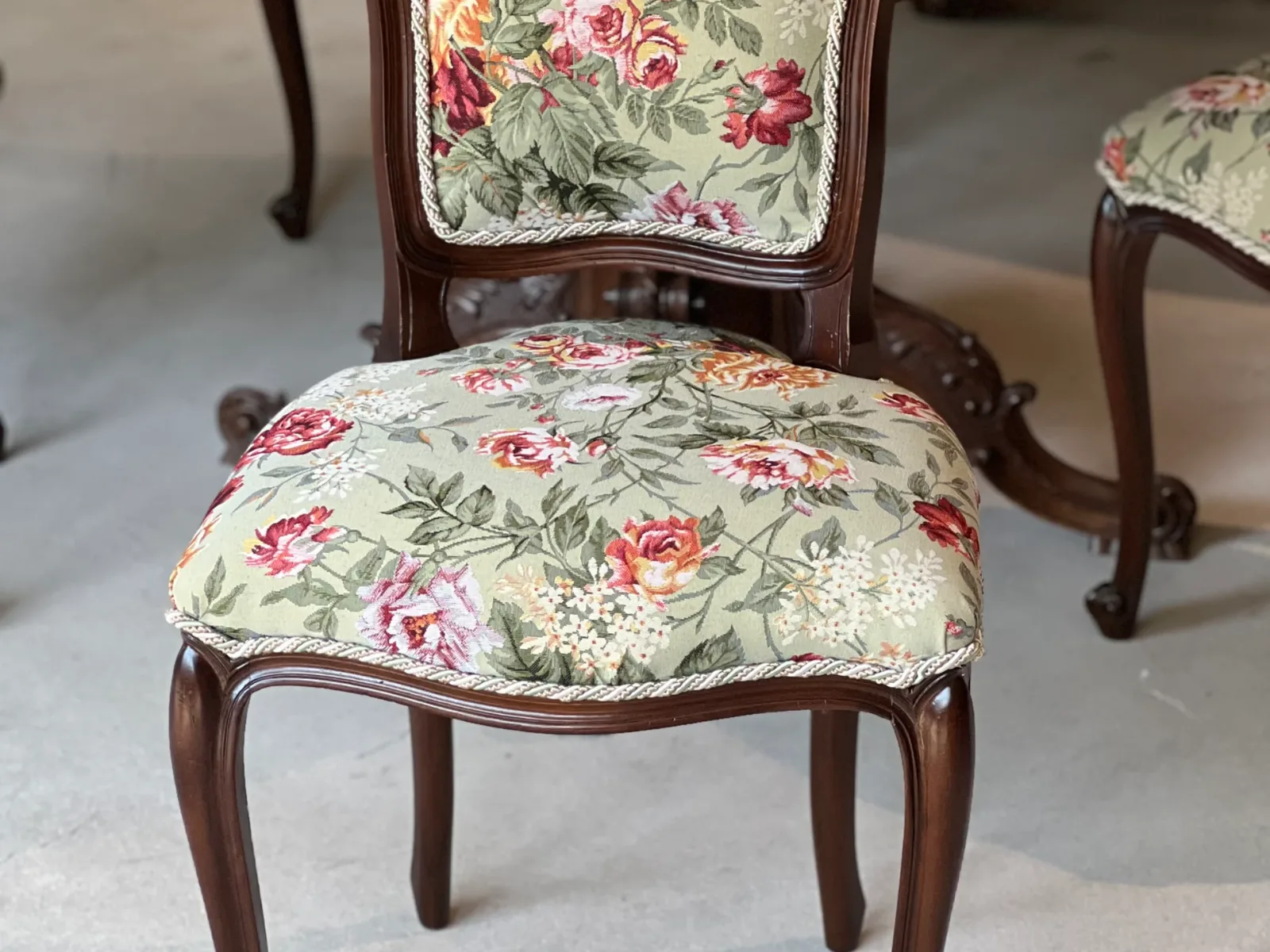
Not every tufted sofa is an authentic Chesterfield, and the difference shows in the details. Genuine leather, not faux or bonded leather — textured, distinctly scented, warm to the touch. A solid internal frame with no creaking or wobble, and legs firmly fixed in solid wood. Symmetrical tufting with securely anchored buttons and no visibly strained stitching. And if a piece already carries some age — coming from a European home with authentic signs of patina — its value only grows; it is exactly the kind of vintage piece with genuine, lasting value worth seeking out rather than avoiding. Another telling sign of quality is weight: a well-built Chesterfield is noticeably heavier than cheap imitations, precisely because it relies on solid-wood framing and generous amounts of leather rather than thin plywood wrapped in synthetic material.
Living with a Chesterfield: how to integrate it with taste
A Chesterfield has a strong personality, so the rest of the room should be composed as a setting for it rather than in competition with it. It sits beautifully beside solid-wood furniture — a low coffee table, a bookcase, a chest with some age to it — and pairs well with premium textiles such as velvet or linen for cushions and drapery, which balance the visual weight of the leather. For anyone starting a room from scratch, our guide to choosing a solid-wood living room sofa explains exactly which criteria matter beyond style — frame construction, cushion density, and the quality of the timber underneath. Neutral tones around it — beige, cream, deep green or warm grey — let the patinated leather stay the room's focal point, exactly as it was originally intended, in a library where nothing was meant to compete with it.
A Chesterfield sofa from the Martello collection
Martello does not manufacture on a production line — we curate. Every Chesterfield sofa that enters our collection is selected for the authenticity of its leather, the soundness of its structure, and the patina that only time can grant. It is a one-of-a-kind piece: once sold, it is never repeated. You can see and feel it in person at our showroom in Nimoreni, Ialoveni, just fifteen minutes from Chișinău, alongside the rest of our living room furniture collection, or browse the full Martello catalogue to discover other rare pieces selected for homes across Moldova and Romania. A Chesterfield sofa is never just a place to sit — it is a decision in taste that stays relevant long after passing trends have faded.