The vintage chest of drawers: the piece that turns a hallway or bedroom into a room with a story
A vintage chest of drawers is the kind of furniture that does not simply occupy space — it creates its own presence around it. Years have polished the wood, hands opening the drawers have given the hardware a soft patina, and the surface has taken on that warm hue that only time can give, never a shop. At Martello Mobili we select pieces exactly like this for our collection of premium furniture, and every chest in it is one of a kind: once sold, it never reappears in our showroom in Nimoreni, Ialoveni, only fifteen minutes from Chișinău. For anyone looking for a centrepiece for a hallway or a bedroom, a chest with history is the difference between a room that is merely furnished and one that truly feels lived in.
What makes a vintage chest genuinely special
The difference between a vintage chest and a new, mass-produced one can be felt as much as seen. Solid wood — walnut, oak or cherry — gains, over the years, a density and a resonance that pressed fibreboard simply cannot imitate. Traditional joinery, a dovetail joint visible along the edge of a drawer, brass or bronze hardware with a gently darkened patina — all of these are the marks of a piece built to last generations, not seasons. A well-chosen vintage chest is never just storage; it carries the imprint of time and of the taste of everyone who owned it before you.
Hallway or bedroom: one piece, two lives
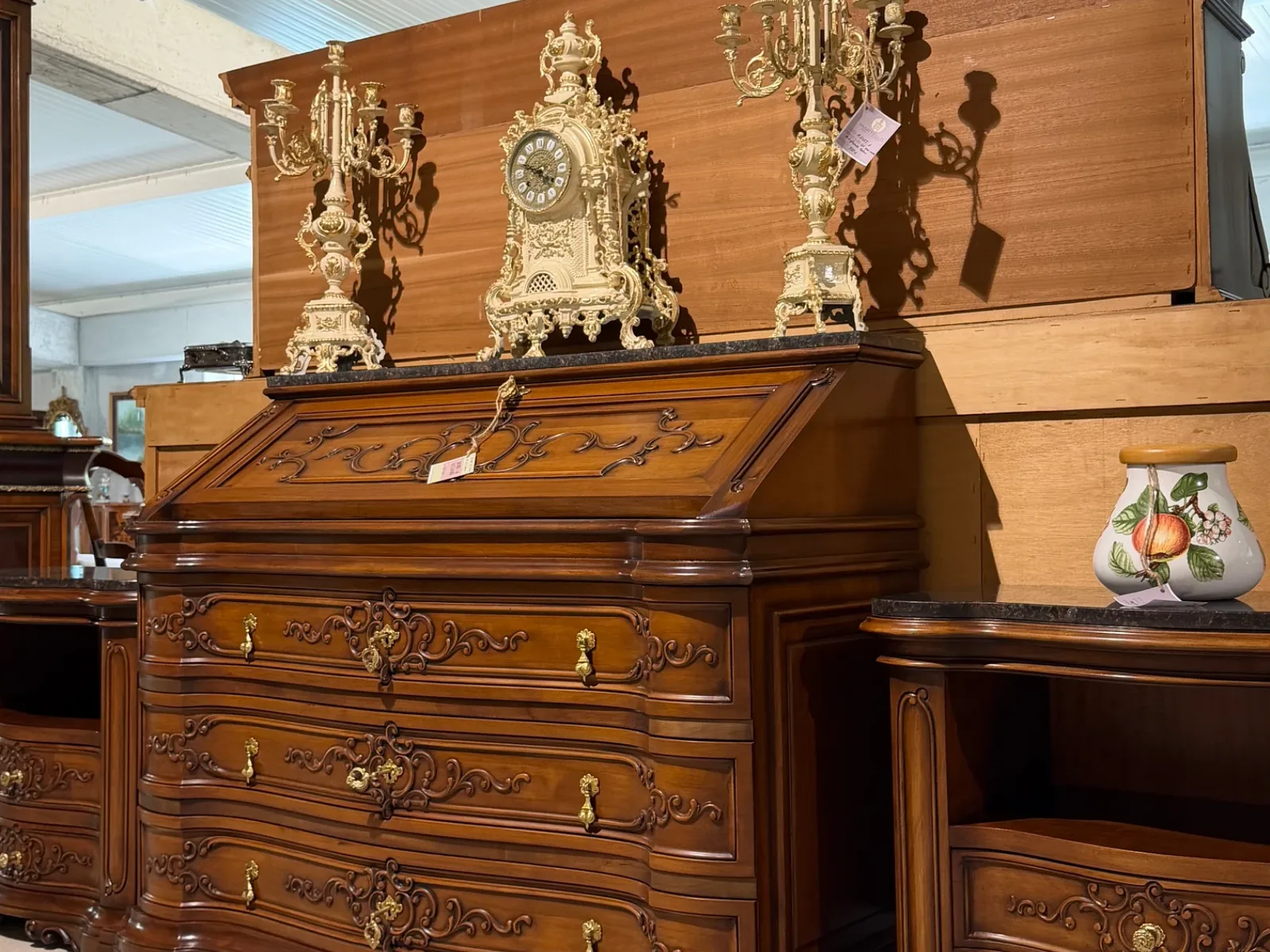
This dual calling is exactly what makes a vintage chest so versatile. In a hallway, it becomes the first gesture of welcome: its top holds the keys, a vase, a small mirror, perhaps a stack of books. In a bedroom, the same chest takes on a more intimate role — holding linens, accessories, jewellery — while its surface becomes home to a clock, a reading lamp or a framed photograph. If you are furnishing a bedroom from scratch, a characterful vintage chest can easily become the starting point for the room's entire colour palette and style.
How to recognise a well-made vintage chest
A few simple checks reveal a great deal about a piece. Weight matters: solid wood is noticeably heavier than a veneered chipboard or MDF carcass. Drawers should glide evenly, without sticking, and the interior should smell neutrally of wood, never of damp. It is also worth looking underneath the chest, where the joinery technique and any past repairs show most clearly. An authentic piece carries natural signs of use — a few small scratches, a slightly uneven tone, a corner softened by decades — and far from being flaws, these are its certificate of authenticity.
Styling the top: the art of a small vignette
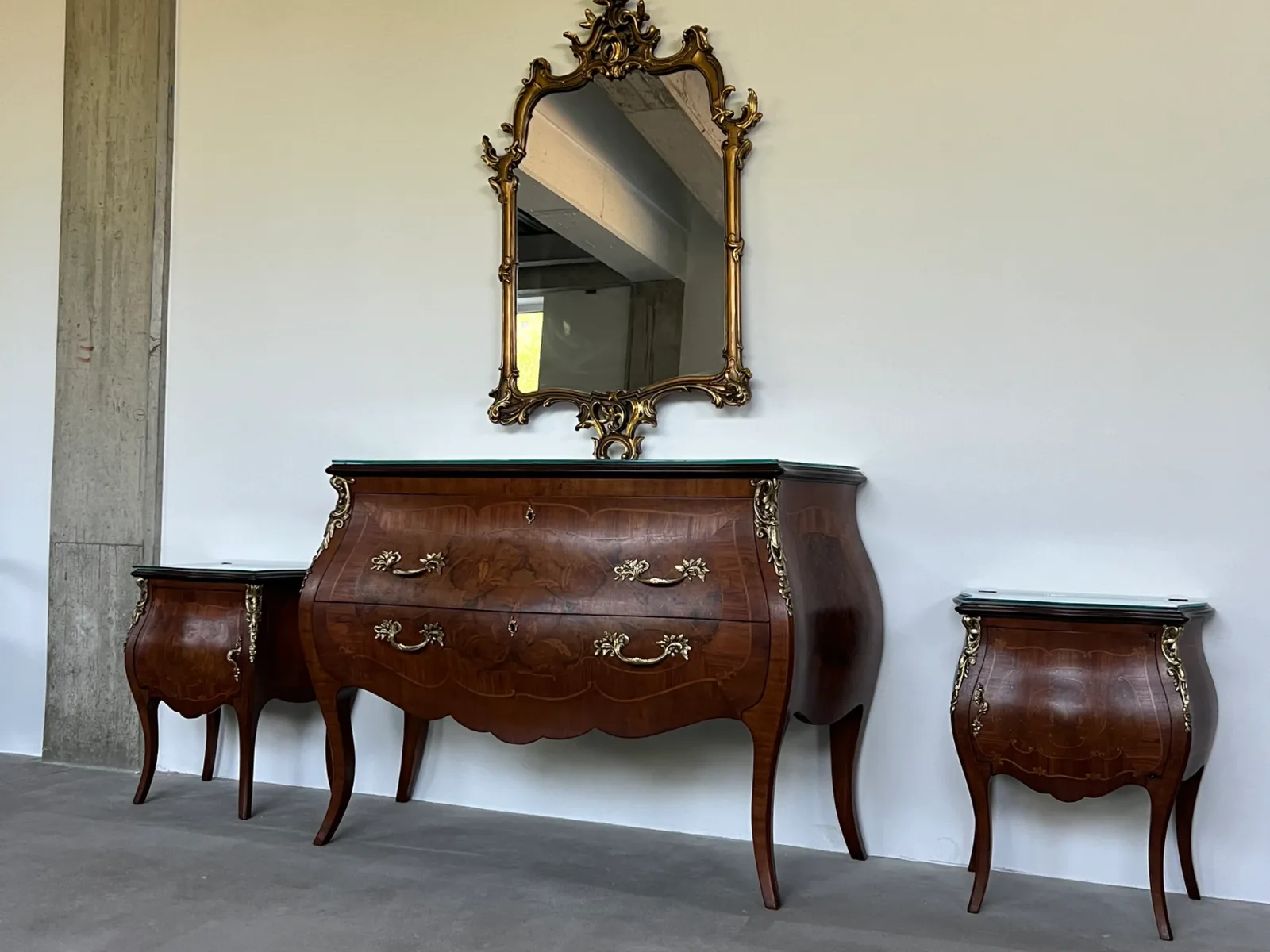
The top of a vintage chest is a small stage that deserves careful direction. The unwritten rule is to group objects in odd numbers — three or five pieces of varying height create a livelier composition than strict symmetry. A mirror framed in solid wood placed above visually doubles the light and adds depth to a hallway or bedroom. Beside it, a lamp with warm light, a vase of dried or fresh flowers, and a small tray for jewellery or keys complete the picture without crowding the surface. Empty space matters just as much as objects — a vintage chest does not need to be full to impress.
Getting the proportions and placement right
Before bringing the piece home, measure the space carefully. In a narrow hallway, a chest with a shallow depth keeps the passage clear; in a spacious bedroom, a larger piece with six or eight drawers can easily take on the role of a compact dressing unit. The classic rule of placement is that if you hang a mirror or a painting above it, you should leave 15 to 20 centimetres between the top of the chest and the bottom of the hanging piece — enough for the composition to breathe. Natural side light shows off the texture and patina of the wood best, which is why it is worth avoiding placement directly opposite a strong light source, which can fade the original finish over time.
How to combine it with the rest of your furniture
A vintage chest should never stand isolated, like a museum piece. Next to something with curved lines, such as a bombé chest, or a piece hand-painted in its own era, such as a painted chest with floral motifs, you can build a hallway corner with real character. In a bedroom, it works beautifully as part of a bedroom set built around a matching mirror, and for anyone who prefers a more contemporary mix, our guide on combining vintage and modern furniture shows exactly how much character a single piece with history can bring to a minimalist room.
Long-term care for a piece that stays in the family
A well cared for vintage chest keeps its value and beauty for decades. Clean the wood with a soft, lightly damp cloth, followed immediately by a dry wipe, and avoid abrasive products or direct exposure to heat sources, which dry out the fibres and can crack the finish. A good-quality natural wax, applied once or twice a year, feeds the wood and maintains its restrained, time-worn sheen. For the full ritual, our guide to caring for vintage wooden furniture explains it step by step, depending on the wood species.
Whether you want a discreet accent for the entrance hallway or the anchor of a bedroom with a character all its own, a carefully chosen vintage chest is an investment that never goes out of style. In the Martello showroom in Nimoreni, Ialoveni, you can see and touch these one-of-a-kind pieces from a collection that is constantly renewed — because, as we always say, a chest once sold never appears the same way twice.