Venetian Mirrors: History, Style, and How to Use Them
The name comes directly from 16th-century Venice, where craftsmen on the island of Murano held a monopoly on the technique for producing clear glass — a rarity in Europe at the time, when most mirrors were cloudy or distorted. A genuine Venetian mirror was, in its day, a luxury object comparable to jewelry. Today the term describes a decorative style more than a strict geographic origin. Here's exactly what defines it.
The carved, gilded, or etched frame
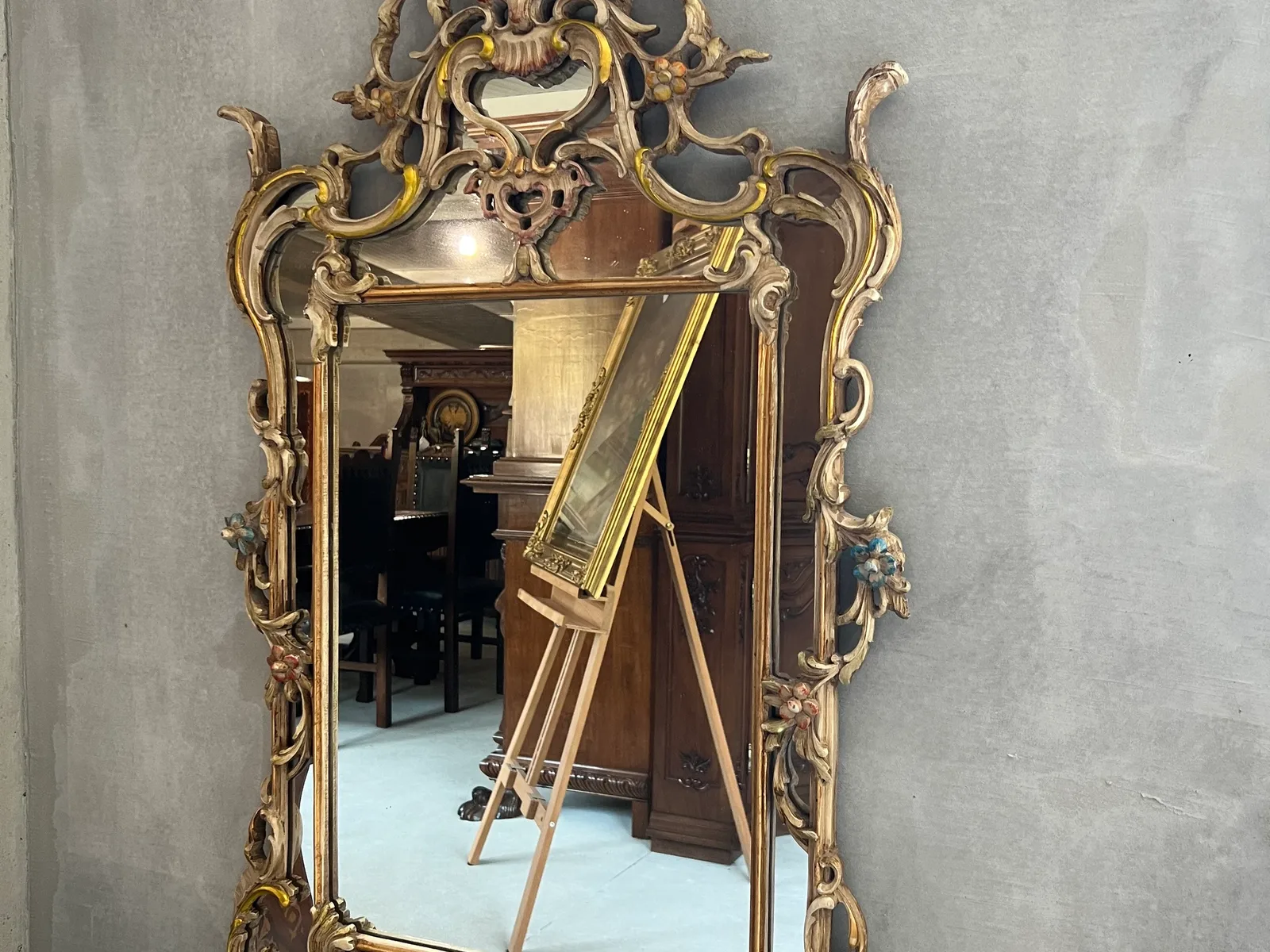
The most recognizable trait is the richly worked frame — carving in gilded wood with scrollwork, shells, and floral motifs, or, in the rarer and costlier version, hand-etched glass in place of wood, cut into decorative shapes surrounding the mirror itself. The difference between a good piece and a cheap imitation shows in the depth of the carving: an authentic Venetian frame has real relief, not just a pattern stamped onto a flat surface.
The silhouette: always asymmetrical or curved, rarely a perfect rectangle
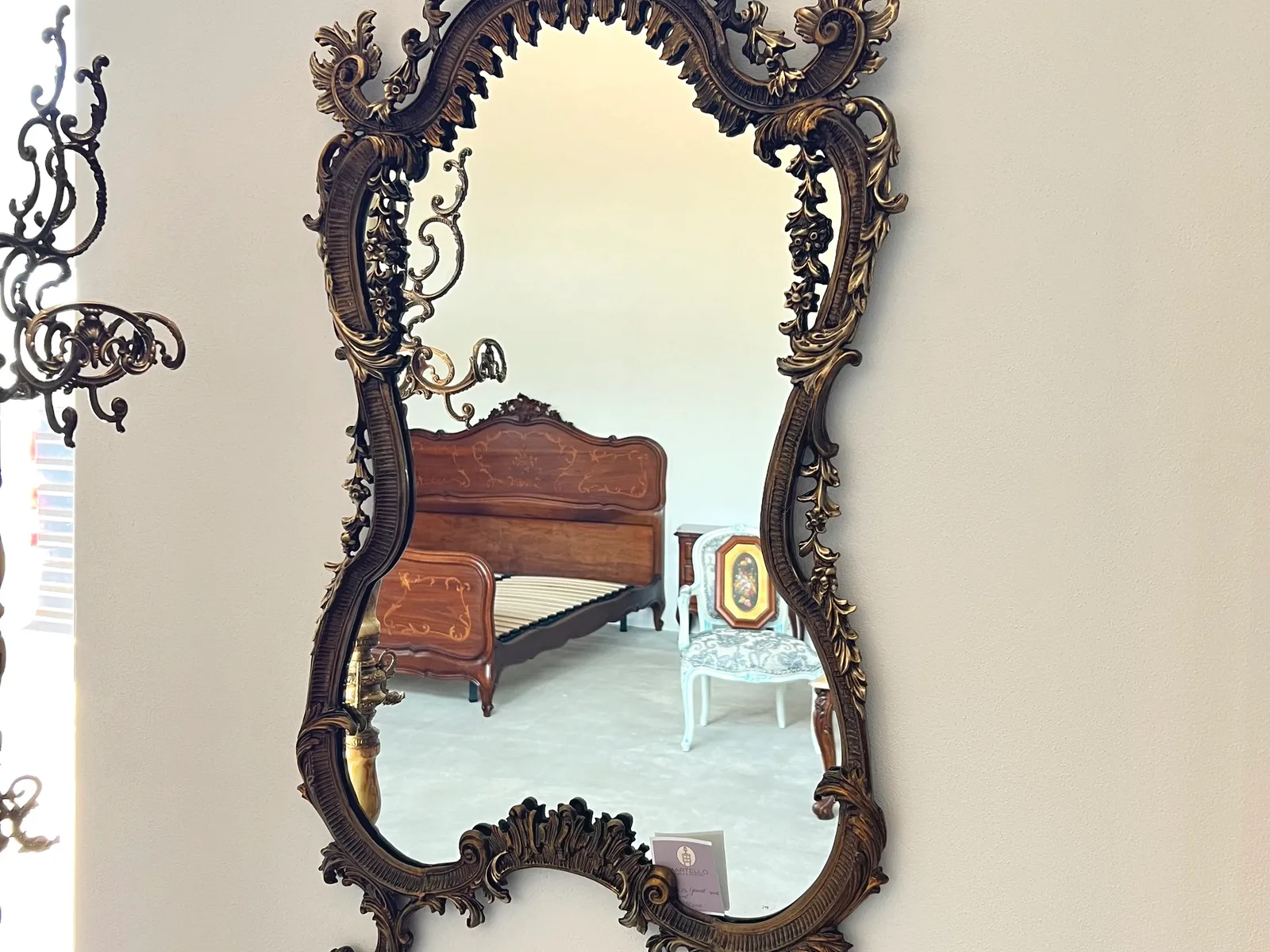
Unlike simple round or rectangular mirrors, the Venetian silhouette almost always follows an irregular shape — an ovalized outline with a decorative crest at the top (often a shell or a floral crown) and edges that ripple rather than run straight. This controlled asymmetry is the style's visual signature.
Where it looks best in today's interiors
A Venetian mirror needs visual breathing room around it — it doesn't work well tightly boxed in by other decorative pieces. The ideal spots are above a fireplace, above a hallway or living room console, or as the centerpiece on an otherwise bare wall. In a contemporary, minimalist interior, a single Venetian mirror works exactly like a valuable painting: the room's focal point, not one element among many.
How to check authenticity before buying
Lift the piece slightly, if you can: a frame carved from solid wood is noticeably heavier than a cast-resin imitation. Check the back too — on a hand-worked piece, chisel or sanding marks stay visible, while industrial imitations have a perfectly uniform surface with no natural variation.
How we choose at Martello, in Moldova and Romania
Every piece in the Martello catalogue is personally checked by us for the authenticity of the carving and the material. You can see and touch them at our showroom in Nimoreni, Ialoveni, fifteen minutes from Chișinău, or browse the vintage furniture section. A well-chosen Venetian mirror remains, decades on, the piece that gives a room depth — long after passing decorative trends have shifted a few more times.