How to Check From Photos If Furniture Is Solid Wood Before Buying Online
Online shopping has one clear drawback for furniture: you can't touch the piece, knock on it, or feel its weight. The good news is that a good photo actually tells you a great deal — you just need to know what to look for. Here's the method we use ourselves when evaluating pieces for purchase, adapted for someone shopping from home, from a handful of photos.
Follow the grain continuity around corners
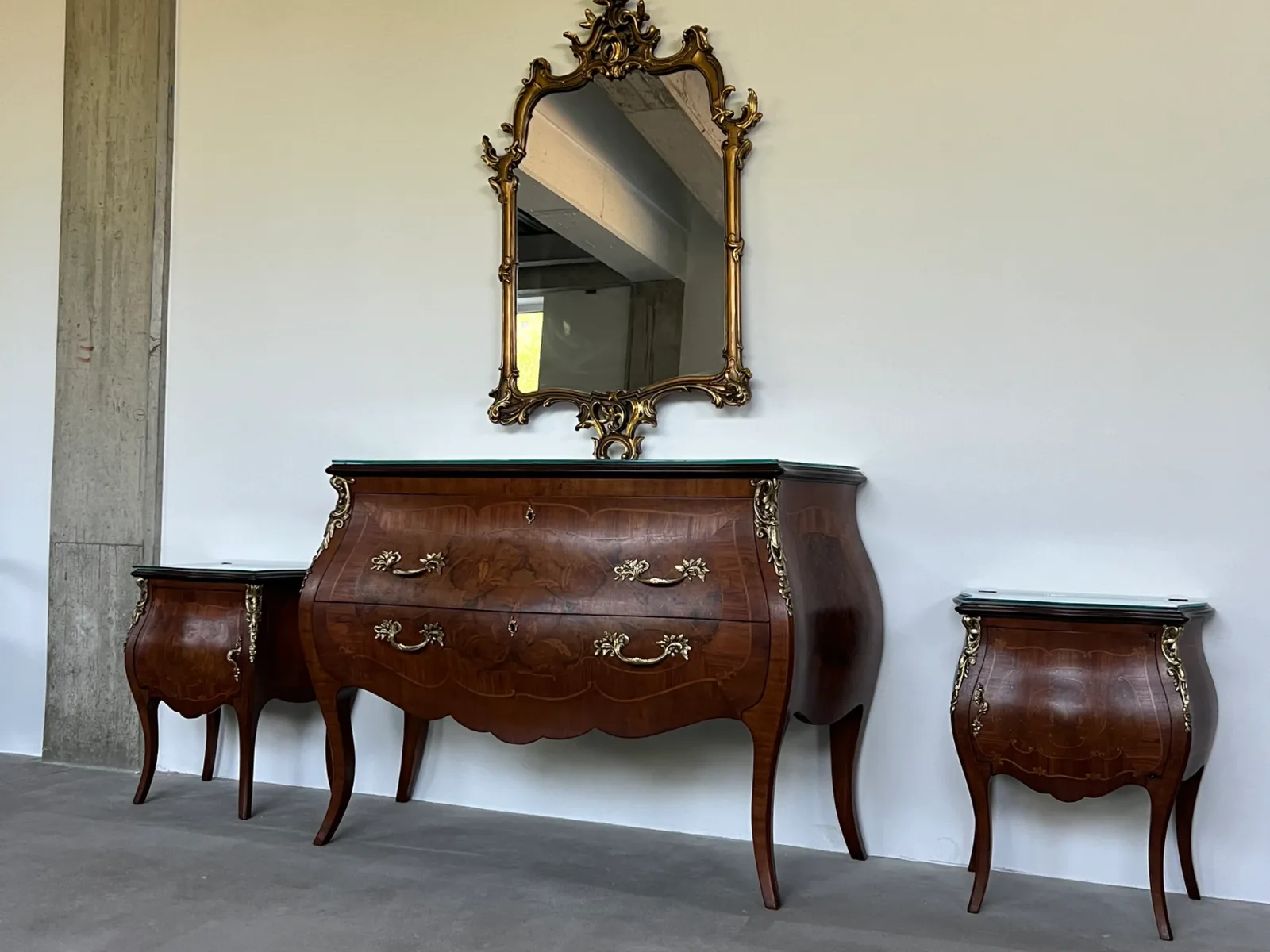
This is the most reliable sign, clearly visible in close-up photos. Zoom in on the corner of a door, a drawer, or a leg. If the wood grain pattern continues naturally, slightly irregularly, from one side of the corner to the other, you're looking at solid wood. If the pattern "stops" abruptly at the edge or, conversely, repeats identically across several neighbouring pieces like a printed pattern, that's a sign of veneer or, worse, printed foil — a topic we cover in detail in our guide on veneer versus solid wood.
Ask for angles the seller doesn't show upfront
Good listings show the piece's front, nicely lit. A serious seller won't hesitate to send, on request, photos of the back, the inside of the drawers, and the underside. These "hidden" areas are exactly where mass-furniture makers cut corners — an unfinished particleboard back immediately gives away a veneered piece, even if the front looks flawless. For any piece in our catalogue, you can always request extra photos from any angle.
Look at the surface texture under raking light
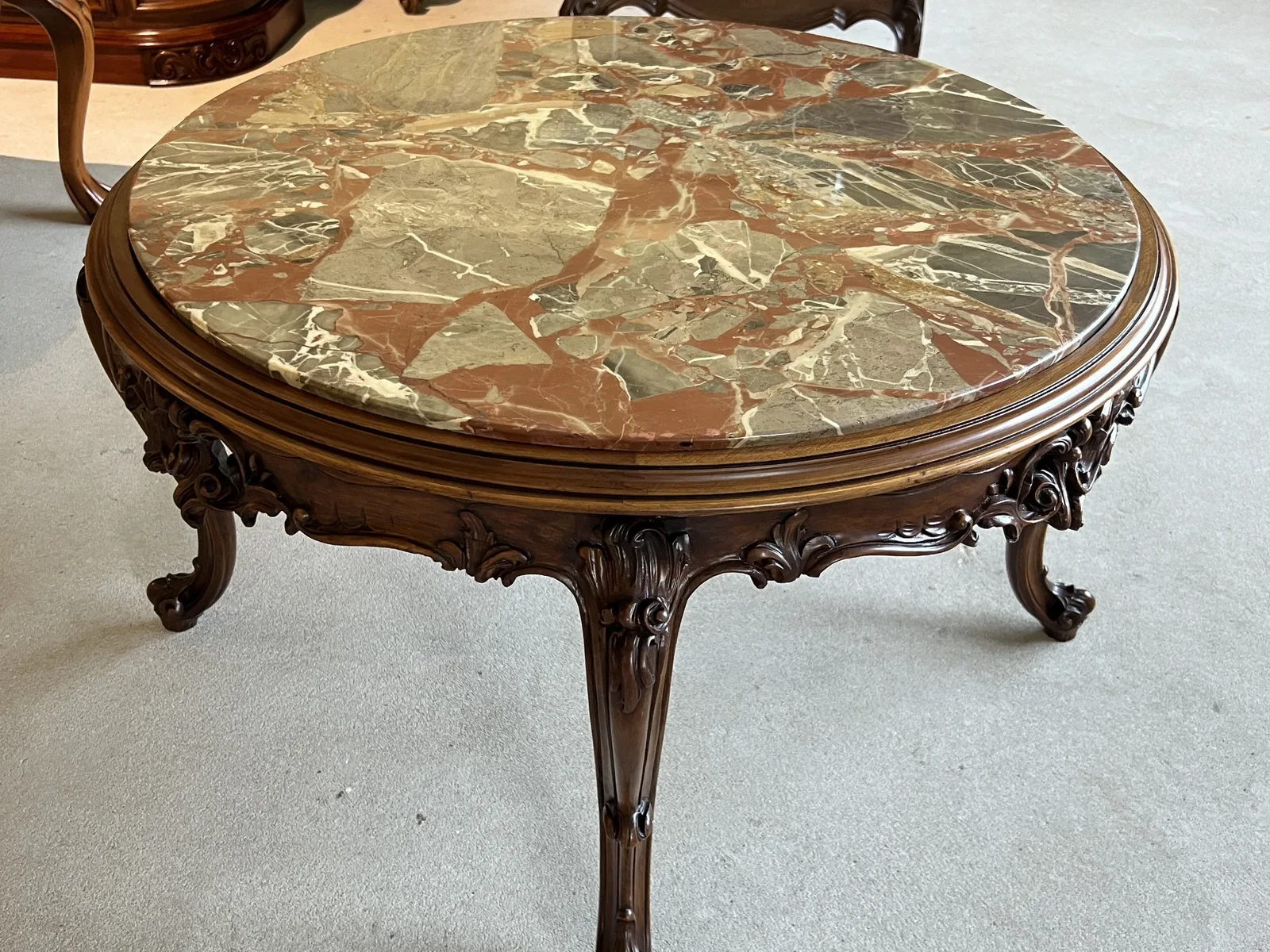
Solid wood, especially old wood, has micro-relief — visible pores, slight surface undulations, fine traces of hand-sanding. In a photo taken with raking light (from the side, not straight on), these imperfections cast fine shadows. A laminated particleboard or printed-foil surface is perfectly flat and reflects light evenly, without that natural micro-relief. It's a subtle detail, but once you learn to see it, it jumps out.
Read the description carefully — and ask the direct question
An accurate description explicitly names the wood species (walnut, oak, cherry) and states solid wood, not just "wood" in general, a term vague enough to cover veneer too. If the information is missing, ask the seller directly: "Is the structure solid wood or veneered over another material?" A trustworthy seller answers clearly and without hesitation; an evasive answer is, in itself, a red flag. For more red flags to watch for when buying online, we've gathered the most common ones in our guide on mistakes to avoid when buying vintage furniture online.
Return policy, your last safety net
Even with all the checks above, a small margin of error remains possible. That's why a clear return policy matters just as much as the photos — if the piece doesn't match the description you were given, you should be able to return or exchange it without hassle.
How we choose at Martello, in Moldova and Romania
Every piece in the Martello catalogue comes with detailed photos from multiple angles, precisely because we know how much this matters for an online purchase. If you'd rather see and touch the piece first, we're waiting for you at our showroom in Nimoreni, Ialoveni, fifteen minutes from Chișinău. Buying furniture online doesn't have to be a gamble — you just need to know what to look for.