Veneer vs. Solid Wood: How to Tell Them Apart Before You Buy
It's one of the most common questions we get at the showroom, and for good reason: the price gap between a piece made of solid wood and one veneered over particleboard or MDF can be enormous, yet at first glance the wood looks equally beautiful on both. The problem shows up years later, when thin veneer peels, chips at the corners, and can no longer be repaired, while solid wood simply develops patina. Here's exactly what to look for, so you know what you're buying.
What each term actually means
Solid wood means the piece is cut and worked from a real block of walnut, oak, or cherry — grain, natural irregularities and all. Veneer is a thin sheet of real wood, a fraction of a millimetre thick, glued onto a cheap core. Not all veneer is a red flag — old, hand-made furniture sometimes used thick solid-wood veneer for intricate marquetry patterns, applied over a core that was itself solid wood. The problem is modern mass-produced furniture, where thin veneer covers particleboard or MDF, a material that can't be repaired and degrades irreversibly from a deep scratch or moisture.
The edge and corner test
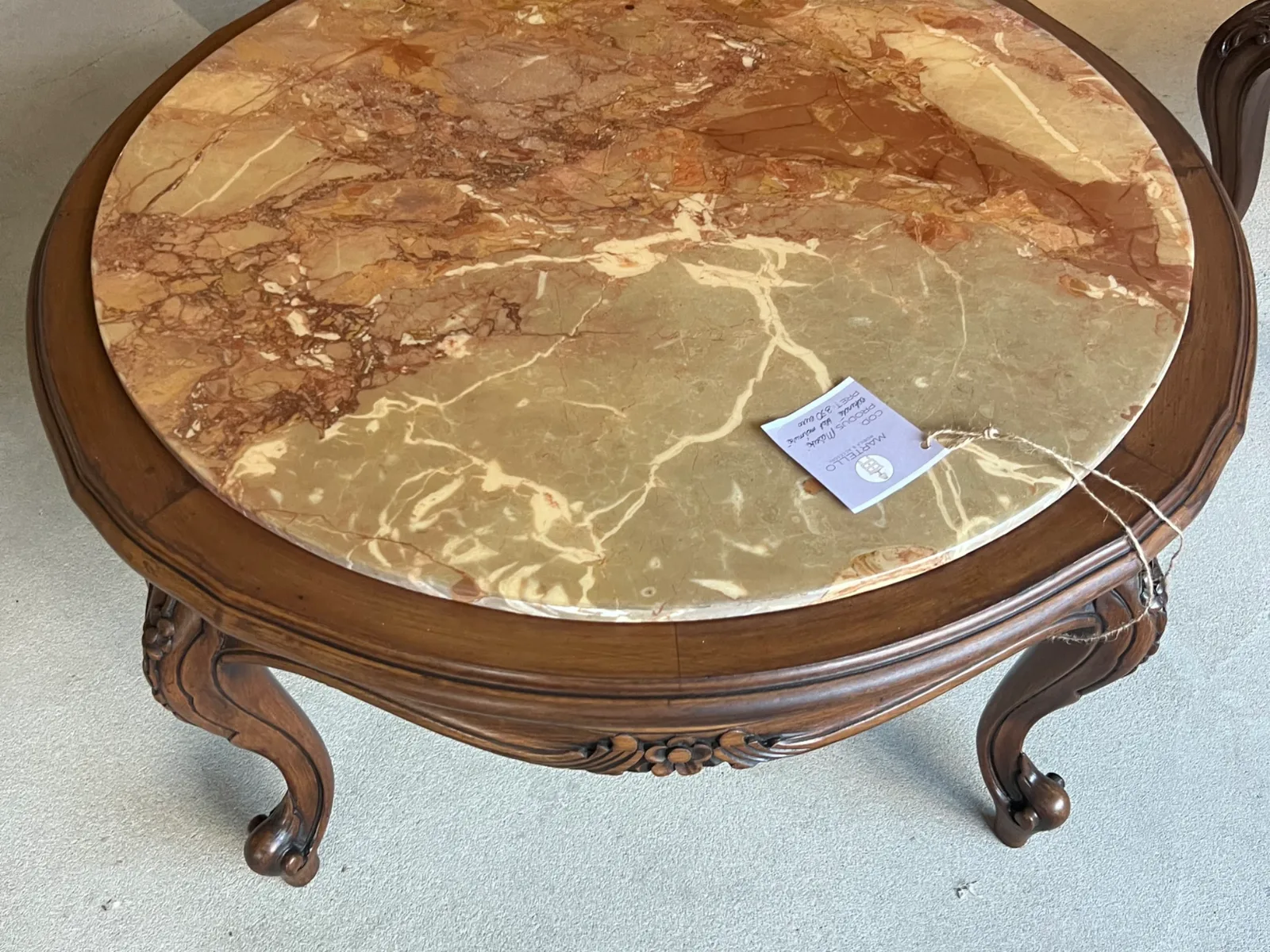
The first place to look is the edge of a door or drawer. On solid wood, the grain continues naturally around the corner, because the material is uniform throughout. On veneer, the corner often reveals a fine, almost invisible line where the wood sheet ends and a different material begins underneath — sometimes a slightly different shade. Check the underside and back of the piece too, where manufacturers cut corners most often: if a chest's back panel is bare, unfinished particleboard, the front is almost certainly veneer, not solid wood throughout.
The weight and sound test
Solid wood is heavier than you'd expect — lift a corner of the piece if you can. Particleboard and MDF are lighter for the same volume. Knock gently on the surface with your knuckle: solid wood gives a dense, full sound; particleboard sounds hollow, like a box. It's a simple test, and any serious seller should agree to it without hesitation.
How to check from photos, when buying online
You can't touch or knock on a photo, but you can follow the grain pattern. On solid wood, the grain pattern repeats naturally and slightly irregularly across the whole piece, including the edges. On veneer, you sometimes see the pattern "stop" abruptly at an edge, or repeat identically like a stamp — a sign it's an applied sheet, not the material itself. For a full guide dedicated exactly to this, with more angles to check in photos, we wrote about how to recognise solid wood from photos before buying online.
Why the difference matters long-term
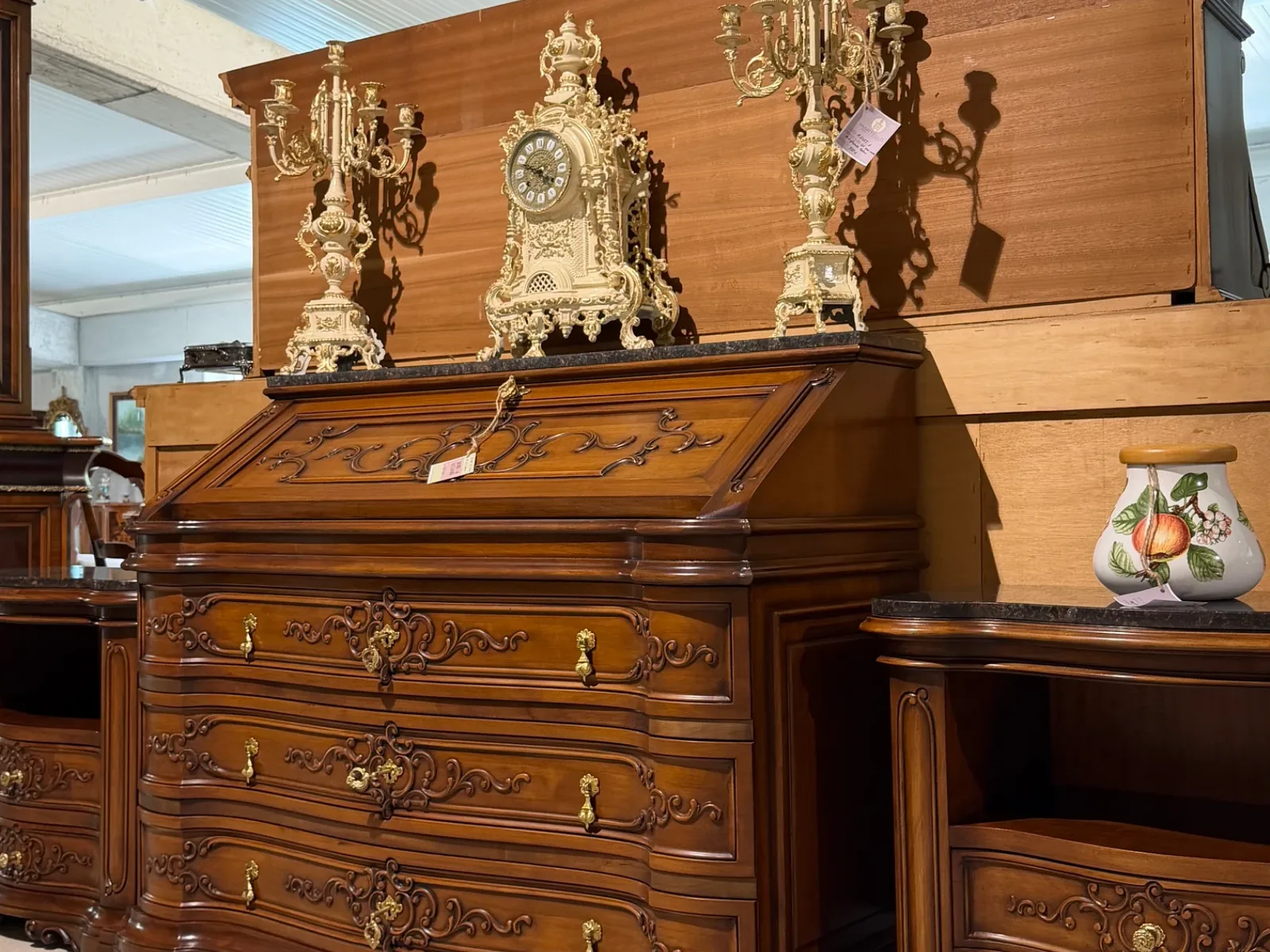
A solid-wood piece can be sanded and refinished several times over the decades — a scratch or a stain isn't fatal to it. A veneered particleboard piece, once damaged, can't truly be repaired, only temporarily hidden. That's why every piece in our vintage chest collection is selected exclusively in genuine solid wood, checked piece by piece before it reaches the showroom.
How we choose at Martello, in Moldova and Romania
Every piece in the Martello catalogue is personally checked by us for material authenticity, not just looks. You can see and touch them at our showroom in Nimoreni, Ialoveni, fifteen minutes from Chișinău, or browse the vintage furniture section. Once you know what to look for, the difference between veneer and solid wood becomes obvious at a single careful glance — and the choice becomes much easier.