Vintage Extendable Table: How It Works, When It's Worth It
The problem is as old as small dining rooms and families gathering for holidays: you need a table sized for four people every day, but for ten a few times a year. The solution, devised long before modular modern furniture, is the extension mechanism — simple, sturdy, and, on an old piece, often built better than today's cheap versions.
How the mechanism actually works
The two most common systems on vintage pieces are center-leaf extension (the top splits in two, an extra panel slots in the middle) and telescopic extension, where the top slides on rails hidden beneath it. Both, on a well-built solid wood table, work just as smoothly decades later as on day one — unlike particleboard mechanisms, which loosen up quickly.
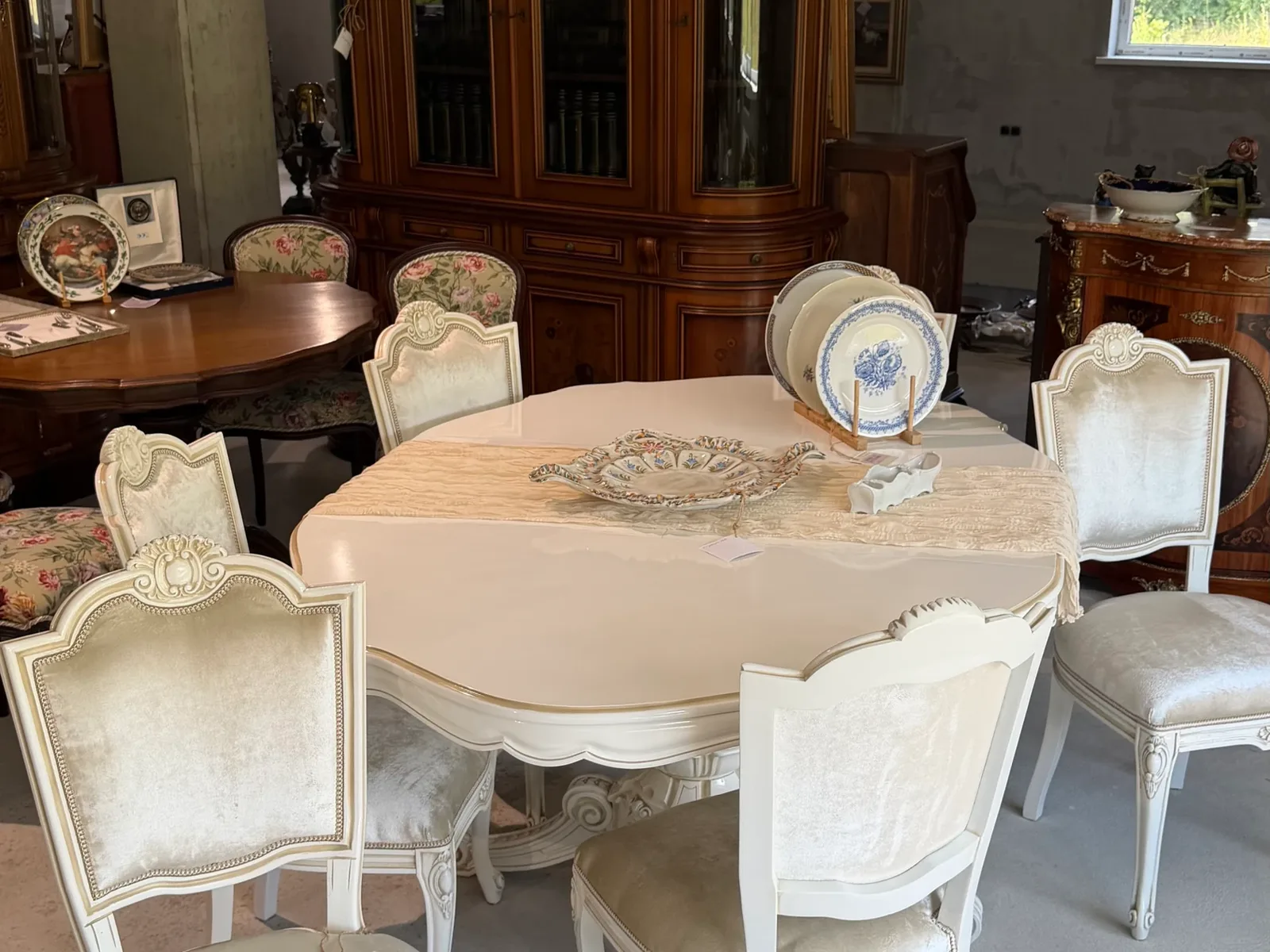
How much space you gain, in real numbers
An everyday oval table, around 130 cm, can reach 180-200 cm with one extra leaf — the difference between 4-6 seats and 8-10. Always check, before buying, how many extra leaves come with the piece and where they're stored when not in use.
How to check the mechanism's condition before buying
Test the extension on the spot, if you can — it should slide without jamming and without excessive side play once extended. Also check whether the extra leaves match the main top's wood tone exactly; on an old piece, years of differing light exposure can create a visible color gap if the leaves were stored separately.
When it's really worth it, and when it isn't
If your dining space is generous and you often host guests, an extendable table is almost always the right call — it saves the cost of a second table. If the space stays tight even when extended, or if you rarely gather more than four people, a fixed, correctly sized table remains the simpler choice.
How we choose the right table at Martello, in Moldova and Romania
Every piece in the Martello catalogue is personally checked by us for how the mechanism works and the structure's stability. You can see and test them at our showroom in Nimoreni, Ialoveni, fifteen minutes from Chișinău, or browse the vintage furniture section. A well-chosen extendable table quietly solves a problem almost every dining room has, even when no one admits it.