Original Painting or Reproduction: How to Tell an Old One
The difference between a genuine painting and a printed reproduction, mounted in the same elegant frame, isn't always obvious at a quick glance — but a few simple checks under good light remove almost any doubt. Here's exactly what to look for, whether you're standing in front of the painting or looking at a photo.
Brushstroke texture: the first and most reliable test
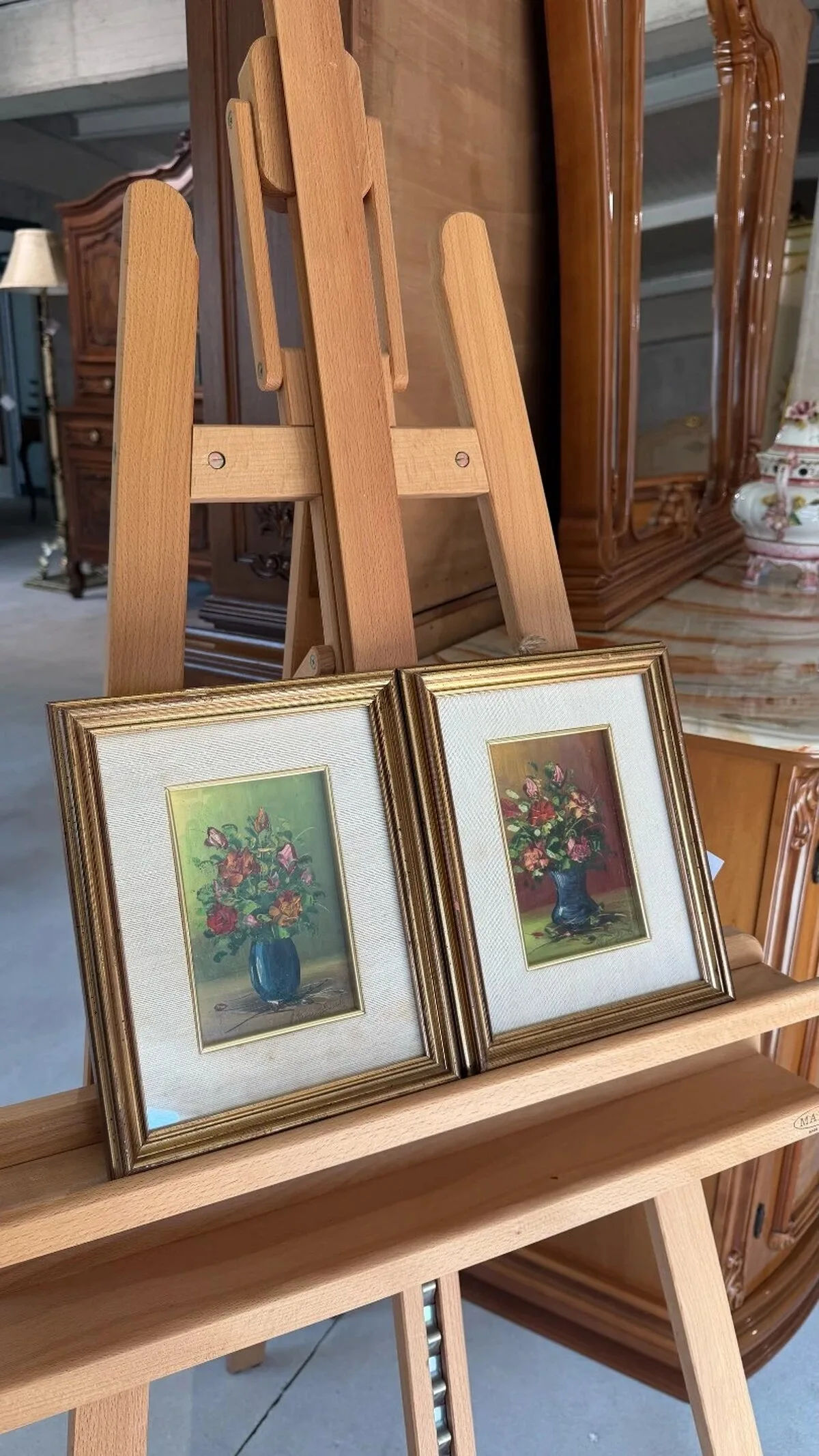
A genuine oil or acrylic painting has real relief on the surface — brush or palette-knife marks rise above the canvas plane, most visible from the side under raking light. A printed reproduction, however fine, stays perfectly flat; ink has no thickness. If you can view the painting from a side angle, under a side light source, the difference becomes obvious within seconds.
The signature: where it sits and how it looks
A painted signature is part of the paint layer — it has the same texture and thickness as the rest of the work, usually in one corner, with the paint slightly different in tone from the rest of the composition. A printed signature is perfectly flat, integrated into the image like any other pixel. Also check whether the signature matches a real, documented artist — an illegible or invented signature isn't necessarily a bad sign, but it isn't a good one either.
The canvas back often says more than the front
Turn the painting over, if you can. A genuine canvas, stretched over a wooden frame, has visible canvas edges, stapled or tacked to the frame, with natural signs of aging — stains, slight discoloration, sometimes an old studio or gallery label. A reproduction on a rigid support (MDF, cardboard, industrially printed canvas) has a perfectly uniform back, often with a modern production label or barcode.
How to check from photos when buying online
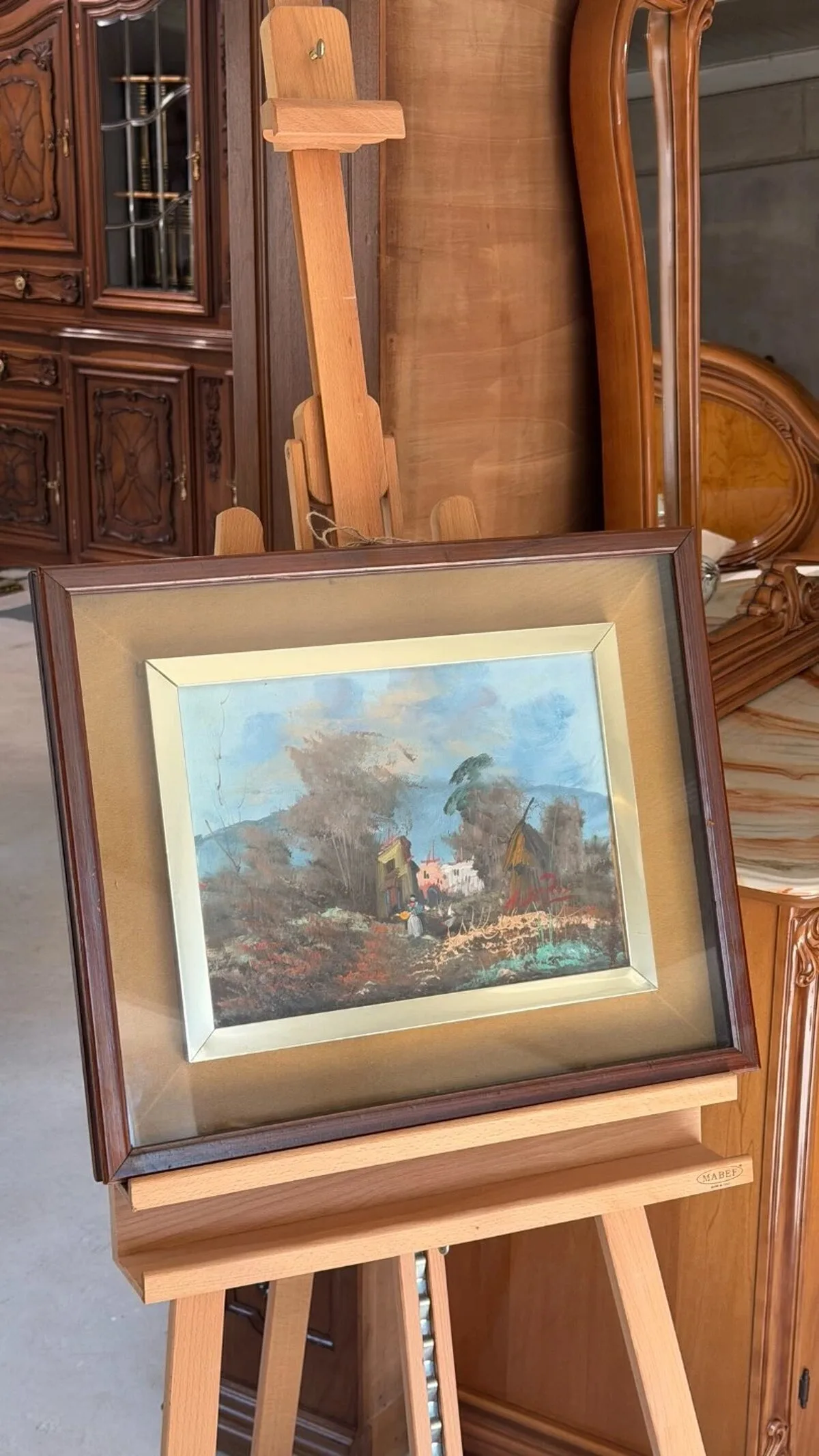
Always ask for a photo taken from the side, in natural light — a serious seller has no reason to refuse. Zoom in on the signature and corners, where brushwork relief is easiest to spot. The same photo-checking principles apply when choosing a gallery wall or matching a solid wood frame to a genuine piece.
Why it matters beyond price
The difference isn't only financial. We wrote in detail about how to recognize a genuine vintage piece in general, and the same principles apply identically to paintings: a genuine work with clear provenance holds its value over time, while a reproduction stays exactly what it is — decor, not an investment.
How we choose paintings at Martello, in Moldova and Romania
Every piece in the Martello catalogue, including our paintings collection, is personally checked by us for the work's authenticity and the frame's condition. You can see and examine them directly at our showroom in Nimoreni, Ialoveni, fifteen minutes from Chișinău, or browse the vintage furniture section. Once you know what to look for, the difference between an original painting and a reproduction becomes obvious — and the choice, far more confident.