Old Money style in interior design: the complete guide
Old money doesn't announce itself, it is felt. It's the aesthetic of families with inherited wealth, where luxury never shouts but whispers through noble materials, correct proportions and objects that have already passed the test of time. This isn't a fleeting social-media trend, but a visual language shaped over centuries in country manors, family libraries and European drawing rooms, quietly handed down from one generation to the next. This guide walks through, section by section, how to truly recognise old money style and, more importantly, how to bring it home — in Moldova or Romania — without slipping into kitsch or a cheap imitation.
The origins of the old money philosophy
The term went viral on social media in recent years, but its roots go back centuries, to English manors, Italian villas and the boyar houses of Eastern Europe. Old money originally described families whose wealth was not new but inherited across generations — and, with it, a particular way of living: homes furnished with one-of-a-kind pieces, passed down as family heirlooms rather than bought as an identical set from an impersonal showroom. The difference between old money and "new money" was never about price, but about restraint: no visible logos, no excessive shine, no loud contrasts demanding attention. You can read more about this philosophy and how it took shape over time in our article dedicated to old money aesthetics, where we trace its European stylistic origins.
The colour palette: shades that never tire the eye
An old money interior always relies on a restrained, earthy palette: cream, beige, camel, English green, deep burgundy, navy, warm grey and quiet touches of aged gold or patinated brass. You'll rarely find saturated, fluorescent or plastic-looking colours here — everything feels filtered through time, as though the wall had already absorbed a few decades of dusk light. We wrote a complete guide to the old money colour palette, with combinations tested for living rooms, bedrooms and studies. The basic rule, valid in any room, is simple: no more than three or four dominant shades per space, with the rest of the effect coming from texture and material, not additional colour.
Noble materials: solid wood, marble and brass
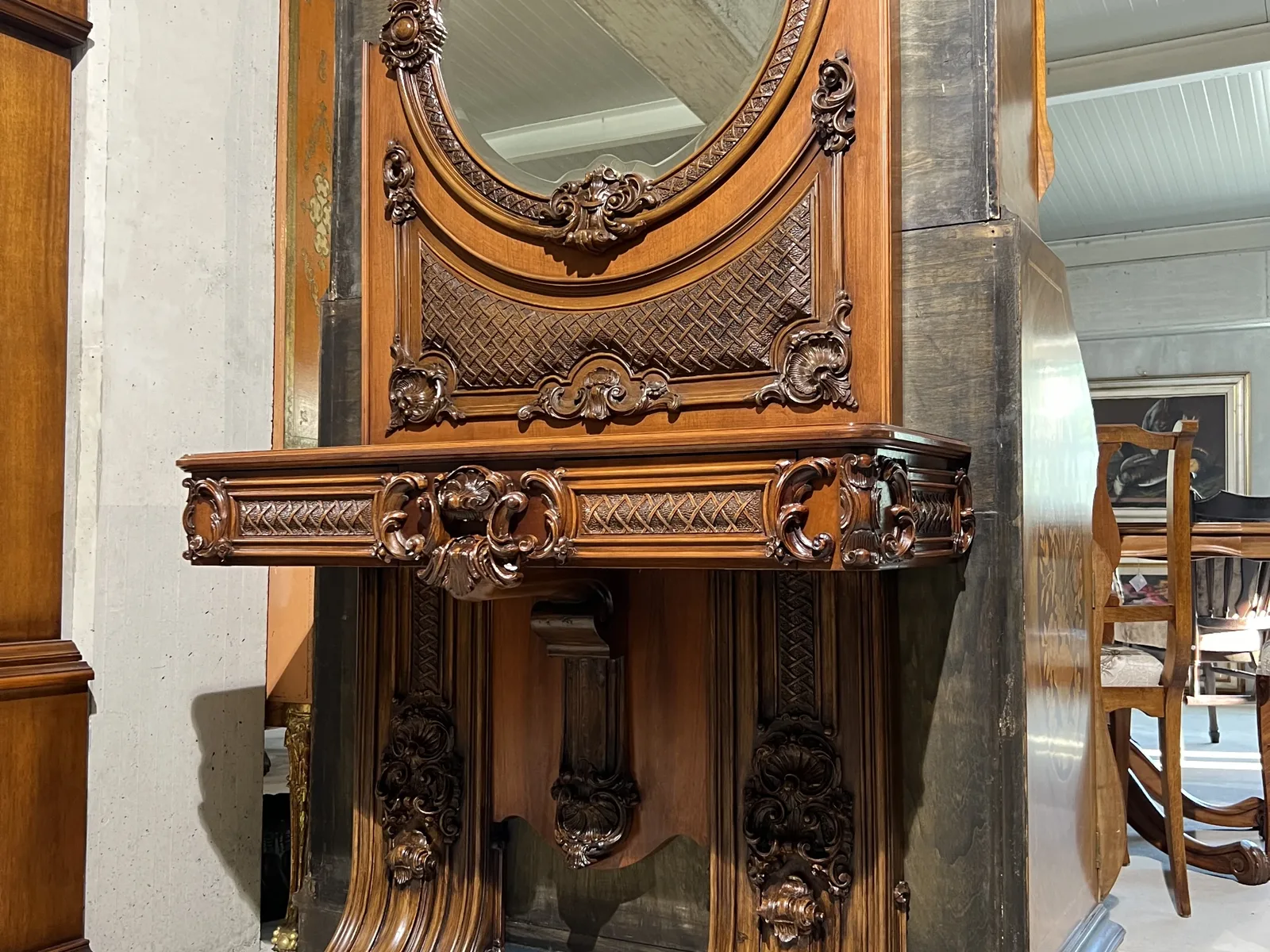
The essence of old money lies in the substance itself, not in applied decoration. Solid wood — walnut, oak or cherry — remains the foundation of any serious interior, because it ages beautifully and gains patina over time instead of degrading like chipboard or veneered MDF. We explain the differences between wood species in our comparison of walnut, oak and cherry, and for anyone who wants to avoid furniture disguised under a thin veneer, we have a guide to recognising genuine solid wood. Alongside wood, marble remains the signature material of timeless elegance — found on side-table tops, consoles and fireplace surrounds, as we show in our article on marble in interior design. Marble was prized since antiquity precisely for its rarity and its cool smoothness, a quality that never dates. Preferred metals are warm and matte — patinated brass, old bronze — never bright chrome or industrial steel, which belong to a different, colder and more contemporary visual language.
Textiles and upholstery: velvet, linen and natural leather
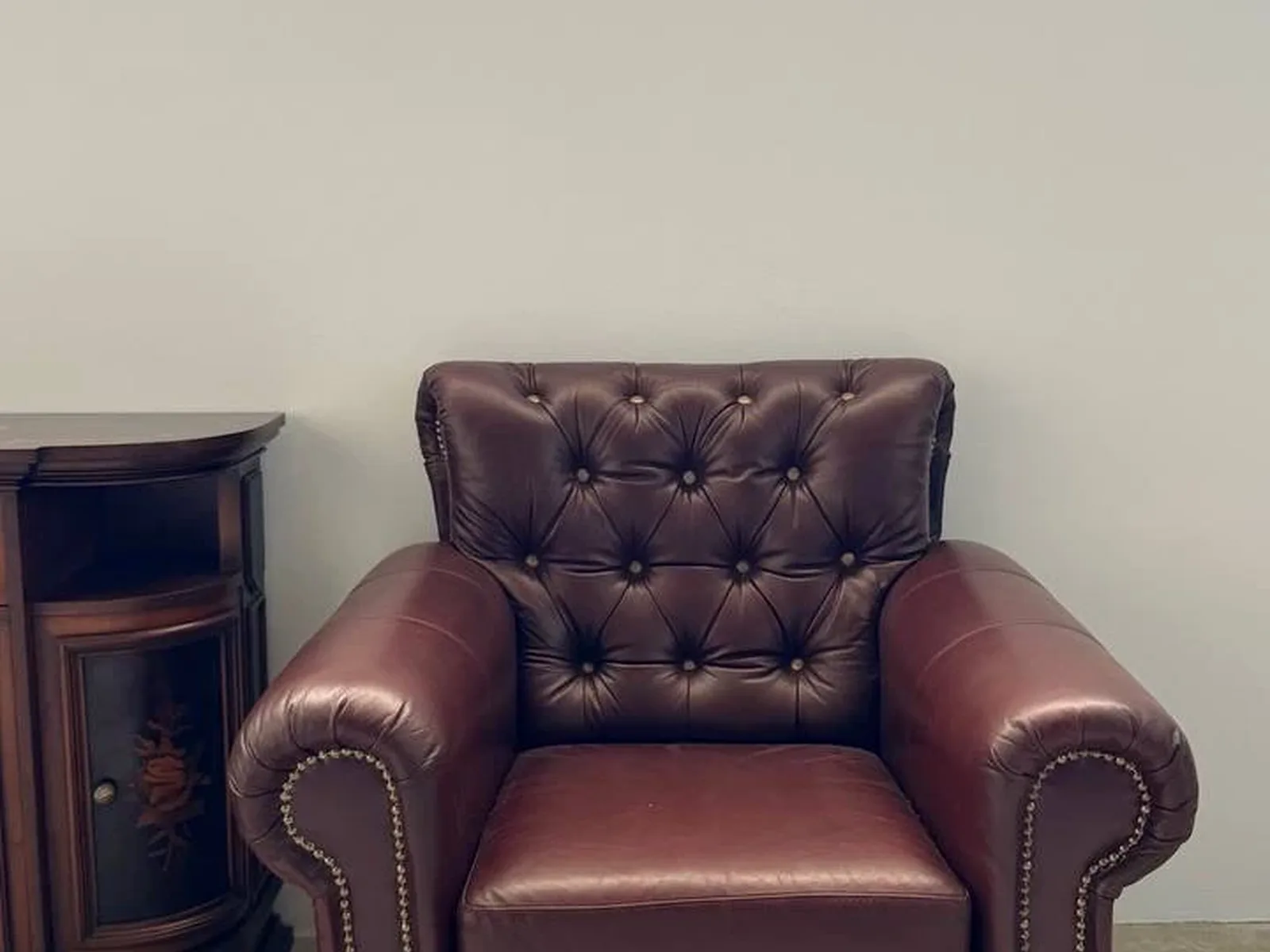
Textiles are what separate a merely pretty room from one that genuinely feels luxurious. Heavy velvet, washed linen and patinated natural leather are the three materials that recur constantly in old money interiors, prized for their rich texture and for the way they absorb light rather than reflect it. We cover all of these options in our guide to premium upholstery. A Persian rug, or one with a discreet pattern, placed beneath solid-wood furniture, visually anchors the whole room and adds a layer of warmth that a cold floor alone can never provide.
Decorative accents: mirrors, rugs and pieces that tie a room together
Beyond the large furniture pieces, it's the small details that truly sign an old money interior. A mirror with a thick solid-wood frame or aged brass edging multiplies natural light and makes a room feel more generous without adding a single extra piece of furniture. A rug, in turn, is never merely a functional accessory, but the element that visually anchors the entire furniture composition. These accents typically cost far less than a major furniture purchase, yet deliver a disproportionately large visual impact — which is why experienced interior designers often recommend starting with one or two precise accents rather than a full furniture haul.
Old money isn't only antique: blending in modern pieces
A common myth is that an old money interior has to be entirely antique, like a lived-in museum. In reality, the most successful interiors blend classic solid-wood pieces with quiet, contemporary accents — a clean-lined modern sofa beside an old bookcase, or a minimalist rug beneath a table with a carved leg. The secret lies in proportion: classic pieces remain the protagonists, while modern ones play a supporting role, never the reverse. This approach keeps an interior liveable rather than museum-like — a home to actually live in, not just show to guests.
Classic furniture: one-of-a-kind pieces, not mass production
A genuine old money interior is never built from mass-produced furniture, identical in a thousand homes across the same city, but from pieces with their own character, chosen one at a time rather than ordered from a catalogue of endless, interchangeable variants. It is built from one-of-a-kind pieces, each with its own story and rarity — a bombé chest found in a Viennese antique shop, a Chesterfield armchair that has already witnessed decades of drawing rooms, a solid-wood bookcase that quietly commands a home office. Martello curates its collection on exactly this principle: once a piece is sold, it is never repeated identically. You can read about the ultimate symbol of the classic sofa in the history of the Chesterfield sofa, and about why well-chosen old furniture gains value rather than losing it, in our separate piece on the difference between vintage furniture and antiques. For a full dining room built in this spirit, see our guide to a classic-style dining room, anchored by a solid-wood table at its centre.
Lighting: chandeliers, table lamps and layered light
Old money lighting is never harsh or uniform. It's built in layers — a central chandelier in crystal, bronze or porcelain, table lamps casting warm light beside armchairs and sofas, discreet wall sconces that never shine directly at eye level. We explain how to choose the right central light fixture in our guide to luxury chandeliers. The essential rule, valid in every room: warm colour temperature, under 3000K, never the cold, bluish light that belongs to corporate offices rather than family homes.
Quiet elegance: how to avoid the kitsch trap
The most common mistake when someone attempts old money style is excess: too much visible gold, too many heavily framed paintings hung haphazardly, too many "expensive-looking" objects crammed into a single room. Old money is actually a form of calculated minimalism — few pieces, but of exceptional quality, with room to breathe between them. A bedroom designed with this balance in mind looks like a boutique-hotel-style bedroom, where every object has a clear purpose rather than a purely decorative one. This restraint also shows in how art is chosen — a subject we cover at length in how to choose paintings for an old money interior, where we explain why fewer, carefully chosen pieces say far more than a wall entirely covered in art.
Room by room: living room, dining room, bedroom and study
In the living room, the starting point is usually a generous solid-wood sofa with natural upholstery, paired with a marble-top coffee table. In the dining room, a solid wood table remains the anchor piece around which the rest of the room is built. The bedroom calls for rich textiles and a unified furniture set — dresser, mirror, nightstands from the same wood family — for a sense of calm rather than clutter. A home study, in turn, benefits from the presence of a substantial bookcase and an elegant secretaire desk. In every one of these rooms, the rule stays the same: a few excellent pieces beat many mediocre ones. The entryway is often underrated, yet it sets the tone for the entire home — a solid-wood coat stand and a floor clock make an impression before a guest even reaches the living room.
How to bring old money style home, in Moldova or Romania
The good news is that you don't need a centuries-old manor to achieve this effect — just the right furnishing decisions. Start with an anchor piece — a solid-wood dining table, an imposing bookcase, a Chesterfield armchair — and build the rest of the room around it, keeping the restrained palette and natural materials described above. Quality furniture, chosen carefully, is not an expense but an investment that holds its value over time, unlike mass-produced furniture, which loses value from day one. You can browse the entire Martello collection online, but we also recommend a visit to our showroom in Nimoreni, Ialoveni, just 15 minutes from Chișinău, where you can touch the wood, feel the velvet and see the genuine patina of one-of-a-kind pieces before deciding. For a living room built exactly in this spirit, explore the living room section of our collection — the pieces on display there are never repeated, so what you see in the showroom today may no longer be available tomorrow.