Marble: the stone that turns an interior into a masterpiece
Some materials decorate a room, and some define it. Marble belongs firmly to the second category. For thousands of years, this natural stone has been chosen by architects, sculptors and the owners of great houses for one simple reason: no other surface combines strength, understated shine and the sheer individuality of its veining quite the same way. In a contemporary living room or a classic dining room, a piece with a marble top never fades into the background — it always becomes the point the eye returns to.
A stone with a thousand-year history
Ancient marble from the quarries of Greece and Italy built temples, statues and palaces that still stand today, thousands of years later. The Greeks raised the Parthenon from Pentelic marble, while the Romans clad their forums and public baths with polished slabs brought from every corner of the empire. During the Renaissance, Michelangelo chose blocks of Carrara marble for his sculptures, and Italy's great families turned marble into a symbol of status: floors, columns, console and table tops set in the salons of the most important palazzos. This legacy explains why, even now, a furniture piece in natural marble carries a quiet authority that no synthetic material can truly copy.
Why we select marble pieces for our collection
Our Martello catalog holds no mass production — only pieces we select carefully for the quality of the stone, the patina of the accompanying wood, and the overall condition of the ensemble. A table or a chest of drawers with a marble top earns its place in the showroom only when the stone's veining is expressive and the underlying structure, in solid wood or metal, carries the same nobility. Because we are talking about one-of-a-kind pieces, once a piece sells it is never repeated — a point we explore in more depth in our article on the difference between a unique piece and mass-produced furniture. Anyone who brings home a marble piece from our collection knows they will never again find quite the same veining, the same tone, the same pairing of stone and wood.
The types of marble you'll find in furniture
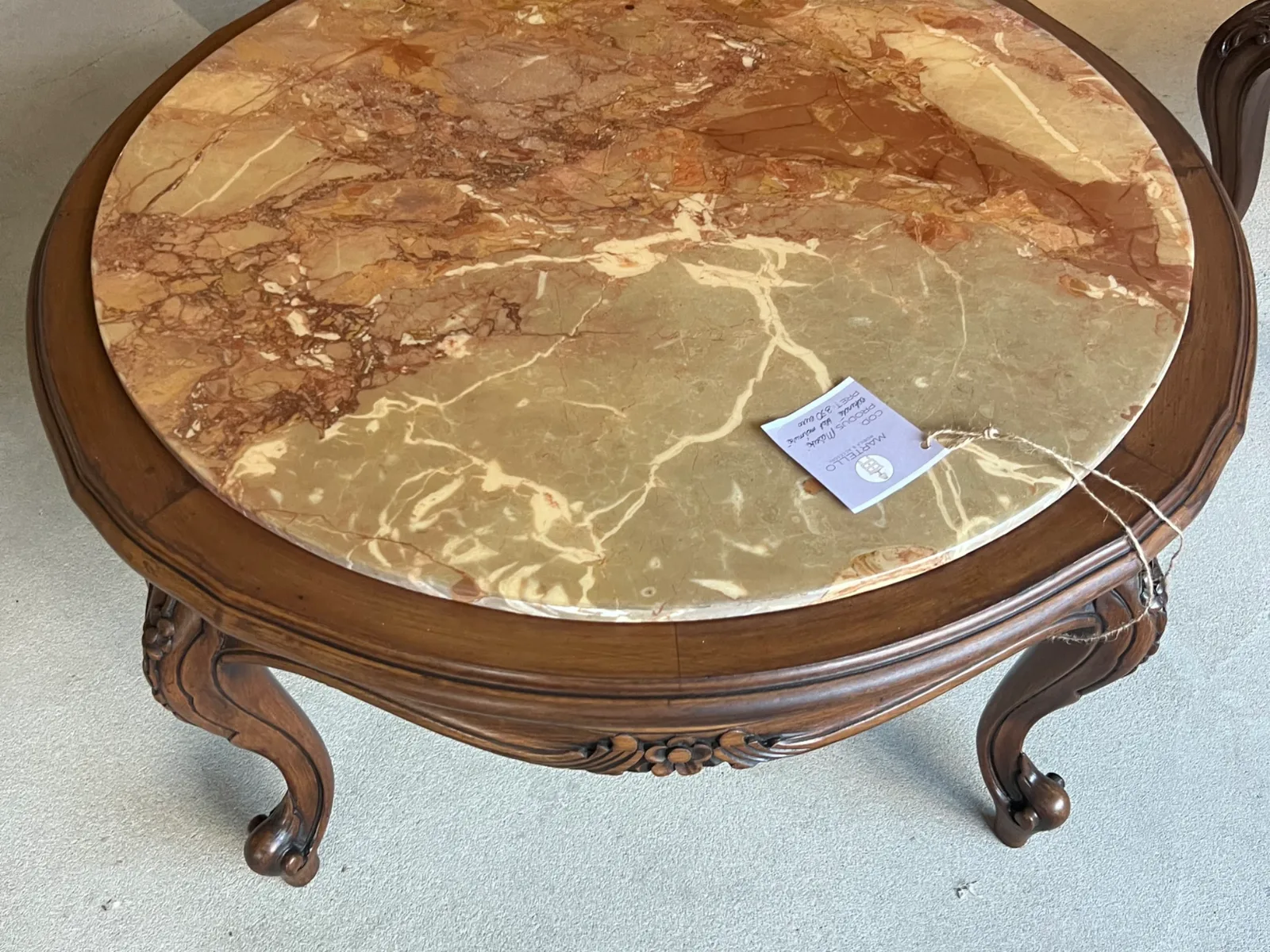
Not all marble is alike, and learning to recognize it helps you understand exactly what you're choosing. Carrara marble, white with fine silvery-grey veins, is the best known and the most understated. Calacatta shares that same white base but with bolder, more dramatic veining, often gold-toned — which is why it's considered rarer and more valuable. Emperador comes in a warm range of browns, from chocolate to almost gilded, and pairs beautifully with dark wood interiors. Nero Marquina is a deep black marble with fine white veins, ideal for a strong accent. Verde Guatemala or Verde Alpi bring a rare, almost emerald tone, suited to those who want a piece that is truly unforgettable. Every block of stone is unique by nature, which means no two marble slabs are ever quite alike — one more reason a marble piece is, by definition, irreplaceable.
Where marble makes the biggest difference in an interior
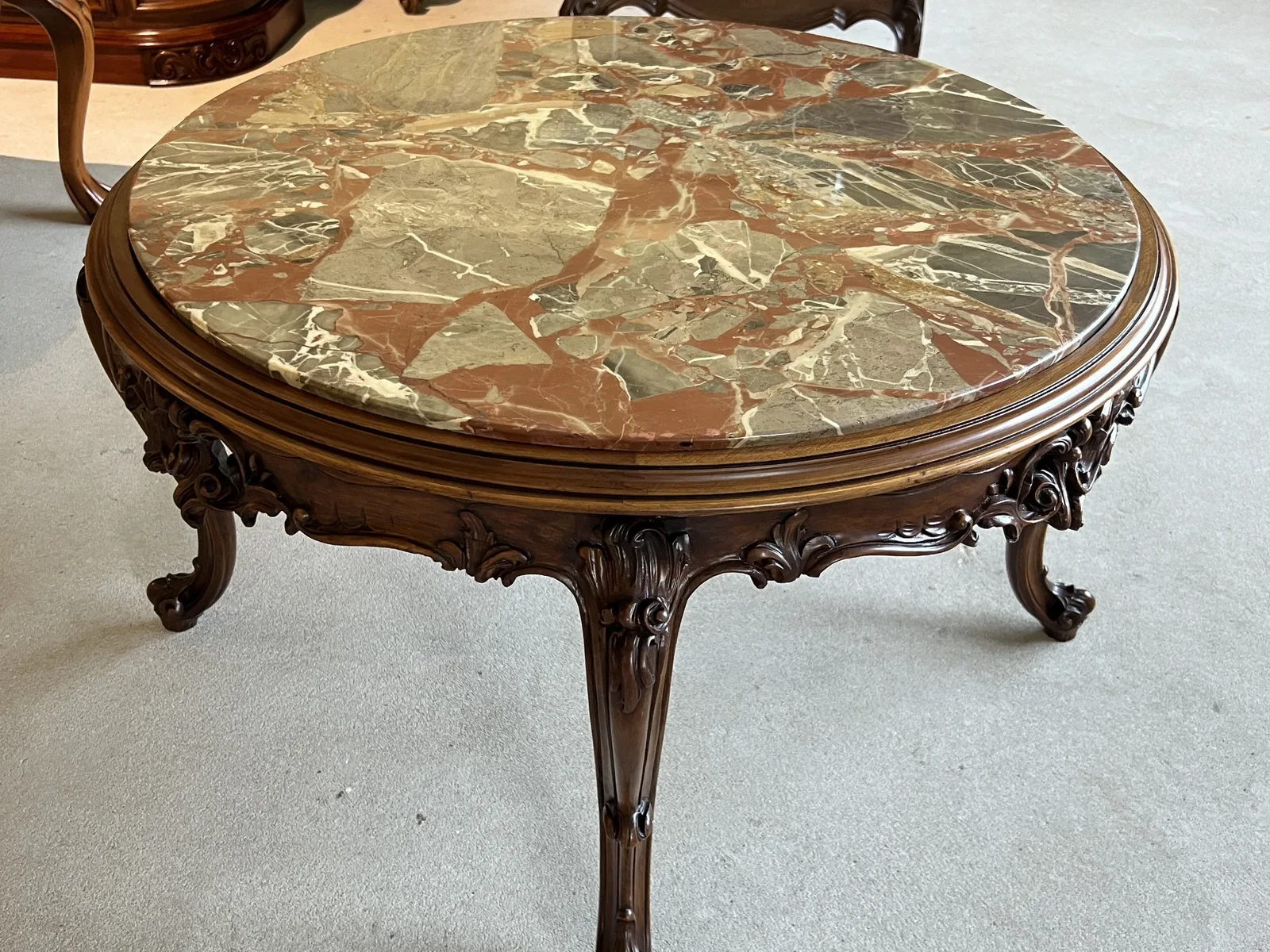
The most popular application remains the marble-top coffee table, the centerpiece of any living room that wants to feel relaxed and refined at once. Alongside it, consoles and chests of drawers with marble tops work beautifully in an entryway or dining room, where the cool, glossy surface plays nicely against the warmer textures around it. A piece like this doesn't need much extra styling: a vase, a table lamp and a well-chosen mirror are usually enough to complete the composition. For those furnishing an entire living area, our living room collection brings together exactly this kind of piece, designed to work as a set.
How to pair marble with wood, brass and textiles
Marble has a strong personality, but it doesn't overpower a room when the balance is right. Next to solid walnut, oak or cherry wood, the stone gains warmth and context; the pairing of stone and wood is, in fact, the classic recipe of nineteenth-century European furniture. Brass or bronze accents — table legs, handles, mirror frames — bridge the gap between cool and warm, while velvet, linen or natural leather upholstery on armchairs and sofas softens the hardness of the stone. This combination of materials is, in many ways, the backbone of the aesthetic we describe in our guide to aristocratic interior design: durable pieces, noble materials, with nothing unnecessarily loud about them.
Caring for a piece with a marble top
Marble is a calcium-based stone, which means it is sensitive to acidity. Wine, vinegar, lemon juice or harsh cleaning products can leave dull marks known as etching if left on the surface too long — which is why we recommend wiping up any spill immediately. Everyday cleaning only needs a soft, slightly damp cloth, with a touch of pH-neutral soap if needed; avoid anything abrasive or acidic. Periodic resealing, every few years, helps the top resist stains and moisture better, especially if the piece is used often for coffee or drinks. Using coasters under glasses and hot dishes keeps the stone looking its best without dulling its natural shine.
Marble, fifteen minutes from Chișinău
Marble pieces from the Martello collection can be seen and touched in our showroom in Nimoreni, Ialoveni, just fifteen minutes from Chișinău — the ideal place to understand, beyond photographs, what natural stone truly feels like in natural light. For clients across Moldova and Romania looking for a memorable piece with history and lasting value, marble remains one of the safest choices: it never goes out of style, never loses its value, and, most importantly, never repeats itself in another interior quite the way it does in yours.