How to Care for Bronze and Brass on Vintage Furniture
Bronze and brass fittings — handles, decorative locks, corner mounts — are often the detail that turns a good piece into a memorable one. They're also, unfortunately, the first thing ruined by overly aggressive cleaning done with good intentions. Here's what to do, and above all, what to avoid.
Patina isn't dirt — it's history
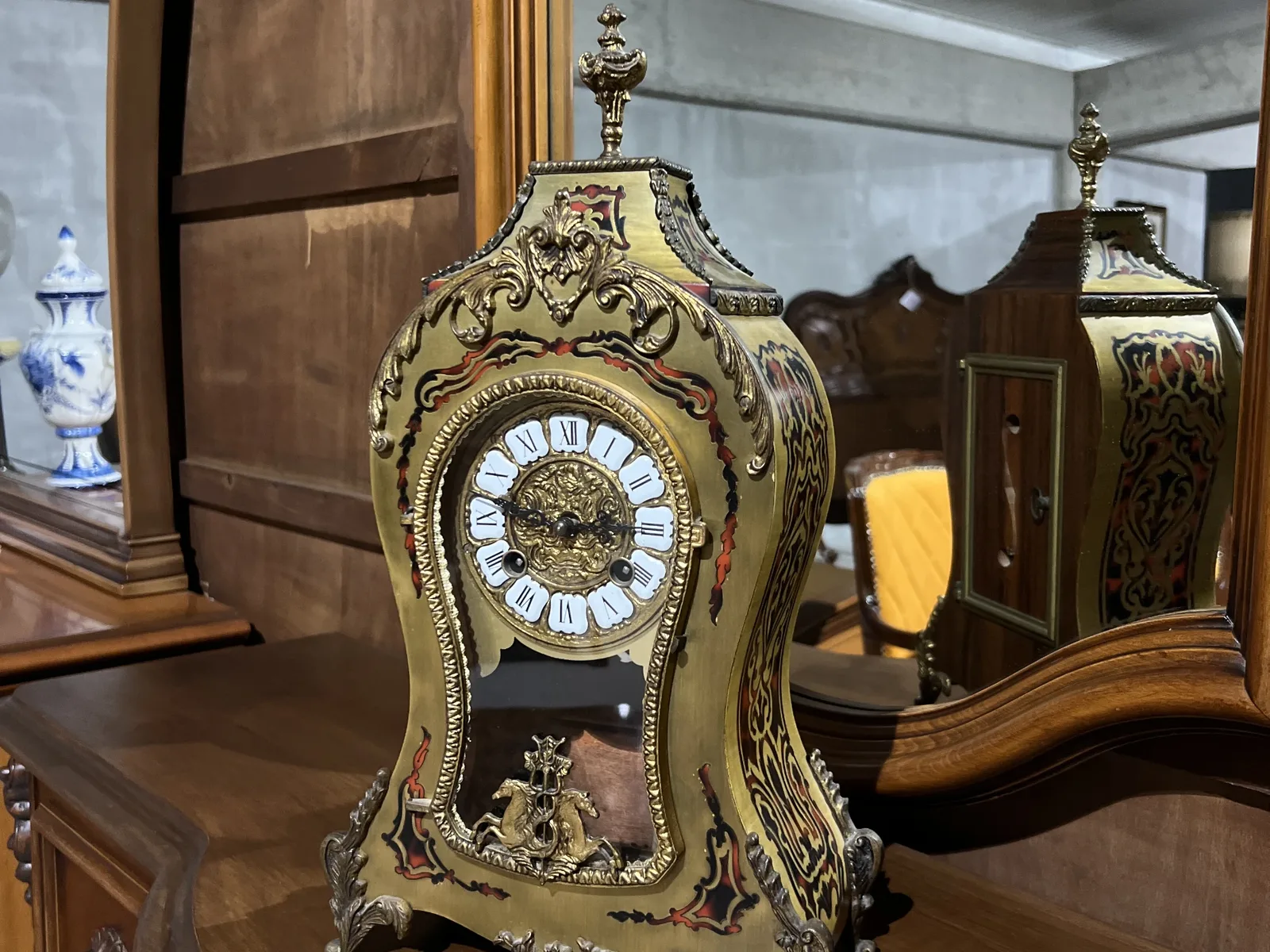
The slightly dark, brownish-green tone that develops on bronze and brass over time is called patina, and it's the natural result of the metal slowly oxidizing. On antique pieces, original patina adds value — it proves genuine age, unlike a freshly cast mount artificially "aged." Don't scrub it aggressively just to get a shiny, new-metal look.
Basic cleaning, without damaging the finish
For dust and surface grime, a soft, lightly dampened cloth is enough — no abrasive products, no metal scourers. Always wipe in the direction of the decorative pattern, not in circles, to avoid leaving fine, visible scratches. Dry it immediately with a dry cloth; moisture left on the metal speeds up uncontrolled oxidation, different from the desired even patina.
When a more thorough cleaning is actually worth it
If the fitting has thick buildup, not just even patina, a specialized brass or bronze paste, applied locally with a soft cloth, can help — but always test it on a small, hidden spot before treating the whole piece. Avoid silver or stainless-steel products entirely; they're too harsh for the fine finishes of one-of-a-kind furniture with verified provenance.
Long-term protection
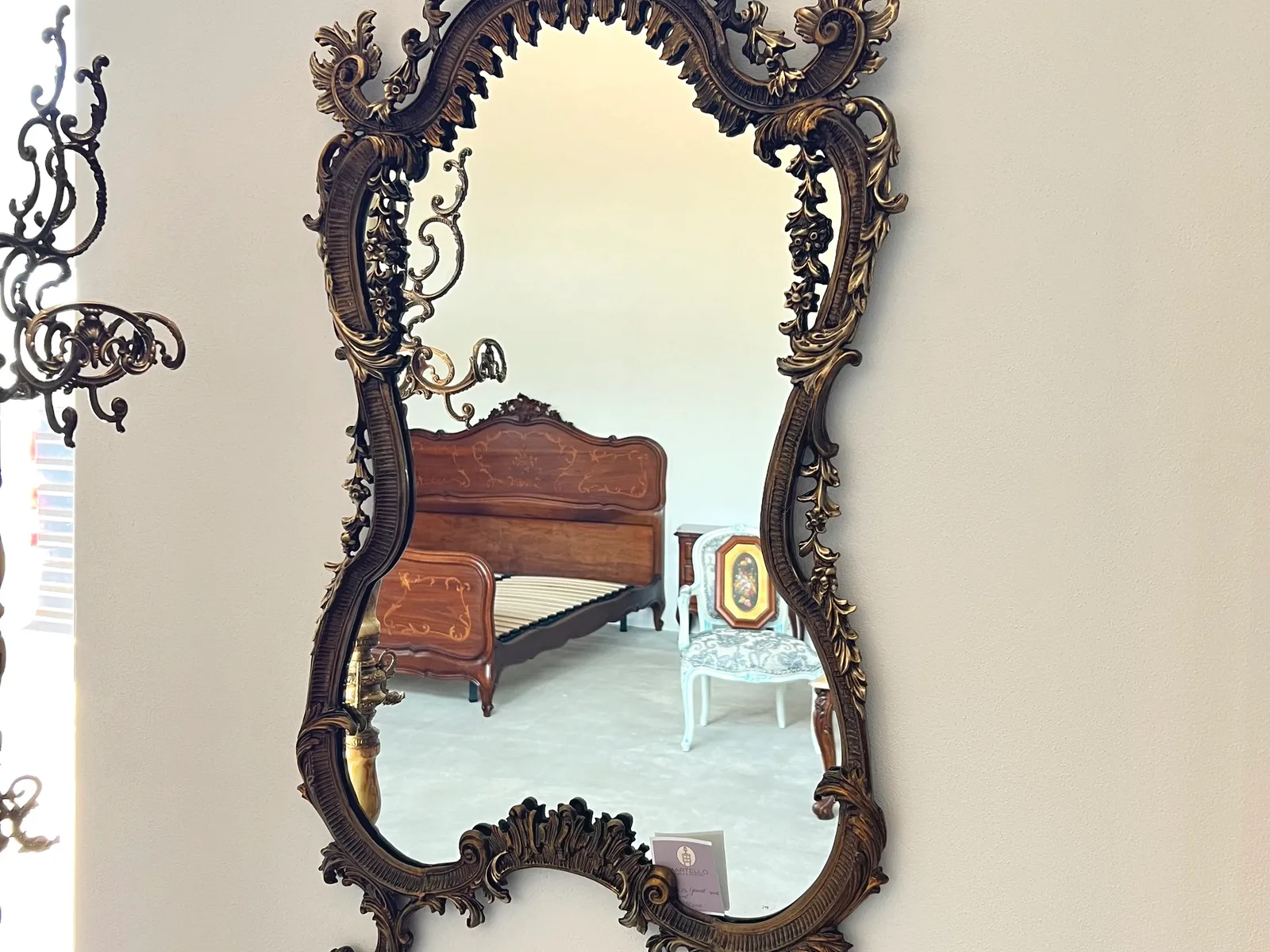
Excess room humidity speeds up uncontrolled metal oxidation, much as it affects the solid wood around the fittings. Keep relative humidity steady between 45-55%, and avoid direct exposure to heat sources, which dry out and crack both the wood and the adhesive holding some decorative mounts in place.
How we choose pieces with genuine fittings at Martello, in Moldova and Romania
Every piece in the Martello catalogue is personally checked by us for the authenticity and condition of the metal fittings. You can see and touch them at our showroom in Nimoreni, Ialoveni, fifteen minutes from Chișinău, or browse the vintage furniture section. Proper care preserves exactly what makes a piece valuable — it doesn't "restore" it to look new.