Baroque and Empire Furniture: The Differences and How to Style Them
These are two of the most imposing historical furniture styles, and that's exactly why they get confused — both feature gold, both impress, both come from Europe's monarchic eras. But Baroque and Empire are, in fact, almost opposite in philosophy: one celebrates movement and abundance, the other discipline and symmetry. Once you see the difference, you won't confuse them again.
Baroque: movement, gold, and controlled excess
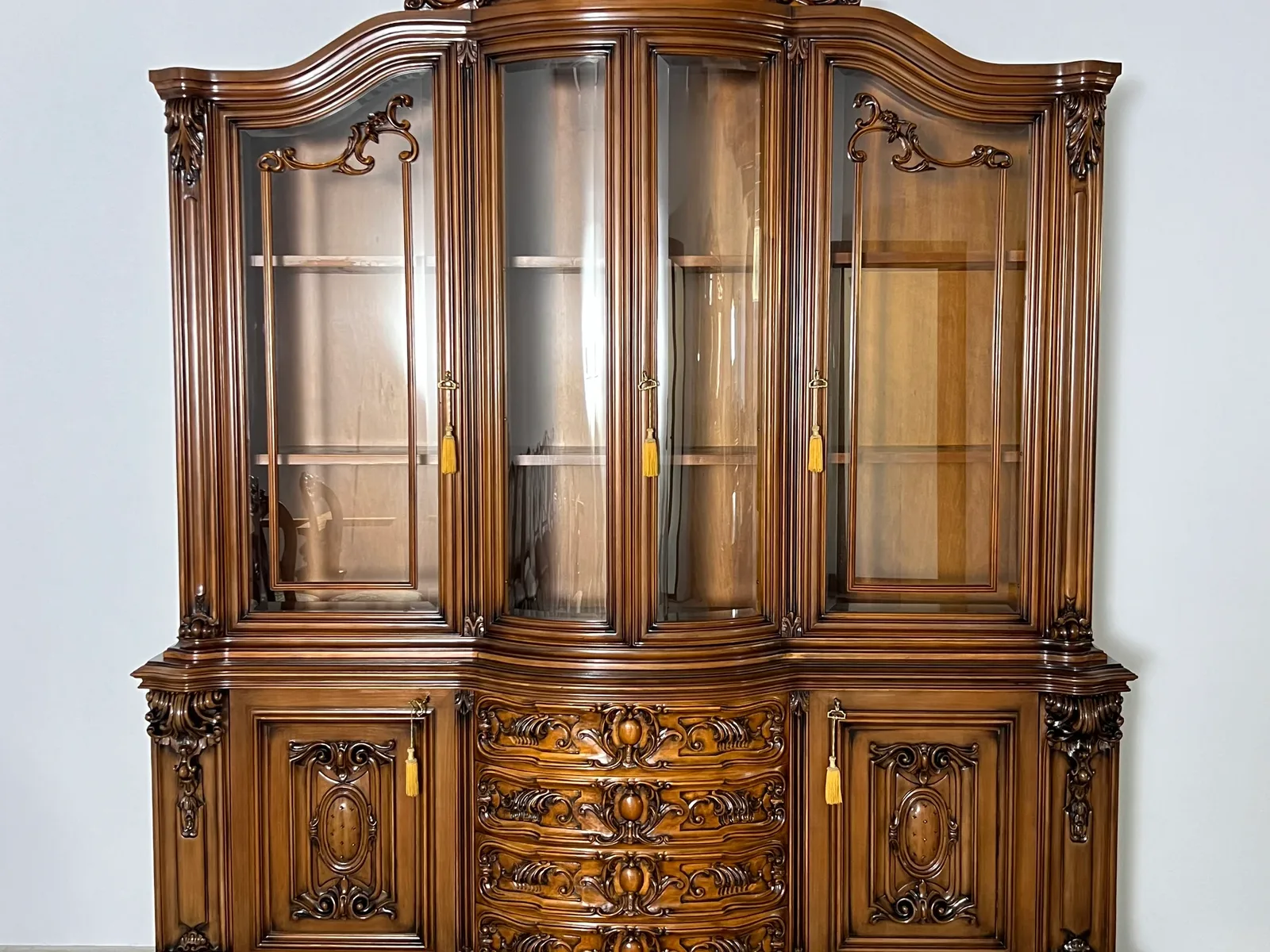
The Baroque style took shape in the 17th century, in Italy and then across Catholic Europe, as a visual instrument of power — for both church and royal courts. Baroque furniture is defined by sweeping curves, gilded or painted surfaces, dense carving (shells, garlands, scrolls), curved legs, and often a subtle asymmetry that gives a sense of continuous motion. An authentic Baroque cabinet almost seems to breathe — nothing about it looks fully static.
Empire: discipline, symmetry, and imperial symbols
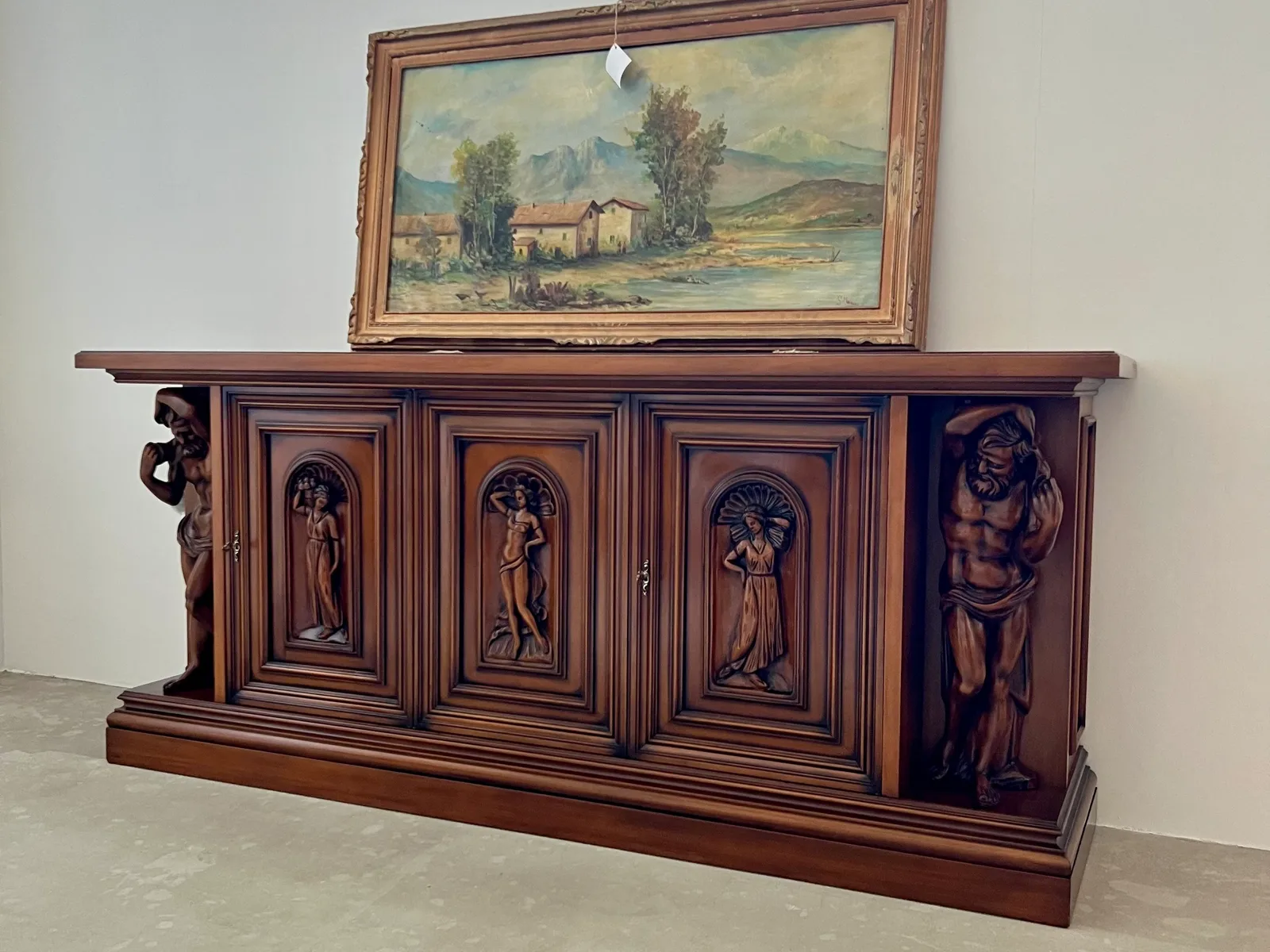
The Empire style appeared a century and a half later, under Napoleon, as a direct reaction against Baroque and Rococo exuberance. Inspired by the architecture of ancient Rome and Egypt, Empire replaces curves with straight lines, rigorous symmetry, and clear geometric forms — columns, palmettes, laurel wreaths, eagles, and sphinxes. The wood is often darker (mahogany, dark walnut), and gold appears sparingly, in precisely applied bronze mounts, not the fully gilded surfaces of Baroque. Where Baroque says "look at me", Empire says "respect me".
How to tell them apart at a glance
The quick test: if a piece has curved legs, dense asymmetric carving, and seems "in motion", it's Baroque. If it has straight or slightly tapered legs, perfect symmetry, and motifs evoking ancient Rome (columns, laurels, eagles), it's Empire. For comparison, the Renaissance style, older than both, keeps a simpler geometry, without Baroque's exuberance or Empire's imperial symbolism.
Why it matters for you, the buyer
Beyond history, the practical difference is in styling choices. Baroque works as a single, dramatic piece in an otherwise simple room — a gilded cabinet dominates any dining room without needing further ornament around it. Empire, being more restrained and symmetrical, lends itself to full sets, entire dining rooms sharing the same geometric line, without the risk of feeling overwhelming.
Authenticity: equally important for both styles
Both styles are heavily reproduced today, often in cheap versions, with carving cast in resin instead of hand-carved wood, or with fake gold leaf that peels within a few years. The same principles we explain in our guide on one-of-a-kind pieces versus mass-produced furniture apply here too: check the weight, examine the carving up close, look for genuine signs of age rather than a finish that merely imitates them.
How we choose at Martello, in Moldova and Romania
In our display cabinet and sideboard collection, you'll find authentic pieces from both eras, each checked for age and material before reaching the showroom. You can see them at our showroom in Nimoreni, Ialoveni, fifteen minutes from Chișinău, or browse the full Martello catalogue online. Whether you're drawn to Baroque's exuberance or Empire's discipline, the difference between the two will never be a mystery again.