Two words that, in furniture, mean opposite things
"Restoration" and "renovation" are often used as synonyms, but for an old furniture piece, the difference between them decides whether the piece keeps its value or loses it for good. Renovation usually means replacing — a thick new coat of paint over the original wood, new handles that don't match the piece's style, a quick fix that hides the problem instead of solving it. Restoration means bringing back — returning the piece as close as possible to its original state and structure, preserving everything that can be preserved and stepping in minimally only where truly needed. At Martello, every piece in the collection goes through the second process, never the first.
What's lost through a rushed renovation
The most common mistake with an old piece is a thick, opaque coat of paint over the wood — a quick fix that covers exactly what makes the piece valuable: the natural grain, the patina built up over decades, the marks of manual craft. Likewise, replacing original hardware with cheap modern handles, or gluing veneer over a damaged solid wood structure, "solves" the problem visually but destroys exactly what sets a one-of-a-kind piece apart from new furniture. A piece renovated this way looks, from a distance, "fixed" — but it has permanently lost any value as a genuine vintage piece; the difference between the two categories is explained at length in vintage or antique.
What proper restoration actually involves
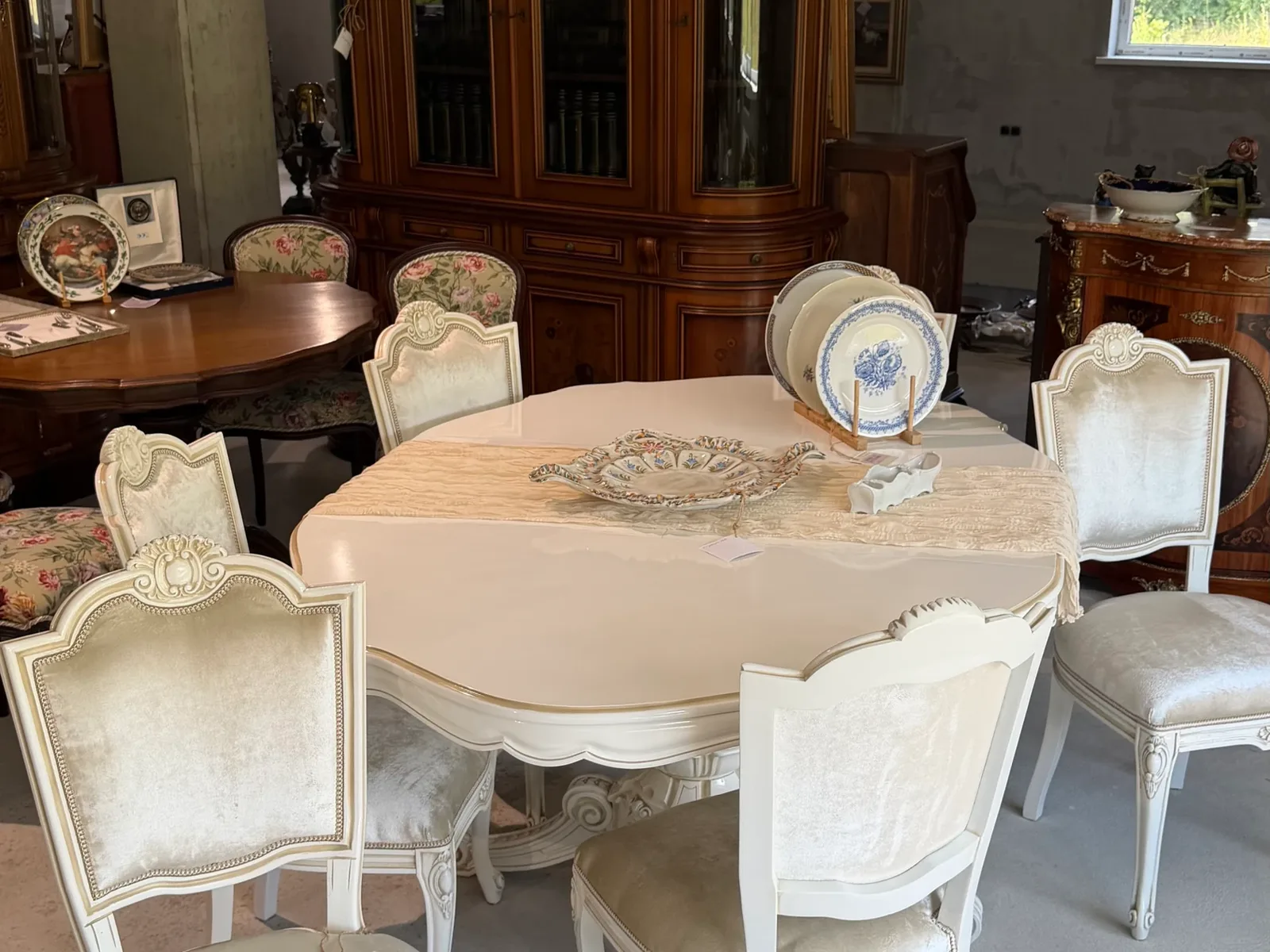
Real restoration starts with assessing the structure — checking joints, leg stability, the wood's strength at load-bearing points — and continues only with necessary intervention: reinforcing a loosened joint, replacing a single irreversibly damaged component (keeping, as far as possible, the original wood species and thickness), cleaning the old finish and reapplying a natural wax or oil that leaves the grain visible. Original hardware is cleaned and kept, not replaced, unless it's entirely missing. The result of good restoration isn't a piece that looks "like new" — it's a piece that shows exactly how much time has passed over it, but works flawlessly and has its structure intact for many more decades.
How to recognise a well-restored piece before buying
The signs are visible to anyone who knows what to look for: the wood grain remains visible under the finish, not hidden under thick paint; hardware carries the natural patina of age, not the shine of a new piece; joints are solid, with no play or creaking. If the seller can explain exactly what was done to the piece — what was kept, what was replaced and why — that's a good sign. A total lack of information about the process, combined with a piece that looks "too perfect" for its stated age, are signs of renovation disguised as restoration.
Why it matters to you as a buyer
A properly restored piece keeps its value and can, in turn, be resold or passed on — exactly the point made in quality furniture as an investment. A rushed renovation stays functional for a few years but permanently loses its status as a genuine vintage piece. At Martello, every piece in the collection is assessed and, where needed, restored by exactly these principles before reaching the showroom in Nimoreni, Ialoveni. For questions about the restoration process of a specific piece, the team answers directly on the contact page.