Furniture arrangement: the art of making a house breathe
There are homes you walk into and instantly feel at ease, without quite knowing why, and homes where, no matter how expensive the furniture, something still feels "off". The difference rarely comes down to budget — it comes down to how the pieces speak to one another. The harmony of a room is never bought with a single item; it is built through balance, proportion and a flow that lets the space breathe. The old principles of feng shui — orientation, circulation, visual weight — blend surprisingly naturally with classic Western interior design rules, and the conclusion is always the same: a well-arranged home feels calm before it is ever admired.
The focal point, the heart of every room
Every successful room has a center of gravity — an element around which everything else gathers. In a living room it might be the fireplace or a generous solid-wood sofa, in a dining room it is almost always the table, and in a bedroom, the bed. Feng shui calls this spot the "commanding position": the main piece should be placed so it visually anchors the room without blocking access or natural light. Once the focal point is chosen, the rest of the furniture — chairs, side tables, bookcases — organizes around it rather than competing with it. If you want to start an arrangement from scratch, browse the Martello collection for one-of-a-kind pieces that can become exactly that center of gravity in a room.
Circulation: the path the eye and the foot follow naturally
A core principle shared by both feng shui and classic design is uninterrupted circulation. A harmonious room leaves room for natural movement — between the door and the window, between the sofa and the bookcase, between the entrance and the dining area. The practical rule of thumb calls for at least 70-90 centimeters of clear space along the main walking routes. Furniture placed directly in a doorway's path, or an armchair blocking access to a window, cuts off a room's energy even when the pieces themselves are beautiful. In smaller spaces the challenge is even greater, and furnishing a small living room with premium furniture shows exactly how to keep elegance intact without sacrificing a clear path through the room.
Visual balance: weight, scale and proportion
Feng shui speaks of yin-yang balance, while interior design speaks of proportion and scale — essentially the same idea viewed from different angles. A room with all its heavy furniture crowded into one side feels unstable, just as a room with furniture out of scale with its dimensions ends up feeling either empty or crowded. The secret lies in distributing visual weight: a substantial walnut chest of drawers is balanced by a generous mirror on the opposite wall, a large sofa gains counterweight from a bookcase or a tall cabinet. Perfect symmetry isn't required — controlled asymmetry often feels more alive — what matters is a balance that reads as natural at a glance.
The conversation area, where an evening comes together
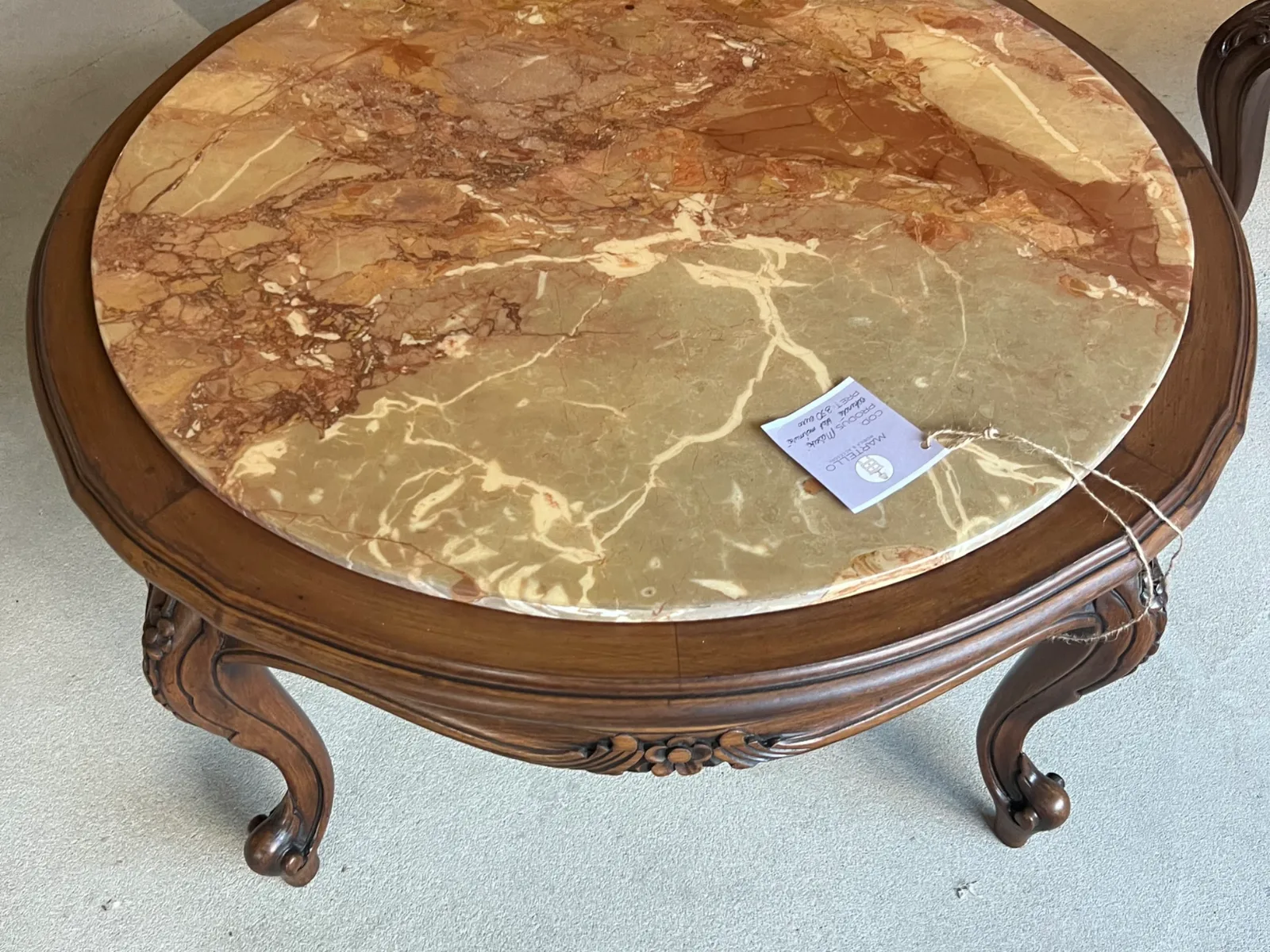
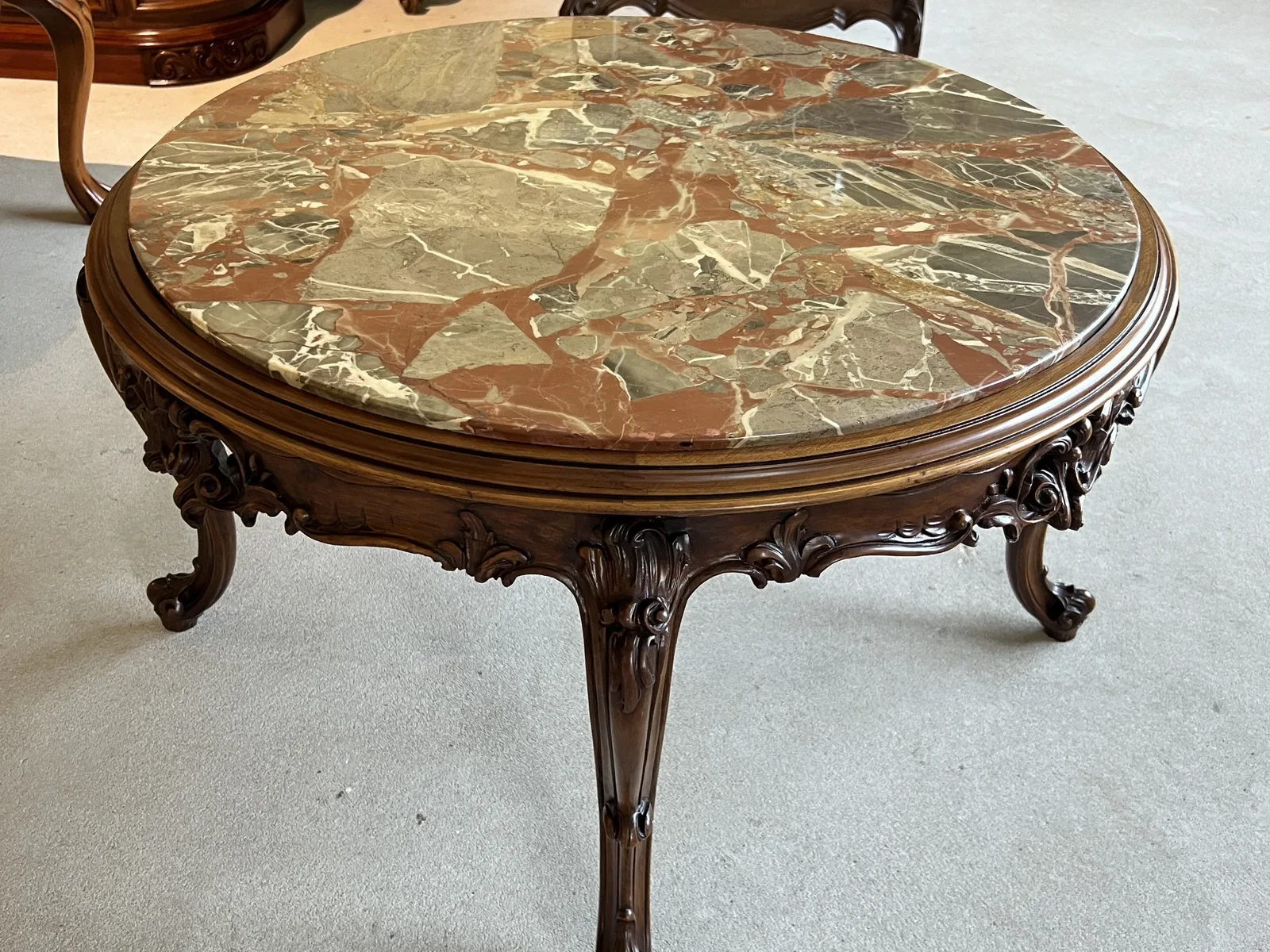
A successful living room is organized around a "conversation area": sofa, armchairs and a central table arranged so people can see each other and talk without raising their voices. The ideal distance between seats is no more than 2.5-3 meters, and the coffee table should sit a comfortable 40-45 centimeters from the sofa. A marble-top coffee table placed centrally often becomes the piece that visually ties the whole composition together, while armchairs angled slightly toward the sofa, rather than perfectly aligned, create a sense of real intimacy rather than a waiting room.
Light, mirrors and the feeling of space
Feng shui places enormous emphasis on light, treating it as the visible form of a home's energy, and Western design arrives at the same conclusion through practical experience: without well-managed light, no furniture arrangement truly works. Strategically placed mirrors, especially framed in solid wood, visually double natural light and "widen" a room without moving a single wall. Layers of light — a central chandelier, side lamps, ambient lighting — create depth and shift the emphasis from the purely functional to atmosphere. If your home gets little natural light, it's worth reading about refined ambient lighting through chandeliers and layered light, a useful resource for completing any furniture arrangement.
Color, texture and the pieces that tell a story
Harmony isn't only geometry — it's also feeling. A coherent color palette — warm, earthy tones, natural wood — makes pieces of different styles or eras feel as though they always belonged to the same home. The aristocratic color palette remains a reliable reference for anyone seeking warmth without ostentation. Texture matters just as much: solid wood, velvet, marble and patinated metal, layered with restraint, give depth to a room that might otherwise feel flat. At the Martello showroom in Nimoreni, Ialoveni — just 15 minutes from Chișinău — this exact dialogue between texture and light is precisely why the one-of-a-kind pieces selected there feel as if they had always belonged in the home, from day one.
A home that settles over time, not a rigid formula
The most important thing to remember is that harmony isn't a set of rules applied mechanically — it's an ongoing dialogue between you and your space. A one-of-a-kind piece, once sold, is never repeated, which is exactly why it deserves to be placed somewhere it can truly be seen and lived with, not tucked into a corner. A living room shaped around pieces from the Martello collection is never fully finished; it settles naturally, year after year, as you learn how the light moves, where people gather in the evening, and which piece the room still needs to finally feel whole. Across Moldova and Romania alike, this philosophy — furniture chosen with care, not merely purchased — remains the surest path to a home where harmony is felt, not explained.