What a One-of-a-Kind Furniture Piece Costs — and Why the Price Is Worth It Long-Term
The first time you see a vintage solid-wood dresser, the first reaction is surprise: the price looks high, sometimes equal to two or three new pieces from a mass-market furniture store. The reaction is understandable, but the comparison is wrong. You are not comparing two objects with the same function — you are comparing a piece that lasts generations with one built to last, statistically, less than a decade. The price difference is not a tax on nostalgia or aesthetics. It is the price of real, long-term savings that most buyers never work out before they pay.
The wrong comparison: purchase price vs. price of use
A hurried buyer compares the number on the tag, not the real cost of the decision. A dresser made from veneered particleboard is cheap because it was designed to be cheap: pressed components, light hardware, a finish that looks fine for the first few months and then starts to fail under humidity, weight, and daily wear. A one-of-a-kind piece in solid wood, carefully selected for the Martello collection, costs more upfront because it already cost time, material and craftsmanship — decades ago, in a workshop that operated differently from today's assembly line. The correct comparison is not price against price, but price against years of real use.
Cost per year of use: the arithmetic nobody does
If you divide a piece's price by the number of years you actually use it, the picture changes completely. A mass-produced dresser, replaced every 5-7 years because it warps, peels, or simply stops looking good, ends up costing — once you add up every replacement — more than a one-of-a-kind piece that lasts 30, 50 or 100 years with minimal upkeep. Add to this the hidden cost of replacement: time spent searching for a new piece, delivery, assembly, sometimes even dismantling and disposing of the old one. A one-of-a-kind piece breaks that cycle — it is bought once and stays in the home for the rest of its useful life, which far outlasts anything from mass production.
What you are actually paying for in a one-of-a-kind piece
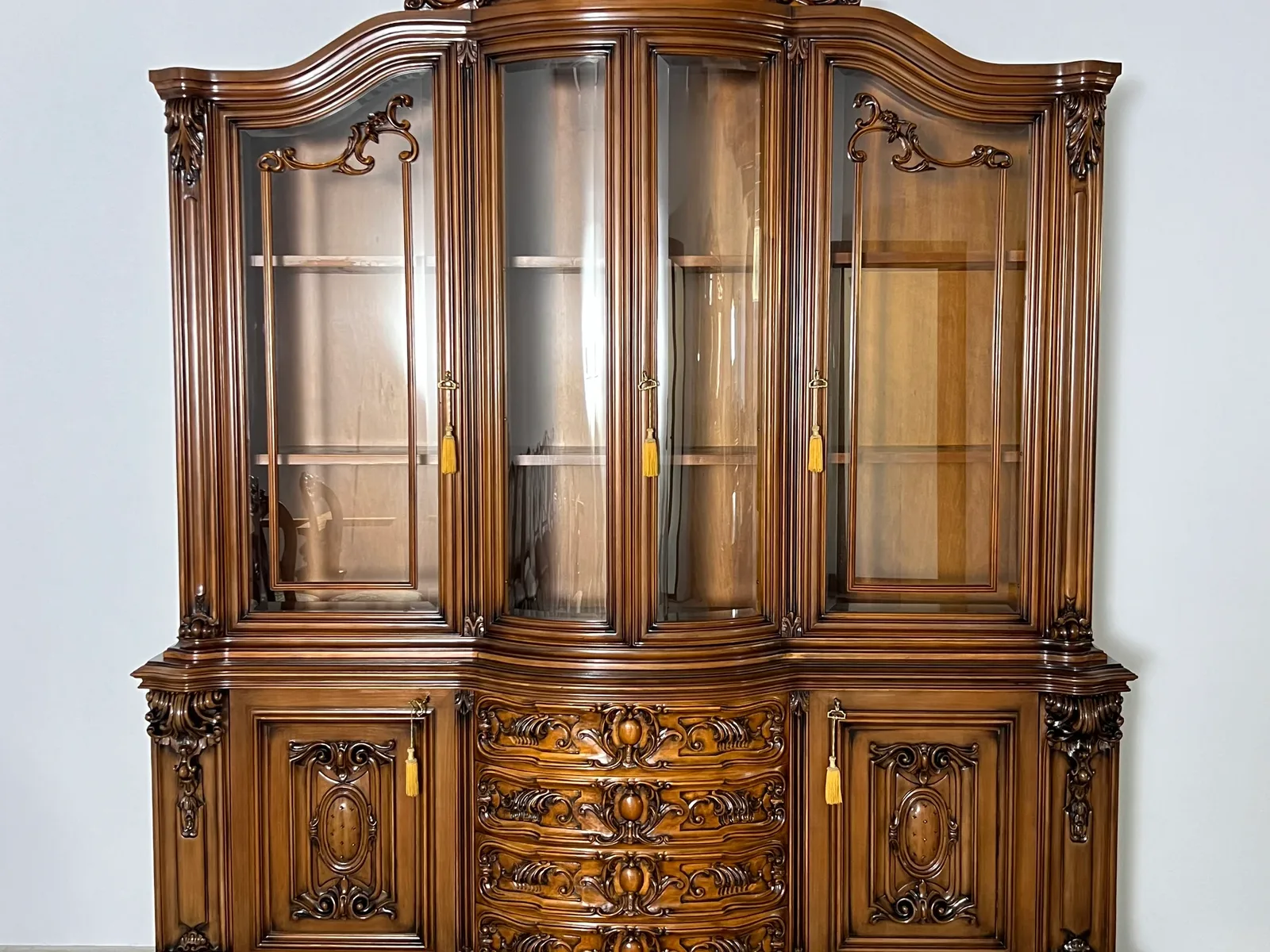
The price of a one-of-a-kind piece rewards more than looks — it rewards four concrete things that are hard to put on a tag. The first is rarity: once sold, the piece is not repeated in the collection — there is no second identical example to buy next year if you change your mind. The second is the wood itself — solid walnut, oak, cherry or mahogany, materials that, at today's prices for new production, would make any equivalent piece extremely expensive. The third is period craftsmanship: hand-fitted joints, brass or bronze hardware with real weight, finishes applied in layers, from a time when production speed was not the main criterion. The fourth is patina — the color and texture that only time can create, and that no industrial technique can authentically replicate. The difference between this kind of value and the character of a one-of-a-kind piece is that here we're talking strictly about money, not character — though in practice the two go hand in hand.
Resale and inheritance: two very different fates
Mass-produced furniture depreciates from day one, exactly like a new car driven off the lot. Within a few years its resale value is close to zero — who would buy a secondhand particleboard dresser, however well kept? A one-of-a-kind piece follows the opposite path: it holds its value and, in some cases, even gains it, especially if it comes from a well-regarded period or workshop. Beyond money, there is also the dimension of inheritance — a one-of-a-kind piece is passed down to children or grandchildren with a story attached, not discarded at the next renovation. This perspective radically changes how a furniture purchase should be viewed: not as an expense that gets consumed, but as an investment that holds its value over time.
How to tell if the price of a vintage piece is fair
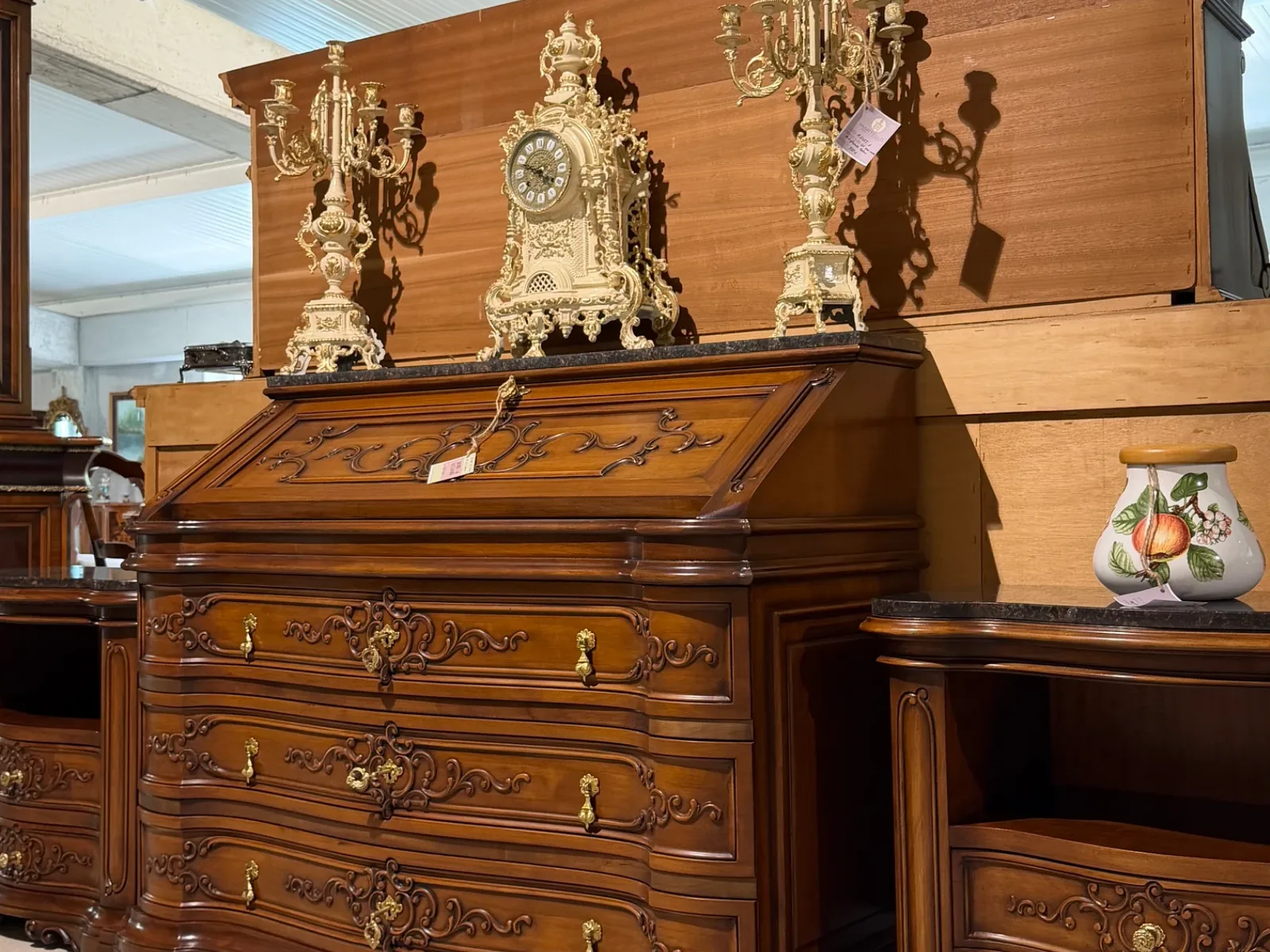
Without exact figures, which vary from piece to piece, there are still clear signals for judging whether a price is justified. Rarity matters: the harder a piece is to find in its shape, wood or style, the more its price naturally rises. Condition matters just as much — a piece carefully restored without harsh interventions that alter its original structure is worth more than one left to deteriorate. Provenance plays an important role: a piece with a documented history, from a known home or workshop, carries an added value that is hard to dispute. And the wood species remains an objective factor — solid walnut or mahogany simply is not comparable, in market price, to thin veneer over a cheap frame. If you want to learn to read these signals before buying, our guide to vintage furniture and antiques goes into detail on each one.
How we select pieces: real value, not just looks
At Martello, we do not add every attractive-looking piece to the collection. Each dresser, mirror or display cabinet is evaluated against exactly the factors above: the wood species, the condition of the structure, the quality of the original craftsmanship and, where it exists, the piece's provenance. We do not manufacture, and we do not visibly restore — we curate what deserves to enter the collection, precisely because we know the asking price has to reflect real, verifiable value, not a passing style. The result is a collection where every piece justifies its price through material, story and durability — visible in our showroom in Nimoreni, Ialoveni, about 15 minutes from Chișinău, or browsable directly in the online catalog, with delivery across Moldova and Romania.