Louis XV Furniture Style: How to Recognise an Authentic Piece
A little history helps with the most imitated style in all of European furniture. The Louis XV style emerged in the mid-18th century as a reaction against the strict symmetry of the earlier Louis XIV style: straight lines became curves, right angles became roundness, and rigid symmetry gave way to playful asymmetry. The result is the rococo furniture we recognise instantly today — and one the market is full of reproductions that respect none of its rules. Here's exactly what to look for.
The cabriole leg, the style's signature
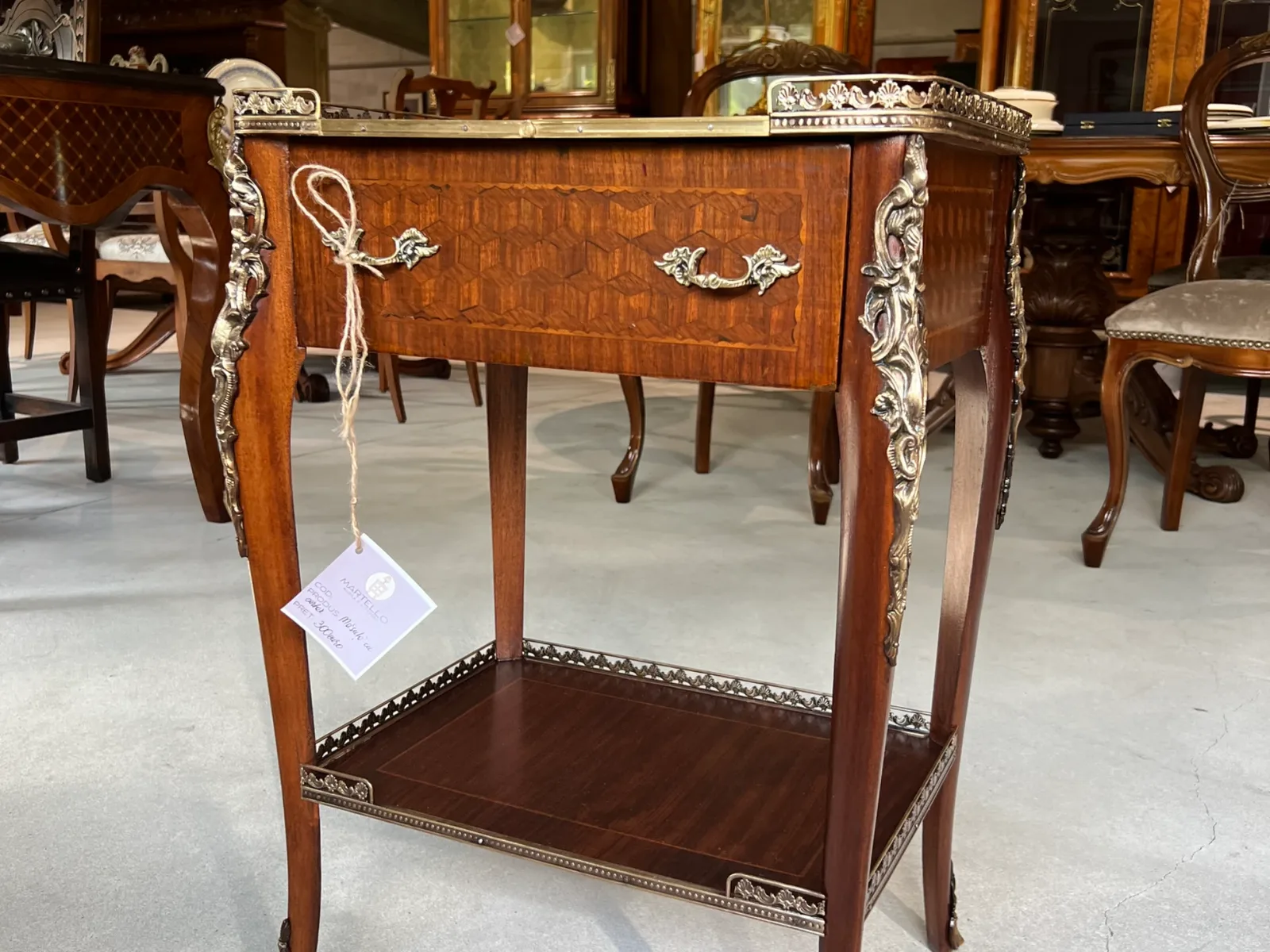
If you remember only one detail, make it this one: the cabriole leg, curved in an elongated "S" shape, emerging from the body of the piece, widening at the "knee" and narrowing toward the "ankle", usually ending in a small carved ornament, a stylised animal paw, or a bud. An authentic Louis XV leg isn't just curved — its curve has a particular tension, like a line drawn in a single stroke of the hand. Cheap reproductions copy the curve but make it too thick or too rigid, and the proportion is lost.
Deliberate, not accidental, asymmetry
Unlike classical styles, where the ornament on the left perfectly mirrors the one on the right, Louis XV cultivates a controlled asymmetry — a carved shell might be slightly twisted, a scroll might flow differently on each side. It's a deliberate aesthetic choice, sometimes called "genre pittoresque", and one of the clearest differences from the Baroque and Empire styles, which are far more symmetrical and rigorous.
Decorative motifs worth recognising
The shell (rocaille, which also gives the style its name "rococo"), acanthus leaves, small carved flowers, the "C" scroll, and small cherub heads appear constantly. Original upholstery used silk, damask, or velvet in pastel or golden tones, fixed with fine decorative tacks, not visible industrial staples. If a supposedly Louis XV chair has upholstery held on with thick, visible metal staples, it's almost certainly a mass-produced reproduction.
Louis XV vs. Chippendale and Savonarola chairs
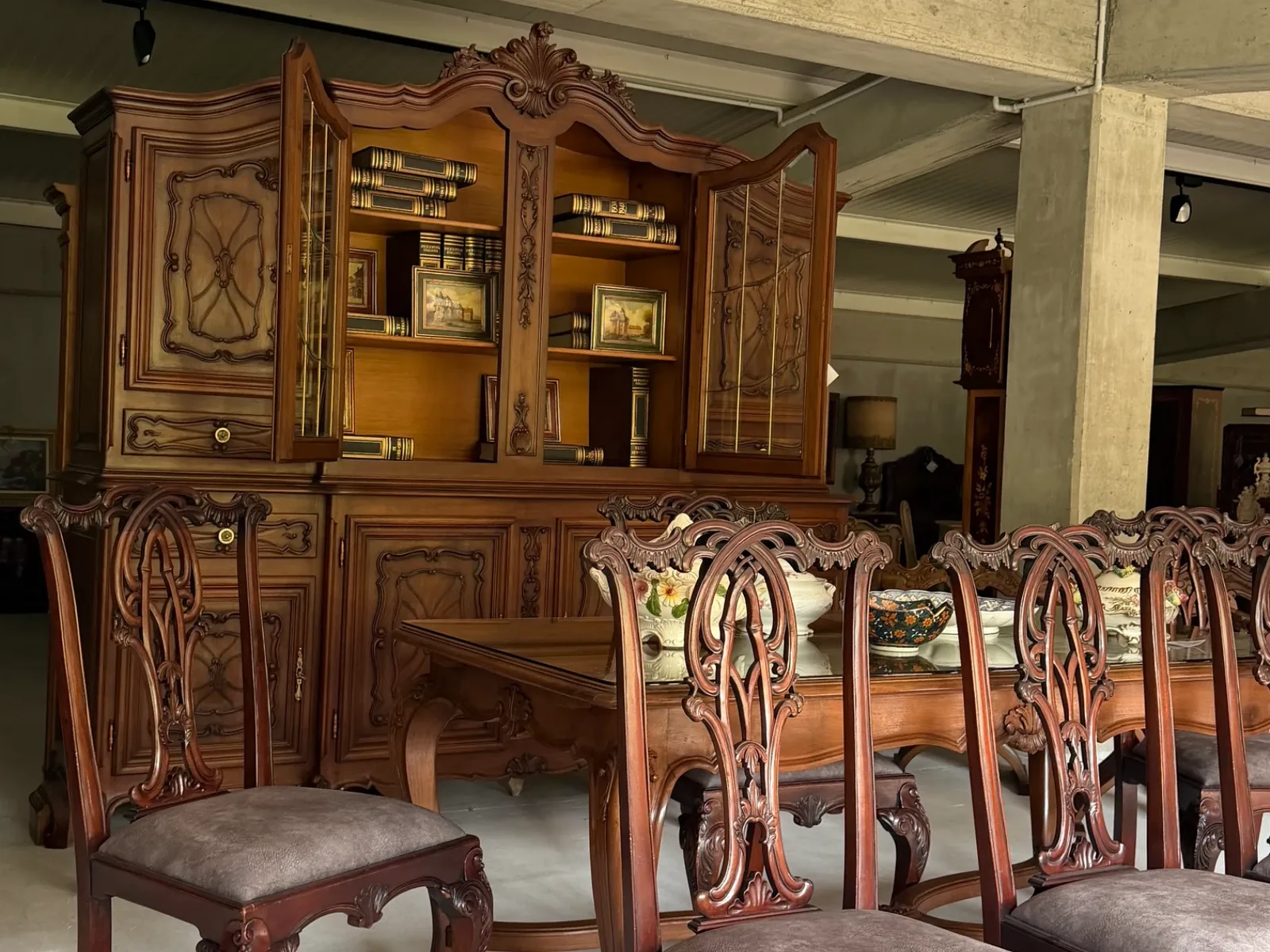
Many people confuse Louis XV with other classic styles that have carved legs. The key difference: English Chippendale keeps straighter, more geometric lines, often with a claw-and-ball foot, while Italian Savonarola chairs are built on a folding X-frame inherited from the Renaissance — with no cabriole curve at all. Louis XV remains the only one of the three defined by a continuous curve, with no visible straight edges.
How to fit a Louis XV piece into a modern home
You don't need to decorate your whole living room in rococo to benefit from it. A single pair of Louis XV armchairs, placed next to an understated contemporary sofa, becomes the room's focal point through contrast — the same principle we cover in depth in our guide on how to combine vintage and modern furniture with elegance. The style's gentle curves harmonise surprisingly well with the simple lines of today's furniture.
Where to find authentic Louis XV pieces
In our vintage armchair and chair collection, we select pieces one at a time, checking exactly the details in this guide — the curve of the leg, the asymmetry of the carving, the quality of the upholstery. You can see them at our showroom in Nimoreni, Ialoveni, fifteen minutes from Chișinău, or browse the entire Martello catalogue. A well-chosen Louis XV piece doesn't just decorate — it brings three centuries of French refinement into your home.