Solid wood never goes out of style — and neither does its value
There is a fundamental difference between furniture that simply fills a home and furniture that defines it. The first is forgotten after the next renovation; the second stays, gets passed down, and gathers patina and stories. Solid wood almost always belongs to the second category. It is not an aesthetic whim but a choice for substance: a genuine piece in oak, walnut, or cherry can carry through decades, while chipboard furniture shows its limits within a few years. This guide gathers everything worth knowing about solid wood — from species and spotting genuine quality, to care, and why it remains a real investment rather than just a furniture purchase.
Noble species: oak, walnut, cherry and ash
Oak is the foundational species of classic European furniture: dense, with a visible grain and exceptional resistance to wear, suited to dining tables and pieces meant to last generations. Walnut brings a warm, almost chocolate tone with a livelier grain pattern, often favored for study and bedroom pieces where quiet elegance matters as much as durability. Cherry stands out for a pinkish-red hue that deepens beautifully over time under light exposure, which is why it is a popular choice for chests and open bookcases. Ash, lighter in color with a straight grain, gives classic pieces a more contemporary air and is one of the most elastic European species. The differences go beyond looks — each species behaves differently with humidity, weight and polishing, and the right choice depends on the room's light, palette, and style. We covered a detailed comparison separately in our guide on how to choose the right wood species.
How to recognize genuine solid wood
The first sign is the grain: on solid wood, the pattern follows natural, slightly irregular lines that continue coherently across every face of the piece. On veneer or laminated chipboard, the pattern repeats identically, like a printed template — a careful eye immediately spots the artificial symmetry. The second sign is weight: a solid wood piece is noticeably heavier than its chipboard equivalent. The third, perhaps most conclusive test, is the edge of a drawer or lid: with solid wood, the grain "cuts" through the entire thickness of the material; with veneer, you see a thin layer glued onto a uniform core, often visible on unfinished edges. Smell, touch, and the reaction to a fine scratch (solid wood can be locally sanded down; veneer reveals the core underneath) round out the check. We detailed this process step by step in our dedicated guide to recognizing quality solid wood, especially useful when buying a vintage piece without a clear provenance.
Structure, joinery and the marks of good craftsmanship
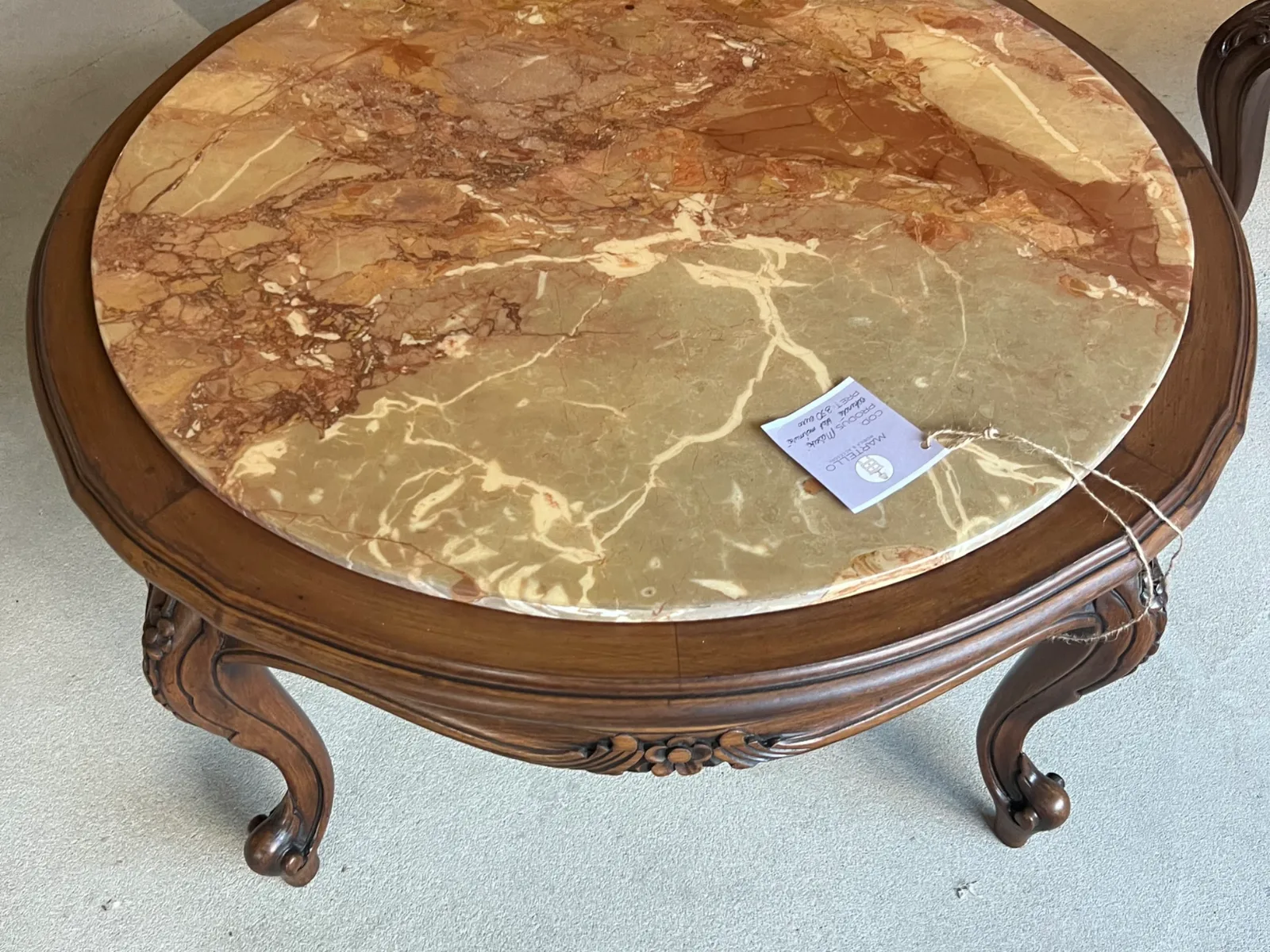
The quality of a solid wood piece does not stop at the species — it shows in how the structure itself was conceived. Dovetail joints in drawers, hidden fixings, solid frames behind chair backs, and finishes that leave the wood's natural pattern visible rather than burying it under thick paint are all signs that a piece was built to last, not just to photograph well. At Martello, every piece that enters the Martello collection goes through careful selection against exactly these criteria — which is why we prefer the term "one-of-a-kind piece" over "product": once sold, it will not appear on our shelves in the same form again.
Caring for solid wood: a simple ritual with generational effects
Contrary to the myth that solid wood "demands a lot," proper care is actually minimal and predictable. The basic rule: avoid direct, prolonged sun exposure (wood changes tone unevenly), keep the room's humidity level fairly constant (sudden swings cause fine cracks), and dust with a soft, slightly damp cloth following the direction of the grain. Every few months, a natural wax or a dedicated care oil feeds the wood and refreshes its sheen without "burying" it under a plastic-like coating. Avoid harsh detergents and abrasive cloths — they are the main reason good finishes deteriorate prematurely. We wrote about this process step by step in our guide to caring for solid wood tables, and for older pieces, in our vintage furniture owner's guide.
Why solid wood is an investment, not an expense
Chipboard furniture starts losing value on day one and, statistically, ends up in the landfill in under a decade. A solid wood piece, properly cared for, keeps — and often grows — its value over time: the finish can be renewed, the piece can be passed down, it can be resold. That is why vintage solid wood pieces remain sought after, while "trendy" furniture from the 2010s is hard to find in good condition today. We explored this in more depth in quality furniture as an investment and in a direct comparison between a one-of-a-kind piece and mass-produced furniture.
Solid wood in every room of the house
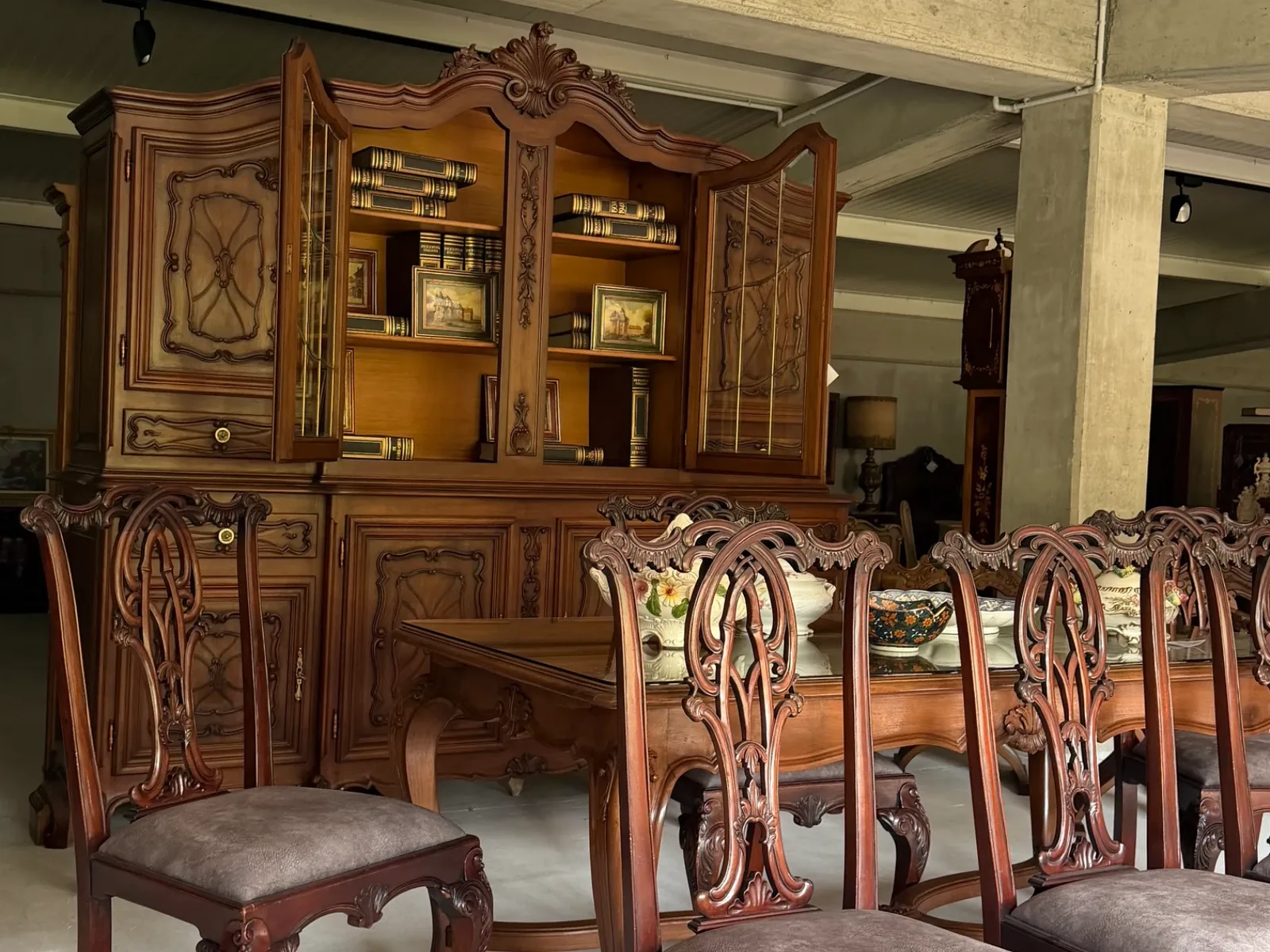
In the dining room, a solid oak or walnut table becomes the center of festive meals and long evenings — a topic we covered separately, from choosing the right table shape to complete pieces such as a Renaissance-style dining set. In the living room, a sofa with a solid wood frame withstands years of daily use — details in our guide to choosing a solid wood living room sofa. For a study or library, the density and stability of solid wood matter twice as much, since it must carry heavy loads without warping — we covered this in our guide to solid wood bookcases. And for country homes and manors, solid wood naturally fits an elegant-rustic atmosphere, a theme explored in furniture for country houses and manors.
How to choose the right piece for your home
There is no "universally correct" species or piece — only the right match between a room's light, its existing palette, and the piece's actual function. A simple rule: in bright spaces, lighter species (ash, pale oak) breathe better; in rooms with warm evening light, walnut and cherry gain in depth. The surest way to judge a piece remains seeing and touching it in person, not just in a photograph — which is why the Martello showroom in Nimoreni, Ialoveni (about 15 minutes from Chișinău) remains the place we recommend visiting before deciding. Solid wood pieces are not something you order at random — they are a long-term choice, and a short visit to the showroom often makes the difference between a fitting purchase and a regretted one.